The Japan Times - Experts back more robust US estimates of social cost of carbon

EUR -
AED 4.313633
AFN 77.713794
ALL 96.524394
AMD 447.271088
ANG 2.102966
AOA 1077.086691
ARS 1704.045282
AUD 1.778098
AWG 2.117175
AZN 2.003403
BAM 1.956986
BBD 2.35973
BDT 143.176779
BGN 1.95654
BHD 0.442867
BIF 3463.566553
BMD 1.174577
BND 1.51406
BOB 8.095907
BRL 6.484367
BSD 1.17156
BTN 105.962223
BWP 15.47372
BYN 3.45955
BYR 23021.707326
BZD 2.356328
CAD 1.618273
CDF 2660.416461
CHF 0.93373
CLF 0.027483
CLP 1078.168041
CNY 8.272839
CNH 8.264658
COP 4540.327024
CRC 583.728946
CUC 1.174577
CUP 31.126288
CVE 110.331872
CZK 24.394847
DJF 208.627567
DKK 7.4715
DOP 73.741555
DZD 152.030597
EGP 55.921486
ERN 17.618654
ETB 182.136914
FJD 2.683027
FKP 0.874948
GBP 0.878601
GEL 3.165445
GGP 0.874948
GHS 13.497181
GIP 0.874948
GMD 86.336511
GNF 10242.772066
GTQ 8.973439
GYD 245.128571
HKD 9.138754
HNL 30.867526
HRK 7.535149
HTG 153.45713
HUF 389.061014
IDR 19644.798726
ILS 3.80385
IMP 0.874948
INR 105.908659
IQD 1534.771417
IRR 49461.433323
ISK 147.996265
JEP 0.874948
JMD 187.465642
JOD 0.832809
JPY 183.043696
KES 151.461476
KGS 102.71622
KHR 4692.664413
KMF 492.147718
KPW 1057.132618
KRW 1735.954093
KWD 0.360442
KYD 0.976359
KZT 602.614719
LAK 25377.408853
LBP 104915.869411
LKR 362.846018
LRD 207.375689
LSL 19.621641
LTL 3.46822
LVL 0.71049
LYD 6.35258
MAD 10.736007
MDL 19.770225
MGA 5292.982732
MKD 61.550646
MMK 2466.869216
MNT 4167.897674
MOP 9.38753
MRU 46.58225
MUR 54.077812
MVR 18.146906
MWK 2031.544828
MXN 21.150138
MYR 4.797018
MZN 75.0635
NAD 19.621724
NGN 1706.953581
NIO 43.114296
NOK 11.984561
NPR 169.533258
NZD 2.037768
OMR 0.451626
PAB 1.17161
PEN 3.946875
PGK 4.981807
PHP 68.7339
PKR 328.278193
PLN 4.212602
PYG 7869.434629
QAR 4.271189
RON 5.092255
RSD 117.381196
RUB 94.552628
RWF 1705.861297
SAR 4.405582
SBD 9.549564
SCR 17.483387
SDG 706.510869
SEK 10.920588
SGD 1.516873
SHP 0.881237
SLE 28.303449
SLL 24630.294701
SOS 668.376647
SRD 45.43031
STD 24311.37046
STN 24.513814
SVC 10.251821
SYP 12987.480461
SZL 19.617055
THB 36.926343
TJS 10.814154
TMT 4.111019
TND 3.419372
TOP 2.8281
TRY 50.18157
TTD 7.947546
TWD 37.027335
TZS 2899.972792
UAH 49.728023
UGX 4176.531372
USD 1.174577
UYU 45.647667
UZS 14183.052891
VES 324.454785
VND 30929.546335
VUV 142.508743
WST 3.278279
XAF 656.326857
XAG 0.017691
XAU 0.000271
XCD 3.174352
XCG 2.111499
XDR 0.81626
XOF 656.326857
XPF 119.331742
YER 279.960019
ZAR 19.684676
ZMK 10572.605087
ZMW 26.858135
ZWL 378.213284
  • SCS

    0.0200

    16.14

    +0.12%

  • RYCEF

    0.2200

    14.86

    +1.48%

  • RELX

    -0.2600

    40.56

    -0.64%

  • RBGPF

    -1.7900

    80.22

    -2.23%

  • GSK

    -0.0700

    48.71

    -0.14%

  • RIO

    1.2000

    77.19

    +1.55%

  • NGG

    1.3900

    77.16

    +1.8%

  • CMSC

    -0.0800

    23.26

    -0.34%

  • BTI

    -0.1200

    57.17

    -0.21%

  • BP

    0.7100

    34.47

    +2.06%

  • BCE

    -0.1800

    23.15

    -0.78%

  • CMSD

    -0.1000

    23.28

    -0.43%

  • BCC

    0.4500

    76.29

    +0.59%

  • VOD

    0.1100

    12.81

    +0.86%

  • AZN

    -1.4900

    89.86

    -1.66%

  • JRI

    -0.0800

    13.43

    -0.6%

Experts back more robust US estimates of social cost of carbon
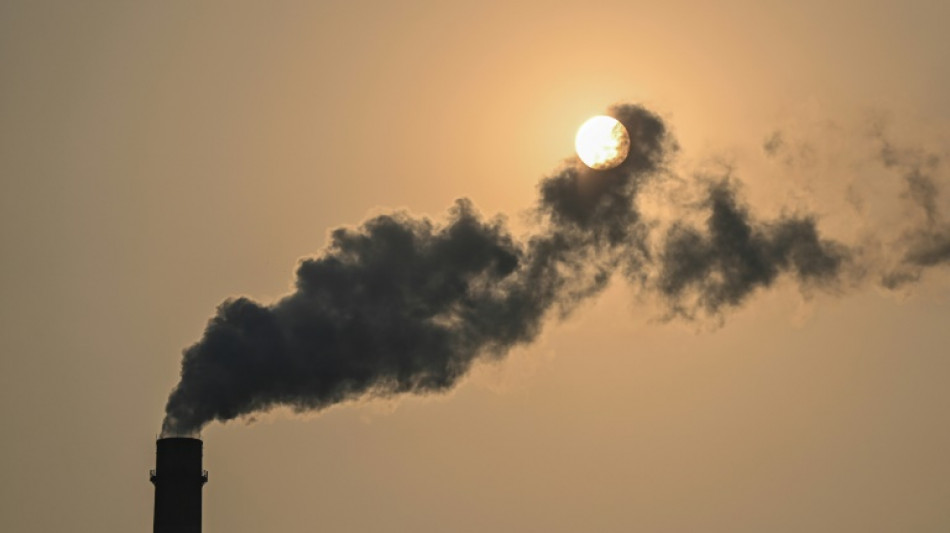
Experts back more robust US estimates of social cost of carbon / Photo: Hector RETAMAL - AFP/File

Experts back more robust US estimates of social cost of carbon

Some 400 scientists and climate experts expressed support on Monday for a US government proposal to revise a key metric that estimates the damage from carbon dioxide emissions.

Text size:

The number in question is the social cost of carbon and it represents the dollar value of the climate change harm attributable to a metric ton of carbon dioxide.

It is a way to evaluate the negative economic, labor and health consequences of CO2 emissions, calculated as the difference between the cost of reducing those emissions and the damages prevented by the reductions.

In the United States, the figure has for years formed part of cost-benefit analyses for everything from power plant regulations to efficiency standards for cars and household appliances.

It considers future illness and deaths from heat waves, small particle pollution, climate-enhanced natural disasters, property damage, reductions in agricultural production, disruption to energy systems, predicted violent conflicts and mass migration.

US President Joe Biden, shortly after taking office in January 2021, restored the social cost of carbon figure to Obama-era levels, after the Trump administration had slashed it to a nominal amount.

The US Environmental Protection Agency (EPA) proposed in a draft report in November to raise the estimate of the damage caused by a ton of CO2 from the current $51 to $190 and a public comment period on the proposed rule change closed on Monday.

Weighing in on the last day was the Union of Concerned Scientists (UCS) with a letter signed by around 400 experts including a number of noted climate scientists.

"The devastating and costly impacts of the climate crisis are evident all around us," they said. "The science is clear that these impacts will only worsen as global heat-trapping emissions rise.

"Our nation's policies must reflect these climate realities."

- 'Underestimate' -

The experts noted that the new EPA estimates are considerably higher than previous federal government figures, but "likely still underestimate the true costs of climate change."

The estimates do not include, for example, some costs that are harder to quantify such as a "range of ecosystem impacts and the loss of cultural heritage," they said.

They also do not take into account potential climate events such as the "loss of major ice sheets that could trigger multi-century catastrophic sea level rise."

Rachel Cleetus, policy director of the UCS Climate and Energy Program, said the new estimates may help "ensure government agencies are appropriately accounting for the damages caused by US global warming emissions, and the significant benefits from cutting them."

Now that the public comment period is closed, the EPA will launch an external peer review of the estimates before finalizing them.

M.Sugiyama--JT