The Japan Times - Warming El Nino set to return in mid-2026: UN

EUR -
AED 4.285696
AFN 76.438469
ALL 92.669224
AMD 426.387556
ANG 2.088623
AOA 1071.278308
ARS 1761.530805
AUD 1.630826
AWG 2.094711
AZN 1.993482
BAM 1.95668
BBD 2.350297
BDT 143.304477
BGN 1.979608
BHD 0.439889
BIF 3489.24047
BMD 1.16697
BND 1.482967
BOB 13.425696
BRL 6.016779
BSD 1.166895
BTN 111.672374
BWP 15.636035
BYN 3.496673
BYR 22872.613113
BZD 2.346896
CAD 1.615489
CDF 2657.775519
CHF 0.936141
CLF 0.027076
CLP 1065.641836
CNY 7.844548
CNH 7.841561
COP 3577.288361
CRC 528.724298
CUC 1.16697
CUP 30.924707
CVE 110.599592
CZK 24.097693
DJF 207.393754
DKK 7.475599
DOP 68.075209
DZD 155.237357
EGP 59.293866
ERN 17.504551
ETB 187.295257
FJD 2.586469
FKP 0.855267
GBP 0.855605
GEL 3.039984
GGP 0.855267
GHS 13.040909
GIP 0.855267
GMD 86.355664
GNF 10243.082832
GTQ 8.905007
GYD 244.143572
HKD 9.144745
HNL 31.367875
HRK 7.534308
HTG 152.664764
HUF 362.841911
IDR 20683.377286
ILS 3.502661
IMP 0.855267
INR 111.72157
IQD 1528.730774
IRR 1604087.865645
ISK 141.004871
JEP 0.855267
JMD 184.623068
JOD 0.827348
JPY 185.691189
KES 151.029038
KGS 102.050895
KHR 4717.467769
KMF 493.628043
KPW 1050.273394
KRW 1610.161589
KWD 0.360104
KYD 0.972438
KZT 533.856475
LAK 26198.477178
LBP 104502.168643
LKR 383.842703
LRD 211.98022
LSL 18.717978
LTL 3.445759
LVL 0.705888
LYD 7.381037
MAD 10.800323
MDL 20.165073
MGA 5047.14532
MKD 61.551111
MMK 2450.332112
MNT 4194.401026
MOP 9.418938
MRU 46.791867
MUR 54.240713
MVR 18.041138
MWK 2027.027397
MXN 19.776571
MYR 4.715839
MZN 74.575216
NAD 18.718355
NGN 1572.212171
NIO 42.828854
NOK 10.859059
NPR 178.680394
NZD 1.956017
OMR 0.448697
PAB 1.166895
PEN 3.913432
PGK 5.153919
PHP 71.994469
PKR 323.98005
PLN 4.3085
PYG 7013.155441
QAR 4.253024
RON 5.253112
RSD 117.309649
RUB 97.847536
RWF 1715.445983
SAR 4.38593
SBD 9.358371
SCR 16.148315
SDG 701.920843
SEK 11.075012
SGD 1.481871
SHP 0.864568
SLE 28.76553
SLL 24470.777703
SOS 666.920298
SRD 44.078208
STD 24153.924072
STN 24.914811
SVC 10.210594
SYP 15172.944569
SZL 18.706691
THB 38.136911
TJS 10.782752
TMT 4.096065
TND 3.385961
TOP 2.809784
TRY 56.127772
TTD 7.922361
TWD 37.139871
TZS 3092.468321
UAH 52.197986
UGX 4346.955833
USD 1.16697
UYU 46.771044
UZS 13822.760378
VES 914.533953
VND 30543.690781
VUV 138.313434
WST 3.169381
XAF 656.235391
XAG 0.016766
XAU 0.000249
XCD 3.153795
XCG 2.103146
XDR 0.825108
XOF 659.337814
XPF 119.331742
YER 276.684587
ZAR 18.675261
ZMK 10504.131467
ZMW 22.142393
ZWL 375.763882
  • CMSD

    0.0800

    21.06

    +0.38%

  • CMSC

    0.1264

    21.228

    +0.6%

  • BCC

    -0.2300

    82.24

    -0.28%

  • BTI

    0.5000

    56.71

    +0.88%

  • RBGPF

    2.5700

    71.13

    +3.61%

  • BCE

    0.1400

    23.85

    +0.59%

  • NGG

    0.6600

    80.42

    +0.82%

  • RIO

    -0.5000

    104.8

    -0.48%

  • AZN

    0.7300

    166.71

    +0.44%

  • GSK

    -0.6300

    51.78

    -1.22%

  • RYCEF

    0.1900

    20.44

    +0.93%

  • BP

    -1.0200

    43.74

    -2.33%

  • JRI

    -0.0100

    12.37

    -0.08%

  • VOD

    0.0200

    15.98

    +0.13%

  • RELX

    0.4800

    36.39

    +1.32%

Warming El Nino set to return in mid-2026: UN
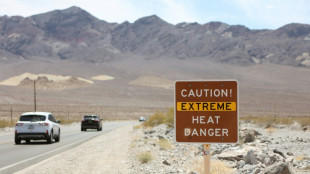
Warming El Nino set to return in mid-2026: UN / Photo: MARTIN BERNETTI - AFP

Warming El Nino set to return in mid-2026: UN

The El Nino weather phenomenon, which pushed global temperatures to record highs the last time around, is expected to return in mid-2026, the UN said Friday.

Text size:

The United Nations' weather and climate agency said El Nino conditions could well develop as early as May to July.

The World Meteorological Organization (WMO) meanwhile said early signs indicated a particularly strong event.

El Nino is a naturally-occurring climate phenomenon that warms surface temperatures in the central and eastern equatorial Pacific Ocean, bringing worldwide changes in winds, pressure and rainfall patterns.

Conditions oscillate between El Nino and its opposite La Nina, with neutral conditions in between.

The last El Nino contributed to making 2023 the second-hottest year on record and 2024 the all-time high.

"After a period of neutral conditions at the start of the year... there is high confidence in the onset of El Nino, followed by further intensification," said Wilfran Moufouma-Okia, the WMO's climate prediction chief.

El Nino typically occurs every two to seven years and lasts around nine to 12 months.

The WMO said in its latest monthly Global Seasonal Climate Update that sea surface temperatures are rising rapidly in the equatorial Pacific, "pointing to a likely return of El Nino conditions as early as May-July."

Forecasts indicate a "nearly global dominance of above-normal land surface temperatures" in the next three months.

- Temperature spike -

"There is no evidence that climate change increases the frequency or intensity of El Nino events," the Geneva-based WMO said. "But it can amplify associated impacts."

The WMO explained that 2024 was the hottest year ever recorded "because of the combination of the powerful 2023-2024 El Nino and human-induced climate change from greenhouse gases".

While forecasting accuracy improves after April, "what we can say for certain is that the El Nino will be strong", Moufouma-Okia said.

El Nino is typically associated with increased rainfall in southern South America, the southern United States, the Horn of Africa and central Asia, and drought over Australia, Indonesia, and parts of southern Asia.

Warmer water can fuel hurricanes in the central and eastern Pacific during the middle of the year, though it hinders hurricane formation in the Atlantic Basin.

The WMO hopes advance warning will guide preparedness, especially in climate-sensitive sectors like agriculture, water management, energy and health.

The WMO's April Global Seasonal Climate Update said that for May to July, land surface temperatures are expected to be above normal nearly everywhere.

The signals are especially strong over southern North America, Central America, and the Caribbean, as well as Europe and Northern Africa.

K.Tanaka--JT