Rescued orphaned elephant highlights Nigeria's conservation fight / Photo: John OKUNYOMIH - AFP

As dawn breaks over Nigeria's Okomu National Park, an exhausted wildlife caretaker prepares milk formula for Agbaibor, a months-old orphaned forest elephant rescued after wandering out of the rainforest alone.
"The baby elephant has to take two litres of this per meal," said Joshua Aribasoye, one of those responsible for feeding and monitoring the calf around the clock in a makeshift pen at a ranger outpost inside the park in southern Edo state.
Forest elephants, smaller and more elusive than their savannah cousins, are endangered and their population has collapsed in recent decades largely because of habitat loss and poaching.
Agbaibor -- named after the ranger who helped rescue him -- was found near a palm oil plantation bordering the protected forest late last year after being separated from the herd.
Rangers and conservationists tried to reunite the calf with its family by taking it back into the forest, but it soon wandered out again.
Fearing it would die alone or be attacked, park authorities and conservation group African Nature Investors (ANI) launched an emergency effort to nurse the animal, flying in elephant rehabilitation specialists from Zambia and assigning caretakers to raise him.
It has become a costly operation. ANI spends between four and five million naira (about $2,900-$3,600) a month on his care, including 77 kilograms of milk powder, alongside oats and nutritional supplements.
Conservationists expect the rehabilitation process to take another three to five years. They are building a new enclosure deeper inside the park, within elephant habitat, where the calf will gradually be exposed to the sounds and movements of wild herds before an eventual reintroduction.
"The calf will be cared for there... until it is integrated into a group," said ANI project manager Peter Abanyam.
- 200 remain -
The International Union for Conservation of Nature (IUCN) lists forest elephants as critically endangered, with conservationists estimating only around 200 remain in the country.
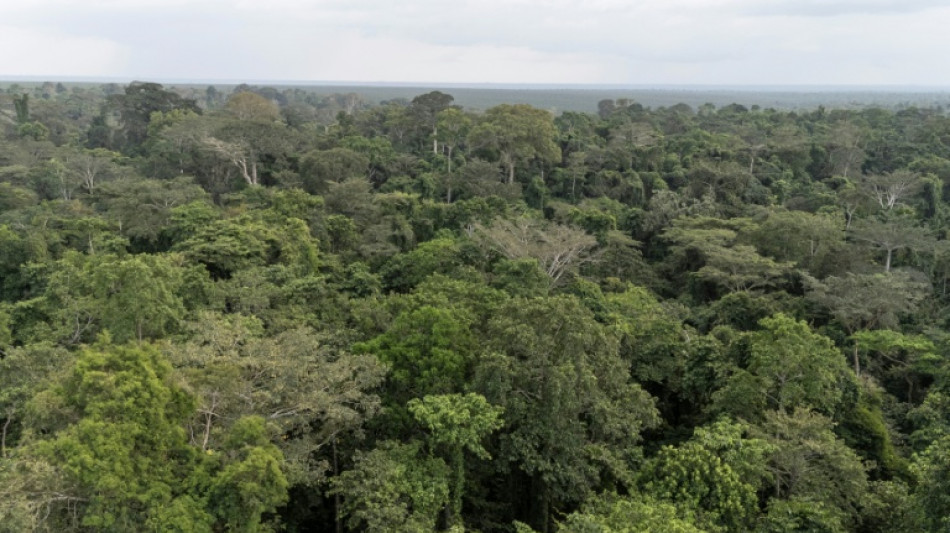
Roughly 40 are believed to live in and around Okomu -- one of Nigeria's last remaining rainforest ecosystems, covering about 24,000 hectares.
"Okomu is critical for conservation in Nigeria," said Abanyam.
"In a small ecosystem like this, housing 40 elephants is a huge number, and it needs to be protected at all costs."
But pressure on the forest is intensifying.
Logging, poaching, farming and expanding human settlements have fragmented large parts of the reserve, shrinking elephant corridors and increasing contact between wildlife and nearby communities.
Godstime Christopher, 26, once helped transport illegally logged timber out of the forest before being recruited as a ranger by ANI.
Today, he works with the organisation's biomonitoring team, using camera traps to track elephant movements and identify poachers.
"When I became a ranger, I thought I would use that to exploit logging," he admitted. "But the training changed our mentality."
- 'Preserve what we have' -
Conservation groups say engaging local communities is essential if endangered wildlife is to survive in one of Africa's fastest-growing countries, where economic hardship often drives people deeper into protected forests in search of land, timber or bushmeat.
While the ranger programme appears to have helped drive down poaching in the area, hunting for other species still disturbs the elephants and degrades their habitat, Christopher warned.
Back at the rehabilitation centre, Agbaibor splashes in the mud, nudges his handler for attention and drinks from oversized bottles of milk formula.
For Aribasoye, the demanding work has become deeply personal.
"We are supposed to be like a mother to him," he said.
"Seeing him eating and playing is part of the joy... because I know we are working to preserve what we have left."
K.Tanaka--JT