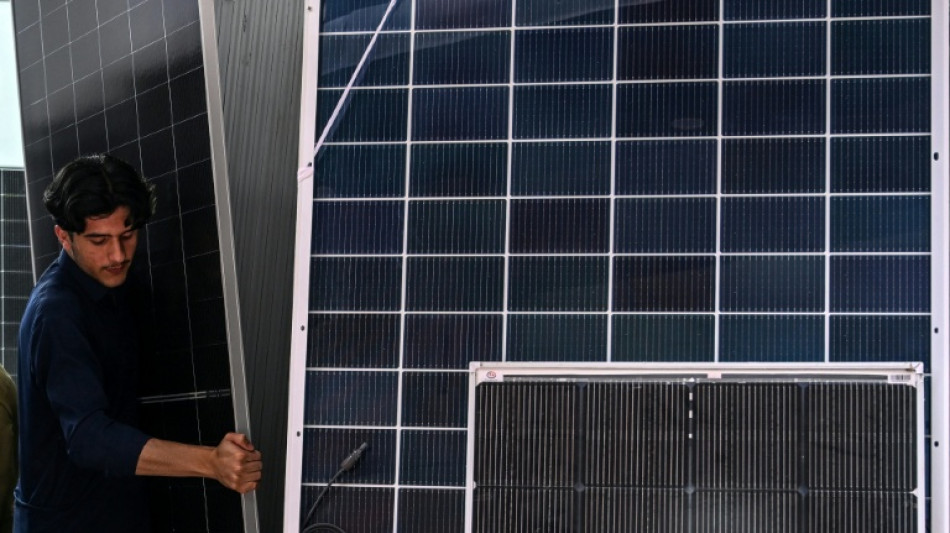
Solar push helps Pakistan temper Gulf energy shock / Photo: Farooq NAEEM - AFP

Pakistan's solar power push has cushioned the full impact of the war in the Middle East, analysts said, despite lingering concerns over fuel supplies and rising prices.
A study published last month assessed that the uptake of solar around 2018 helped the country avoid more than $12 billion in oil and gas imports up to February this year.
At projected market prices, it could save a further $6.3 billion by the end of 2026, said Renewables First and the Centre for Research on Energy and Clean Air.
In the bustling side streets of Lahore, in northeast Pakistan, shopkeeper Aftab Ahmed, 49, was out shopping for solar panels to install at home to help him cut costs.
"The current fuel situation in our country is such that fuel has gone beyond the reach of the common person," he told AFP last Friday.
"It has become so expensive that an average person can no longer afford fuel for a motorcycle or a car. Fuel prices are also affecting electricity bills, leading to further increases.
"If we shift towards solar energy, at least some savings can be achieved from one side."
Hours earlier, the government in Islamabad announced an eye-watering 42.7-percent hike in the price of petrol and 54.9 percent on diesel.
That brought protesters onto the streets, sparked queues at fuel stations, and led the government to announce free state-run public transport for a month.
- Boom -
Rooftop solar panels are everywhere in Pakistan, helping to provide uninterrupted power and avoid often lengthy cuts in grid supply, particularly when temperatures soar.
Nabiya Imran, an energy analyst with Renewables First in the capital Islamabad, said they have also helped ease the burden caused by the disruption to shipping in the Gulf.
"Because people in Pakistan have adopted solar over the past several years, this... is providing a cushioning effect against the crisis in the Strait of Hormuz, particularly in the power sector," she said.
"Had we not adopted solar in the first place to the extent that we have, the impacts in the power sector would be much worse."
Pakistan's solar surge does not mean it is immune to the supply shortages that have hit countries across Asia.
Last month, the government introduced austerity measures. The working week for public sector employees was cut to four days and schools were shut.
The Pakistan Super League cricket tournament was also cut from six venues to two, and crowds were banned, to save fuel.
But solar has made working from home more viable and affordable for Pakistanis because it cuts reliance on the grid and imported gas.
Market forces have largely driven the uptake, which the study called "one of the fastest consumer-led energy transitions on record".
Unlike western economies, Pakistan did not impose tariffs on Chinese solar technology from 2013 until last year. As a result, imports jumped from 1 gigawatt in 2018 to 51 gigawatts early this year.
Oil and gas price rises after Russia's full-scale invasion of Ukraine in early 2022 also forced consumers to look for alternatives, as did hefty increases in domestic energy tariffs.
Between 2022 and 2024, Pakistan saw a 40-percent drop in oil and gas imports, the study said.
- Security -
The International Energy Agency has estimated that more than 40 million of Pakistan's more than 240 million people do not have access to electricity.
Manzoor Ishtiaq, whose shop in Lahore sells and installs solar panels, believes making the technology affordable for everyone could help.
"There should be a plan that encourages every household to adopt solar energy. This way, both the government and the public will get relief and long-term benefits," he said.
For Renewables First's Nabiya Imran, the Gulf crisis has shown the need for less reliance on fossil fuels and energy security using renewable sources.
She noted that Pakistan spent around 11 percent of its GDP on fossil fuel imports including oil, coal and liquefied natural gas in the 2024 fiscal year.
"That is a big chunk of money to be spending for a country like Pakistan, which could be going towards other aspects of development."
The key now, she added, would be to push take-up of solar battery storage to prevent the use of fossil fuel-powered thermal plants to keep the lights on at peak times.
Policymakers should also look at the transportation sector to reduce its exposure to global fuel and price shocks and cut emissions through initiatives such as electric vehicles, she added.
video-phz/mjw/lga
H.Nakamura--JT