The Japan Times - Half the world faced an extra month of extreme heat due to climate change: study

EUR -
AED 4.120835
AFN 72.376646
ALL 91.446363
AMD 404.430758
ANG 2.00828
AOA 1030.068071
ARS 1734.359288
AUD 1.62136
AWG 2.022547
AZN 1.912974
BAM 1.961233
BBD 2.259861
BDT 139.356061
BGN 1.961204
BHD 0.423252
BIF 3378.578422
BMD 1.122079
BND 1.436078
BOB 13.334763
BRL 6.181191
BSD 1.122008
BTN 105.309742
BWP 15.416709
BYN 3.359607
BYR 21992.738982
BZD 2.256652
CAD 1.584964
CDF 2570.681235
CHF 0.920132
CLF 0.027649
CLP 1088.168925
CNY 7.487409
CNH 7.483652
COP 3676.0751
CRC 508.2079
CUC 1.122079
CUP 26.928601
CVE 110.665006
CZK 24.345714
DJF 199.415625
DKK 7.476381
DOP 68.053886
DZD 152.620074
EGP 60.46562
ERN 16.831178
ETB 180.876813
FJD 2.526699
FKP 0.840202
GBP 0.834944
GEL 2.911781
GGP 0.840202
GHS 13.111489
GIP 0.840202
GMD 83.033728
GNF 9944.378364
GTQ 8.573714
GYD 235.220589
HKD 8.799957
HNL 30.380262
HRK 7.595361
HTG 147.067424
HUF 362.431919
IDR 20293.912103
ILS 3.54441
IMP 0.840202
INR 105.415967
IQD 1698.826878
IRR 2134513.700104
ISK 137.228052
JEP 0.840202
JMD 178.243793
JOD 0.795585
JPY 177.315894
KES 145.756644
KGS 98.126077
KHR 4583.690588
KMF 495.958991
KPW 1009.870624
KRW 1509.96422
KWD 0.348775
KYD 0.935082
KZT 503.404593
LAK 25252.377599
LBP 100482.130971
LKR 373.071867
LRD 191.090351
LSL 18.581951
LTL 3.313206
LVL 0.678734
LYD 7.214799
MAD 10.948678
MDL 20.224849
MGA 5155.950214
MKD 61.536967
MMK 2355.754922
MNT 4040.791023
MOP 9.062205
MRU 45.163564
MUR 52.858792
MVR 17.275707
MWK 1949.05068
MXN 20.803113
MYR 4.553845
MZN 71.696486
NAD 18.581481
NGN 1511.450807
NIO 41.079237
NOK 10.551522
NPR 168.495788
NZD 1.991925
OMR 0.431396
PAB 1.122109
PEN 3.862754
PGK 5.040344
PHP 70.762196
PKR 310.423176
PLN 4.386822
PYG 7013.429462
QAR 4.087729
RON 5.343004
RSD 117.67346
RUB 92.574778
RWF 1655.065816
SAR 4.219482
SBD 9.031142
SCR 15.780944
SDG 674.960217
SEK 11.000016
SGD 1.435267
SHP 0.840351
SLE 25.751724
SLL 23529.430449
SOS 641.25269
SRD 42.136277
STD 23224.759885
STN 24.994299
SVC 9.8182
SYP 14589.264556
SZL 18.581752
THB 37.488452
TJS 10.300189
TMT 3.927275
TND 3.349961
TOP 2.701695
TRY 56.354259
TTD 7.610082
TWD 36.808219
TZS 2967.895463
UAH 51.116008
UGX 4594.728881
USD 1.122079
UYU 45.245142
UZS 13464.942184
VES 1005.737375
VND 28630.394464
VUV 133.821406
WST 3.128157
XAF 655.957
XAG 0.021033
XAU 0.000271308372
XCD 3.032473
XCG 2.022202
XDR 0.793368
XOF 655.957
XPF 119.331742
YER 265.51185
ZAR 18.382448
ZMK 10100.052768
ZMW 22.805178
ZWL 361.308825
SSP 6446.60178
MXV 2.338638
  • RYCEF

    0.1000

    19.81

    +0.5%

  • VOD

    -0.2500

    16.33

    -1.53%

  • CMSC

    -0.2800

    20.12

    -1.39%

  • RBGPF

    -2.0000

    65

    -3.08%

  • RIO

    -0.2500

    94.16

    -0.27%

  • BTI

    -1.2000

    54.85

    -2.19%

  • NGG

    -0.3000

    74.94

    -0.4%

  • GSK

    -0.3500

    49.35

    -0.71%

  • BCE

    -0.4200

    20.14

    -2.09%

  • CMSD

    -0.3400

    19.93

    -1.71%

  • BP

    -0.9100

    43.52

    -2.09%

  • RELX

    0.1700

    33.24

    +0.51%

  • BCC

    -0.6200

    75.97

    -0.82%

  • AZN

    -1.9400

    164.21

    -1.18%

  • JRI

    0.0000

    10.77

    0%

Half the world faced an extra month of extreme heat due to climate change: study
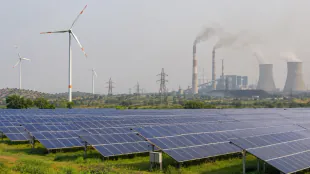
Half the world faced an extra month of extreme heat due to climate change: study / Photo: Frederic J. BROWN - AFP/File

Half the world faced an extra month of extreme heat due to climate change: study

Half the global population endured an additional month of extreme heat over the past year because of manmade climate change, a new study found Friday.

Text size:

The findings underscore how the continued burning of fossil fuels is harming health and well-being on every continent, with the effects especially under-recognized in developing countries, the authors said.

"With every barrel of oil burned, every tonne of carbon dioxide released, and every fraction of a degree of warming, heat waves will affect more people," said Friederike Otto, a climate scientist at Imperial College London and co-author of the report.

The analysis -- conducted by scientists at World Weather Attribution, Climate Central, and the Red Cross Red Crescent Climate Centre -- was released ahead of global Heat Action Day on June 2, which this year spotlights the dangers of heat exhaustion and heat stroke.

To assess the influence of global warming, researchers analyzed the period from May 1, 2024 to May 1, 2025.

They defined "extreme heat days" as those hotter than 90 percent of temperatures recorded at a given location between 1991 and 2020.

Using a peer-reviewed modeling approach, they then compared the number of such days to a simulated world without human-caused warming.

The results were stark: roughly four billion people -- 49 percent of the global population -- experienced at least 30 more days of extreme heat than they would have otherwise.

The team identified 67 extreme heat events during the year and found the fingerprint of climate change on all of them.

The Caribbean island of Aruba was the worst affected, recording 187 extreme heat days -- 45 more than expected in a world without climate change.

The study follows a year of unprecedented global temperatures. 2024 was the hottest year on record, surpassing 2023, while January 2025 marked the hottest January ever.

On a five-year average, global temperatures are now 1.3 degrees Celsius above pre-industrial levels -- and in 2024 alone, they exceeded 1.5C, the symbolic ceiling set by the Paris climate accord.

The report also highlights a critical lack of data on heat-related health impacts in lower-income regions.

While Europe recorded more than 61,000 heat-related deaths in the summer of 2022, comparable figures are sparse elsewhere, with many heat-related fatalities misattributed to underlying conditions such as heart or lung disease.

The authors emphasized the need for early warning systems, public education, and heat action plans tailored to cities.

Better building design -- including shading and ventilation -- and behavioral adjustments like avoiding strenuous activity during peak heat are also essential.

Still, adaptation alone will not be enough. The only way to halt the rising severity and frequency of extreme heat, the authors warned, is to rapidly phase out fossil fuels.

T.Ikeda--JT