The US towns that took on 'forever chemical' giants -- and won / Photo: Robyn Beck - AFP

No corner of Earth is untouched. From Tibet to Antarctica, so-called "forever chemicals" have seeped into the blood of nearly every living creature.
Tainting food, water and wildlife, these toxic substances have been linked to ailments ranging from birth defects to rare cancers.
Yet if it weren't for the efforts of residents in two heavily impacted American towns, the world might still be in the dark.
In the new book "They Poisoned the World: Life and Death in the Age of Chemicals," investigative journalist Mariah Blake recounts how people in Parkersburg, West Virginia, and Hoosick Falls, New York, blew the whistle on the industrial giants that poisoned them -- and, in the process, forced the world to reckon with per‑ and polyfluoroalkyl substances, or PFAS.
"We're talking about a class of chemicals that doesn't break down in the environment," Blake tells AFP, calling it the "worst contamination crisis in human history."
First developed in the 1930s, PFAS are prized for their strength, heat resistance, and water- and grease-repelling powers. Built on the carbon-fluoride bond -- the strongest in chemistry -- they persist like radioactive waste and accumulate in our bodies, hence the "forever" nickname.
Blake's research traces their history, from accidental discovery by a DuPont chemist to modern usage in cookware, clothing, and cosmetics.
They might have remained a curiosity if Manhattan Project scientists hadn't needed a coating that could withstand atomic-bomb chemistry, helping companies produce them at scale.
- Corporate malfeasance -
Industry knew the risks early. Internal tests showed plant workers suffered chemical burns and respiratory distress. Crops withered and livestock died near manufacturing sites.
So how did they get away with it? Blake tracks the roots to the 1920s, when reports emerged that leaded gasoline caused psychosis and death among factory workers. In response, an industry-backed scientist advanced a now-infamous doctrine: chemicals should be presumed safe until proven harmful.
This "Kehoe principle" incentivized corporations to manufacture doubt around health risks -- a big reason it took until last year for the US to finalize a ban on asbestos.
DuPont's own studies warned that Teflon had no place on cookware. But after a French engineer coated his wife's muffin tins with it, a Parisian craze took off -- and an American entrepreneur sold the idea back to DuPont.
Soon nonstick pans were flying off shelves, thanks in part to a regulatory gap: PFAS, along with thousands of other chemicals, were "grandfathered" into the 1976 Toxic Substances Control Act and required no further testing.
- Massive litigation -
The cover-up began to unravel in the 1990s in Parkersburg, where DuPont had for decades been dumping Teflon waste into pits and the Ohio River.
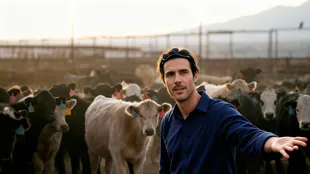
The town reaped economic benefits, but female plant workers were having babies with birth defects, a cattle farmer downstream was losing his herd, and residents developed rare cancers.
Blake tells the story through "accidental activists." One is Michael Hickey, a preppy insurance underwriter with no interest in politics or the environment. After cancer took his father and friends, he started testing Hoosick Falls's water.
Another is Emily Marpe, "a teen mom with a high school education" who saved to buy her family's dream house in upstate New York, only to learn the water flowing from the taps was fouled with PFAS that now coursed through their blood in massive levels.
"She knew the science inside out," says Blake, "and became an incredibly articulate advocate."
Years of litigation yielded hundreds of millions in settlements and forced DuPont and 3M to phase out two notorious PFAS. But the companies pivoted to substitutes like GenX -- later shown to be just as toxic.
Still, Blake argues the tide is turning. France has banned PFAS in many consumer goods, the EU is considering a ban, and in the US, states are moving to restrict PFAS in sludge fertilizer and food packaging.
Liabilities linked to the chemicals are driving major retailers from McDonald's to REI to pledge PFAS-free products.
Her optimism is tempered by the political climate. Just this week, the Trump administration announced the rollback of federal drinking water standards for four next-generation PFAS chemicals.
But she believes the momentum is real.
"Ordinary citizens who set out to protect their families and communities have really created this dramatic change," she says. "It's like climate change -- it feels intractable, but here's a case where people have made major headway."
K.Yamaguchi--JT