The Japan Times - US statewide bans on plastic bags reduced beach pollution: analysis

EUR -
AED 4.244974
AFN 72.820821
ALL 95.679468
AMD 435.069847
ANG 2.069125
AOA 1059.943556
ARS 1608.41038
AUD 1.649033
AWG 2.083477
AZN 1.960828
BAM 1.950286
BBD 2.324029
BDT 141.589657
BGN 1.975759
BHD 0.435868
BIF 3415.542608
BMD 1.155882
BND 1.475727
BOB 7.973455
BRL 6.141665
BSD 1.153937
BTN 107.875982
BWP 15.734511
BYN 3.500901
BYR 22655.282549
BZD 2.320738
CAD 1.585043
CDF 2629.631372
CHF 0.910875
CLF 0.027167
CLP 1072.7165
CNY 7.959867
CNH 7.977497
COP 4241.407488
CRC 538.976054
CUC 1.155882
CUP 30.630867
CVE 109.954107
CZK 24.487528
DJF 205.479011
DKK 7.47136
DOP 68.496328
DZD 152.86307
EGP 59.999466
ERN 17.338226
ETB 181.855905
FJD 2.559642
FKP 0.866441
GBP 0.867079
GEL 3.138222
GGP 0.866441
GHS 12.578435
GIP 0.866441
GMD 84.954116
GNF 10114.40169
GTQ 8.839008
GYD 241.417396
HKD 9.05505
HNL 30.542641
HRK 7.533347
HTG 151.38197
HUF 393.178948
IDR 19599.362345
ILS 3.593781
IMP 0.866441
INR 108.66508
IQD 1511.625902
IRR 1520706.944273
ISK 143.64086
JEP 0.866441
JMD 181.287413
JOD 0.819536
JPY 183.919854
KES 149.487327
KGS 101.07943
KHR 4610.962577
KMF 493.56122
KPW 1040.327809
KRW 1739.960935
KWD 0.354359
KYD 0.961581
KZT 554.761421
LAK 24778.937947
LBP 103341.603261
LKR 359.962213
LRD 211.16294
LSL 19.465661
LTL 3.413019
LVL 0.699181
LYD 7.387113
MAD 10.782612
MDL 20.095181
MGA 4811.395855
MKD 61.466205
MMK 2425.983079
MNT 4124.393548
MOP 9.314164
MRU 46.190397
MUR 53.760182
MVR 17.870088
MWK 2000.942367
MXN 20.733739
MYR 4.552987
MZN 73.846768
NAD 19.465661
NGN 1567.66451
NIO 42.459945
NOK 11.070054
NPR 172.601971
NZD 1.98137
OMR 0.444436
PAB 1.153937
PEN 3.98942
PGK 4.980917
PHP 69.526124
PKR 322.168873
PLN 4.275387
PYG 7536.690129
QAR 4.219569
RON 5.087616
RSD 117.118848
RUB 96.006653
RWF 1678.952788
SAR 4.339939
SBD 9.306767
SCR 15.832933
SDG 694.685214
SEK 10.812147
SGD 1.481684
SHP 0.867211
SLE 28.405845
SLL 24238.275136
SOS 659.435457
SRD 43.331121
STD 23924.418772
STN 24.430922
SVC 10.096452
SYP 127.969146
SZL 19.471943
THB 38.037761
TJS 11.083163
TMT 4.057145
TND 3.407964
TOP 2.783085
TRY 51.2244
TTD 7.828864
TWD 37.030636
TZS 3000.117216
UAH 50.55027
UGX 4361.667455
USD 1.155882
UYU 46.498526
UZS 14068.222325
VES 525.568607
VND 30413.56094
VUV 137.376492
WST 3.153027
XAF 654.107521
XAG 0.017125
XAU 0.00026
XCD 3.123828
XCG 2.07962
XDR 0.8135
XOF 654.107521
XPF 119.331742
YER 275.797228
ZAR 19.734312
ZMK 10404.320537
ZMW 22.530296
ZWL 372.193456
  • RBGPF

    -13.5000

    69

    -19.57%

  • BCC

    -1.5600

    68.3

    -2.28%

  • CMSD

    -0.2420

    22.658

    -1.07%

  • NGG

    -3.5400

    81.99

    -4.32%

  • CMSC

    -0.2000

    22.65

    -0.88%

  • GSK

    -0.5300

    51.84

    -1.02%

  • BCE

    0.0600

    25.79

    +0.23%

  • RIO

    -2.5000

    83.15

    -3.01%

  • RYCEF

    -1.2600

    15.34

    -8.21%

  • RELX

    -0.4600

    33.36

    -1.38%

  • AZN

    -5.3300

    183.6

    -2.9%

  • VOD

    -0.0900

    14.33

    -0.63%

  • JRI

    -0.3900

    11.77

    -3.31%

  • BTI

    -1.3500

    57.37

    -2.35%

  • BP

    -1.0800

    44.78

    -2.41%

US statewide bans on plastic bags reduced beach pollution: analysis
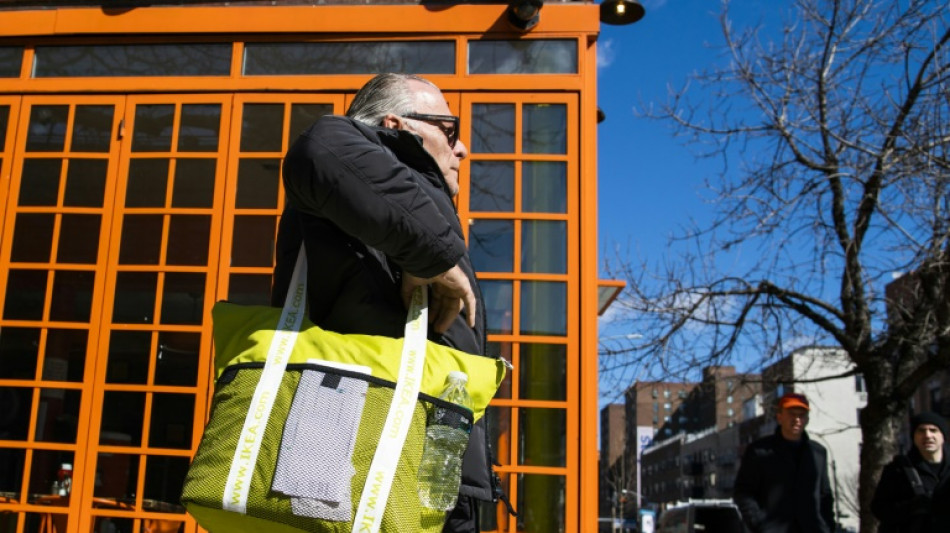
US statewide bans on plastic bags reduced beach pollution: analysis / Photo: EDUARDO MUNOZ ALVAREZ - GETTY IMAGES NORTH AMERICA/AFP/File

US statewide bans on plastic bags reduced beach pollution: analysis

Statewide bans on plastic bags in the United States have led to significant reductions in the number of bags found on beaches and waterways, according to a scientific analysis published Monday.

Text size:

The number of grocery bags collected by volunteers for Ocean Conservancy's International Coastal Cleanup (ICC) doubled during the Covid-19 pandemic, a period marked by a surge in plastic bag use and the temporary suspension of bans.

But since 2020, as the percentage of the US population covered by statewide bans has risen from 12 to 25 percent, there has been a 29 percent reduction in the number of bags collected per volunteer from 2022-23 compared to pre-pandemic levels (2013-2019).

California was the first of eleven states to pass a plastic bag ban, effective since 2015.

"Plastic bags are well-known to be one of the most deadly types of plastic pollution in our oceans," Anja Brandon, Ocean Conservancy's director of plastics policy, told AFP.

"We were really excited to see that with the increase in percentage of Americans who are covered by a strong plastic bag ban, we see less plastic bag pollution within our ICC dataset," added Brandon, an environmental engineer who has helped draft state and national legislation on plastic pollution.

The data was drawn from the ICC, an annual international cleanup effort that has run since 1986, as well as other voluntary cleanup efforts recorded in the Clean Swell app or data sheets that contribute to Ocean Conservancy's marine litter database.

Ocean Conservancy applies statistical methods to weigh the citizen-science data, accounting for variations in the volume of information gathered across different locations.

As the largest database of its kind, the ICC data informs scientists, conservationists and policymakers. It has played a key role in shaping two California laws on plastic pollution and Florida's balloon release ban, which passed earlier this year.

Turtles and birds mistake plastic bags as jellyfish and ingest them.

"Once they're ingested, they can bunch up and coil inside the stomach or intestines on an animal," explained Brandon. This can cause blockages and leave them unable to feed, leading to starvation. It can also impact turtles' buoyancy, preventing them from swimming down.

The analysis comes ahead of the next round of UN plastic treaty talks, set to take place in Busan, South Korea, in November.

"Every year, 11 million metric tons of plastic enter our oceans -- that's over a garbage truck of plastic every single minute," said Brandon.

"I think it's a great reminder that systemic challenges of plastic pollution are not going to solve themselves -- we need strong, effective policy interventions, we know what those are, we have the data to support them, we just need more of them."

She encouraged people to participate in the next International Coastal Cleanup slated for September 21, not only to remove trash but to contribute to data collection efforts.

T.Kobayashi--JT