Heartbreak in Zimbabwe park: elephants' desperate hunt for water / Photo: Zinyange Auntony - AFP

Storm clouds are finally gathering over Zimbabwe's biggest animal reserve, but it has come too late for more than 110 elephants that have died in a searing, extended drought.
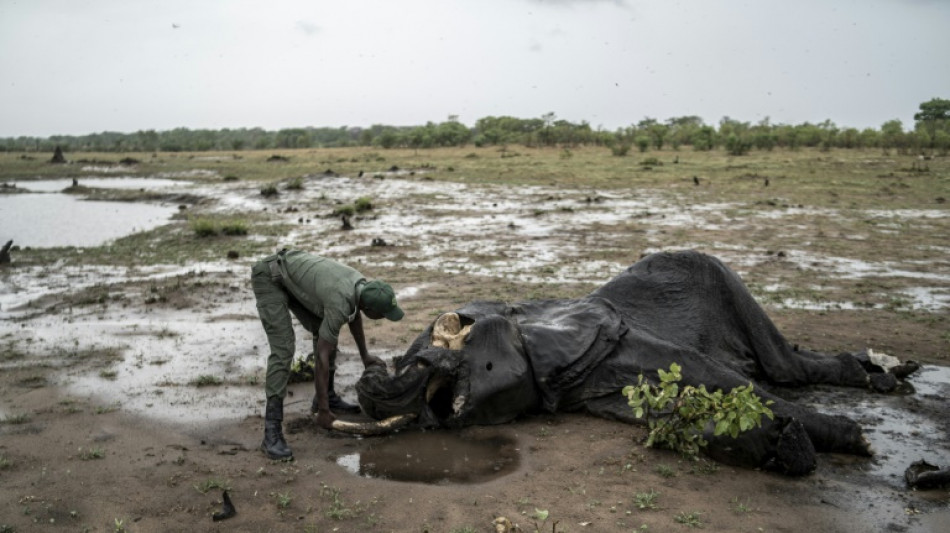
There is little that Simba Marozva and other rangers at the Hwange National Park can do except cut the tusks off the rotting corpses before poachers find them.
With the black clouds in recent days promising life-saving rains, the rangers may not find all of the victims of the drought on their daily hunts.
The 14,600-square-kilometre (5,600-square-mile) park -- bigger than many countries -- is home to more than 45,000 savanna elephants, so many that they are considered a threat to the environment.
The scene is still heart-breaking.
Blackened corpses scar a landscape where the rains have been more than six weeks late and scorching temperatures have regularly hit 40 degrees Celsius (104 Fahrenheit).
Tinashe Farawo, spokesperson for the Zimbabwe national parks authority, Zimparks, said "the old, the young and the sick" have been worst hit.
Some have fallen in dried-up waterholes, some spent their final hours in the shade of a tree.
Many are infant elephants -- but all that is left is the shrivelled skin over the rotting carcass.
- Grim tusk collection -
The intact tusk is a sign that it was a natural death. But there is a heavy stench around the elephants, that have attracted growing attention in recent years.
On average, an elephant drinks more than 200 litres (50 gallons) of water and eats some 140 kilos (300 pounds) of food a day.
More than 200 elephants died in a 2019 drought but the rangers say it could be worse this time once the end of the summer arrives.
Hwange is part of the Kavango- Zambezi Transfrontier Conservation Area covering parks in Angola, Botswana, Namibia, Zambia and Zimbabwe. All have borders on the Okavango and Zambezi river basins.
An aerial survey started in 2022 estimated the region's elephant population at 227,900 animals.
While tens of thousands of elephants have been slaughtered across Africa by poachers and hunters since the 1970s, the Kavango-Zambezi conservation area is considered a success story with numbers mainly growing.
That has increased pressure on Hwange's resources while climate change has emerged as a new risk.
The estimated 100,000 elephants in Zimbabwe is twice the capacity of its parks, conservationists say.
Farawo from Zimparks said 112 elephant deaths had been confirmed since September.
- Over-population threat -
He said the numbers were not surprising given the huge size of the elephant population in Hwange.
"We have high temperatures and we have no water. They are bound to be stressed and die."
Climate change has increased the number of droughts, he added.
"It's not only elephants which are affected, there are also other animals. Elephants can be easily noticed because of their size."
Farawo said the parks authority was also concerned that the elephants had become "overpopulated" and "are destroying the habitat."
Hwange, covered in dry grass, leafless trees and some desert-like open areas, has 104 solar-powered boreholes across the park to reach further into the water table that falls lower each year.
But it has not been enough, and the drought which has hit several southern African countries, has been worsened this year by the El Nino phenomenon.
The hunt for water has taken elephants dangerously close to human habitations on the fringes of Hwange.
They have drunk in desperation from swimming pools in private homes and risked drinking at water holes contaminated by dead animals.
Dried-up water holes are forcing elephants and other wildlife to walk long distances for food and water.
Some have crossed into Botswana and other neighbouring countries where many deaths have also been reported.
Y.Watanabe--JT