The Japan Times - France to probe microplastic pellet pollution on Atlantic beaches

EUR -
AED 4.276798
AFN 76.973093
ALL 96.541337
AMD 443.660189
ANG 2.0846
AOA 1067.888653
ARS 1669.958677
AUD 1.752514
AWG 2.096182
AZN 1.984351
BAM 1.955625
BBD 2.34549
BDT 142.477215
BGN 1.956439
BHD 0.438161
BIF 3440.791247
BMD 1.164546
BND 1.508565
BOB 8.047278
BRL 6.334667
BSD 1.164496
BTN 104.702605
BWP 15.471612
BYN 3.348
BYR 22825.091832
BZD 2.34209
CAD 1.610159
CDF 2599.265981
CHF 0.936209
CLF 0.027366
CLP 1073.571668
CNY 8.233458
CNH 8.232219
COP 4424.302993
CRC 568.848955
CUC 1.164546
CUP 30.860456
CVE 110.255106
CZK 24.203336
DJF 207.371392
DKK 7.470448
DOP 74.533312
DZD 151.068444
EGP 55.295038
ERN 17.468183
ETB 180.629892
FJD 2.632397
FKP 0.873977
GBP 0.872678
GEL 3.138497
GGP 0.873977
GHS 13.246811
GIP 0.873977
GMD 85.012236
GNF 10119.091982
GTQ 8.9202
GYD 243.638138
HKD 9.065875
HNL 30.671248
HRK 7.535429
HTG 152.446321
HUF 381.994667
IDR 19435.740377
ILS 3.768132
IMP 0.873977
INR 104.760771
IQD 1525.563106
IRR 49041.926882
ISK 149.038983
JEP 0.873977
JMD 186.393274
JOD 0.825709
JPY 180.924237
KES 150.636483
KGS 101.839952
KHR 4662.581612
KMF 491.43861
KPW 1048.137083
KRW 1716.311573
KWD 0.357481
KYD 0.970513
KZT 588.927154
LAK 25252.733992
LBP 104283.942272
LKR 359.197768
LRD 204.961608
LSL 19.736529
LTL 3.438601
LVL 0.704422
LYD 6.330432
MAD 10.755735
MDL 19.814222
MGA 5194.533878
MKD 61.634469
MMK 2445.172268
MNT 4132.506664
MOP 9.338362
MRU 46.438833
MUR 53.651052
MVR 17.938355
MWK 2019.3188
MXN 21.165153
MYR 4.787492
MZN 74.426542
NAD 19.736529
NGN 1688.68458
NIO 42.856154
NOK 11.767853
NPR 167.523968
NZD 2.015483
OMR 0.44694
PAB 1.164595
PEN 3.914449
PGK 4.941557
PHP 68.66747
PKR 326.476804
PLN 4.229804
PYG 8009.281302
QAR 4.244719
RON 5.092096
RSD 117.389466
RUB 89.441974
RWF 1694.347961
SAR 4.370508
SBD 9.584899
SCR 15.747587
SDG 700.4784
SEK 10.946786
SGD 1.508673
SHP 0.873711
SLE 27.603998
SLL 24419.93473
SOS 664.340387
SRD 44.985272
STD 24103.740676
STN 24.497802
SVC 10.190086
SYP 12876.900539
SZL 19.72123
THB 37.119932
TJS 10.684641
TMT 4.087555
TND 3.416093
TOP 2.803946
TRY 49.523506
TTD 7.894292
TWD 36.437508
TZS 2841.64501
UAH 48.888813
UGX 4119.630333
USD 1.164546
UYU 45.545913
UZS 13931.74986
VES 296.437311
VND 30697.419423
VUV 142.156724
WST 3.247609
XAF 655.898144
XAG 0.019964
XAU 0.000277
XCD 3.147243
XCG 2.098812
XDR 0.815727
XOF 655.898144
XPF 119.331742
YER 277.802752
ZAR 19.711451
ZMK 10482.311144
ZMW 26.923584
ZWL 374.983176
  • RBGPF

    0.0000

    78.35

    0%

  • BCC

    -1.2100

    73.05

    -1.66%

  • SCS

    -0.0900

    16.14

    -0.56%

  • BCE

    0.3300

    23.55

    +1.4%

  • NGG

    -0.5000

    75.41

    -0.66%

  • BTI

    -1.0300

    57.01

    -1.81%

  • BP

    -1.4000

    35.83

    -3.91%

  • GSK

    -0.1600

    48.41

    -0.33%

  • RIO

    -0.6700

    73.06

    -0.92%

  • RELX

    -0.2200

    40.32

    -0.55%

  • JRI

    0.0400

    13.79

    +0.29%

  • CMSC

    -0.0500

    23.43

    -0.21%

  • CMSD

    -0.0700

    23.25

    -0.3%

  • AZN

    0.1500

    90.18

    +0.17%

  • VOD

    -0.1630

    12.47

    -1.31%

  • RYCEF

    -0.0500

    14.62

    -0.34%

France to probe microplastic pellet pollution on Atlantic beaches
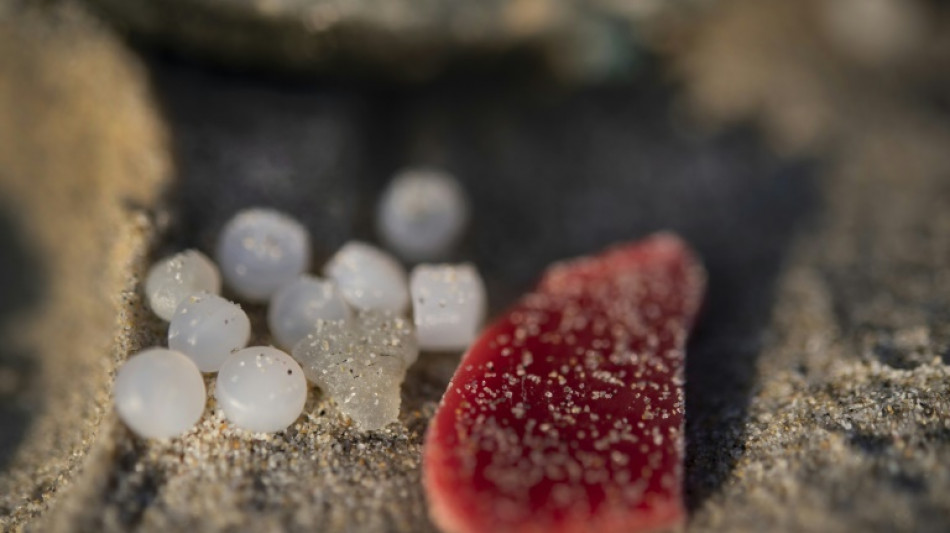
France to probe microplastic pellet pollution on Atlantic beaches / Photo: FRED TANNEAU - AFP/File

France to probe microplastic pellet pollution on Atlantic beaches

French prosecutors said on Friday they would investigate the appearance of vast quantities of tiny toxic plastic pellets along the Atlantic coast that endanger marine life and the human food chain.

Text size:

The criminal probe will follow several legal complaints about the pellet invasion lodged by local authorities and the central government in Paris, Camille Miansoni, chief prosecutor in the western city of Brest, told AFP.

The microscopic pellets, called nurdles, are the building blocks for most of the world's plastic production, from car bumpers to salad bowls.

They are usually packed in bags of 25 kilogrammes (55 pounds) for transport, each containing around a million nurdles, which are sometimes called "Mermaids' Tears".

But they can easily spill into the ocean when a cargo ship sinks or loses a container. Environmentalists also suspect that factories sometimes dump them into the sea.

Fish and birds often mistake them for food and, once ingested, the tiny granules can make their way into the diet of humans.

Experts told AFP the nurdles found along the coast of Brittany may have come from a plastic industry container that fell into the sea.

"We can't rule out a single source for the industrial pellets," said Nicolas Tamic at the CEDRE pollution research body in Brest.

On Tuesday, the French government filed a legal complaint against persons unknown and called for a international search for any containers that may have been lost at sea.

Local authorities have followed suit, and the environmental crime branch of the Brest prosecutor's office will lead the investigation.

Last weekend, around 100 people took part in a clean-up campaign on a microplastic-infested beach in Pornic in Brittany to collect pellets and draw attention to the problem.

"We think they've come from a container that may have been out there for a while and opened up because of recent storms," said Lionel Cheylus, spokesman for the NGO Surfrider Foundation.

"Our action is symbolic. It's not like we're going to pick up an entire container load," said Annick, a pensioner, as she filled her yoghurt pot with nurdles.

French politicians have taken note. Joel Guerriau, a senator from the region, has called for a "clear international designation" of the pellets as being harmful.

Ecological Transition Minister Christophe Bechu labelled the nurdles "an environmental nightmare", telling AFP the government would support associations fighting pellet pollution.

Ingesting plastic is harmful for human health but nurdles, in addition, attract chemical contaminants found in the sea to their surface, making them even more toxic.

Measuring less than five millimetres (0.2 inches) in size, they are not always readily visible except when they wash up in unusually huge quantities, as has been the case since late November along the northwestern French coast.

burs/jh/sjw

Y.Ishikawa--JT