The Japan Times - Lost in space: Sperm struggles to navigate during weightless sex

EUR -
AED 4.231483
AFN 75.467656
ALL 93.271336
AMD 422.196577
AOA 1057.72755
ARS 1728.022837
AUD 1.6396
AWG 2.073975
AZN 1.938486
BAM 1.956247
BBD 2.325032
BDT 142.892687
BHD 0.4353
BIF 3450.039479
BMD 1.152209
BND 1.480174
BOB 13.962133
BRL 5.888365
BSD 1.154364
BTN 109.858653
BWP 15.612571
BYN 3.417782
BYR 22583.287906
BZD 2.321631
CAD 1.616319
CDF 2603.991686
CHF 0.936072
CLF 0.026726
CLP 1055.284416
CNY 7.776313
CNH 7.773295
COP 3641.393866
CRC 525.120121
CUC 1.152209
CUP 30.533527
CVE 110.287357
CZK 24.243908
DJF 205.567023
DKK 7.475736
DOP 67.265387
DZD 153.102878
EGP 57.247371
ERN 17.283128
ETB 186.320421
FJD 2.552604
FKP 0.856369
GBP 0.856512
GEL 3.013019
GGP 0.856369
GHS 13.568751
GIP 0.856369
GMD 85.263702
GNF 10137.703095
GTQ 8.808015
GYD 241.504196
HKD 9.039024
HNL 30.940078
HRK 7.533599
HTG 150.927975
HUF 365.333043
IDR 20624.533343
ILS 3.472762
IMP 0.856369
INR 109.715086
IQD 1512.239361
IRR 1584113.947438
ISK 142.468329
JEP 0.856369
JMD 182.981857
JOD 0.816908
JPY 182.455111
KES 149.049537
KGS 100.760472
KHR 4683.238048
KMF 491.993323
KRW 1637.219545
KWD 0.356067
KYD 0.96202
KZT 540.94374
LAK 26082.966454
LBP 103373.346556
LKR 387.758699
LRD 208.366759
LSL 18.828807
LTL 3.402172
LVL 0.696959
LYD 7.358683
MAD 10.770417
MDL 20.085595
MGA 4963.135313
MKD 61.539077
MMK 2419.122624
MNT 4143.388184
MOP 9.327593
MRU 46.278586
MUR 54.234774
MVR 17.813278
MWK 2001.657877
MXN 19.815707
MYR 4.711847
MZN 73.643798
NAD 18.828807
NGN 1572.383836
NIO 42.477873
NOK 10.994271
NPR 175.774208
NZD 1.965005
OMR 0.443012
PAB 1.154359
PEN 3.901993
PGK 5.100167
PHP 70.186213
PKR 320.48031
PLN 4.301477
PYG 6866.570722
QAR 4.219619
RON 5.253604
RSD 117.32364
RUB 95.632926
RWF 1695.78791
SAR 4.324641
SBD 9.29642
SCR 16.957784
SDG 691.902092
SEK 10.960211
SGD 1.477431
SLE 28.354688
SOS 659.750917
SRD 43.630106
STD 23848.391029
STN 24.505606
SVC 10.10031
SZL 18.813304
THB 38.130617
TJS 10.64899
TMT 4.038491
TND 3.385657
TRY 54.966336
TTD 7.815788
TWD 37.158306
TZS 3048.165436
UAH 51.689524
UGX 4299.964953
USD 1.152209
UYU 46.490433
UZS 13757.087222
VES 869.008663
VND 30205.723678
VUV 137.124788
WST 3.143704
XAF 656.107084
XAG 0.018292
XAU 0.000269
XCD 3.113901
XCG 2.080476
XDR 0.815987
XOF 656.107084
XPF 119.331742
YER 272.900006
ZAR 18.834341
ZMK 10371.260724
ZMW 21.962024
ZWL 371.010688
  • RBGPF

    0.0000

    69.74

    0%

  • CMSC

    -0.0100

    21.72

    -0.05%

  • CMSD

    -0.0600

    21.98

    -0.27%

  • BP

    1.0200

    42.23

    +2.42%

  • RIO

    -1.8600

    99.65

    -1.87%

  • BTI

    -0.5400

    58.73

    -0.92%

  • BCE

    0.7100

    22.77

    +3.12%

  • GSK

    0.7100

    52.17

    +1.36%

  • NGG

    0.1500

    80.41

    +0.19%

  • RELX

    -0.8600

    35.75

    -2.41%

  • RYCEF

    -0.3800

    20.62

    -1.84%

  • BCC

    -0.5400

    84.26

    -0.64%

  • JRI

    -0.0100

    12.66

    -0.08%

  • AZN

    -0.4300

    161.07

    -0.27%

  • VOD

    0.6900

    16

    +4.31%

Lost in space: Sperm struggles to navigate during weightless sex
Lost in space: Sperm struggles to navigate during weightless sex / Photo: © ESA/AFP/File

Lost in space: Sperm struggles to navigate during weightless sex

Scientists have used a tiny plastic "obstacle course" to test how much sperm would struggle to navigate during sex in the weightlessness of space.

Text size:

Some particularly resilient sperm still made it through the course, suggesting that conceiving children in space will still be possible, according to research published on Thursday.

However a bigger problem could be that the development of embryos after fertilisation was harmed by a lack of gravity, the Australian team of researchers found.

With humanity setting its eyes on colonising space -- next week NASA hopes to launch its first crewed mission around the Moon in half a century -- scientists have been studying how difficult it will be to procreate on spaceships or other worlds.

One of the biggest challenges is that sperm will no longer be pulled downwards by Earth's gravity.

"Sperm need to actively find their way to an egg, and this study is the first to put that ability to the test under space-like conditions," Nicole McPherson, a researcher at Adelaide University in Australia, told AFP.

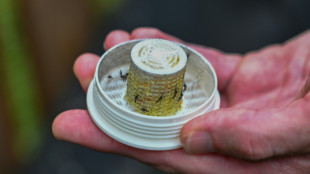
The scientists used a plastic chamber that resembles the female reproductive tract to act as a "miniature obstacle course", the senior author of the new study said.

"Think of it as a tiny race track... sperm are introduced at one end and have to swim their way through to the other."

- Filtering out weak runners -

Both human and mice sperm were sent down the course, which was inside a device that uses constant rotation to simulate the microgravity of space.

The sperm was about 50 percent worse at navigating through the course compared to how they perform under Earth's gravity.

This worked out to be roughly a 30-percent drop in successful fertilisation, according to the study in the journal Communications Biology.

However the sperm that did make it through seemed to produce better-quality embryos, which could turn out to be "beneficial", McPherson said.

It appeared that the stress of microgravity acted as a "filter" that effectively cleared the field, "leaving only the most capable sperm in the running," she explained.

A bigger problem came in the first 24 hours after sperm had fertilised the eggs.

"The results reversed sharply, with fewer embryos formed, and those that did were of poorer quality," McPherson said.

This suggests that microgravity "may not be the deal-breaker we feared, but protecting the embryo from weightlessness in those critical first hours will likely be essential for reproduction in space," she added.

Some including billionaire SpaceX founder Elon Musk have ambitious plans to make humans an interplanetary species by establishing settlements on the Moon then Mars.

There has also been speculation that the first baby conceived outside the bounds of Earth could be the result of a couple having sex on a flight launched by the booming space tourism industry.

McPherson emphasised that much more research is needed to understand how reproduction works in space, adding that fertilisation is "only one small piece of a very long and complex puzzle".

"We are still a long way from seeing the first space baby."

S.Ogawa--JT