The Japan Times - Gas shortages push India's poor back to wood and coal

EUR -
AED 4.255899
AFN 72.432944
ALL 95.975736
AMD 435.816867
ANG 2.074448
AOA 1062.670738
ARS 1619.00736
AUD 1.664418
AWG 2.08594
AZN 1.965411
BAM 1.956316
BBD 2.328224
BDT 141.837422
BGN 1.980843
BHD 0.437657
BIF 3428.619402
BMD 1.158856
BND 1.478997
BOB 7.988142
BRL 6.101215
BSD 1.15601
BTN 108.040972
BWP 15.796236
BYN 3.442123
BYR 22713.57276
BZD 2.324923
CAD 1.593809
CDF 2634.079447
CHF 0.912802
CLF 0.026896
CLP 1062.021594
CNY 7.973508
CNH 7.993474
COP 4302.147686
CRC 539.144574
CUC 1.158856
CUP 30.709677
CVE 110.294576
CZK 24.480538
DJF 205.855201
DKK 7.471357
DOP 68.598395
DZD 153.754179
EGP 61.083375
ERN 17.382836
ETB 180.492
FJD 2.575846
FKP 0.865723
GBP 0.865196
GEL 3.146334
GGP 0.865723
GHS 12.646391
GIP 0.865723
GMD 84.596598
GNF 10132.71714
GTQ 8.854374
GYD 241.844852
HKD 9.068017
HNL 30.597205
HRK 7.534884
HTG 151.410602
HUF 390.142677
IDR 19561.832769
ILS 3.618985
IMP 0.865723
INR 108.642205
IQD 1514.39956
IRR 1523953.258404
ISK 143.790433
JEP 0.865723
JMD 182.078825
JOD 0.821607
JPY 183.961977
KES 150.191349
KGS 101.3402
KHR 4632.242159
KMF 492.513609
KPW 1042.936742
KRW 1735.867428
KWD 0.35505
KYD 0.96335
KZT 557.168924
LAK 24847.663027
LBP 103523.360316
LKR 363.007342
LRD 211.546727
LSL 19.601456
LTL 3.4218
LVL 0.70098
LYD 7.399984
MAD 10.804997
MDL 20.218422
MGA 4811.290172
MKD 61.619088
MMK 2433.167084
MNT 4135.923012
MOP 9.326861
MRU 46.146374
MUR 53.891919
MVR 17.904411
MWK 2004.13742
MXN 20.722312
MYR 4.585017
MZN 74.062945
NAD 19.59968
NGN 1592.476153
NIO 42.541408
NOK 11.233374
NPR 172.865355
NZD 1.98862
OMR 0.445586
PAB 1.15601
PEN 4.021461
PGK 4.991338
PHP 69.408484
PKR 322.693232
PLN 4.27397
PYG 7554.02565
QAR 4.227234
RON 5.094316
RSD 117.444213
RUB 93.641229
RWF 1690.053196
SAR 4.350082
SBD 9.330779
SCR 16.087553
SDG 696.472444
SEK 10.811603
SGD 1.483057
SHP 0.869442
SLE 28.449668
SLL 24300.638259
SOS 660.677164
SRD 43.267618
STD 23985.974368
STN 24.506572
SVC 10.114625
SYP 128.606968
SZL 19.594254
THB 37.747988
TJS 11.045462
TMT 4.055995
TND 3.406714
TOP 2.790246
TRY 51.392106
TTD 7.847393
TWD 37.073181
TZS 2978.258958
UAH 50.757111
UGX 4364.170274
USD 1.158856
UYU 47.102631
UZS 14093.718494
VES 529.022698
VND 30543.961084
VUV 138.434854
WST 3.185549
XAF 656.132945
XAG 0.016646
XAU 0.000263
XCD 3.131866
XCG 2.083341
XDR 0.816019
XOF 656.132945
XPF 119.331742
YER 276.560932
ZAR 19.76266
ZMK 10431.128864
ZMW 22.397006
ZWL 373.15108
  • RBGPF

    -13.5000

    69

    -19.57%

  • CMSC

    0.2300

    22.88

    +1.01%

  • RYCEF

    0.6300

    15.97

    +3.94%

  • RIO

    2.6900

    85.84

    +3.13%

  • GSK

    0.1500

    51.99

    +0.29%

  • BCE

    -0.0300

    25.76

    -0.12%

  • NGG

    0.0700

    82.06

    +0.09%

  • AZN

    0.4700

    184.07

    +0.26%

  • BCC

    3.5800

    71.88

    +4.98%

  • VOD

    0.1500

    14.48

    +1.04%

  • CMSD

    0.0816

    22.74

    +0.36%

  • RELX

    0.4500

    33.81

    +1.33%

  • BTI

    0.5500

    57.92

    +0.95%

  • JRI

    -0.0900

    11.68

    -0.77%

  • BP

    -1.2100

    43.57

    -2.78%

Gas shortages push India's poor back to wood and coal
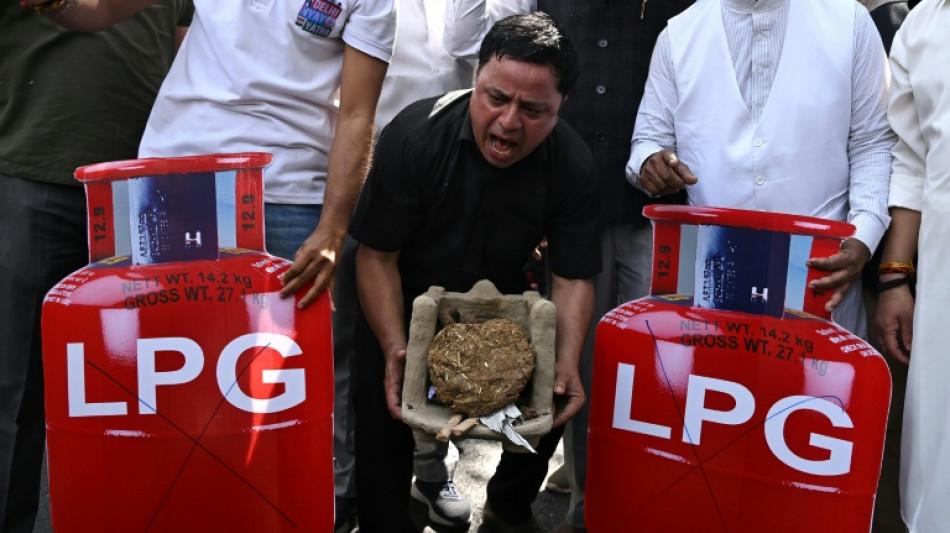
Gas shortages push India's poor back to wood and coal / Photo: Arun SANKAR - AFP

Gas shortages push India's poor back to wood and coal

Soaring black-market prices of cooking gas in India's capital are pushing poorer families back to wood and coal, raising health risks and worsening air quality in the highly polluted megacity.

Text size:

India is the world's second-largest buyer of liquefied petroleum gas (LPG), which is used for cooking and predominantly sourced from the Middle East -- and supplies have been strangled by the ongoing war.

India's Prime Minister Narendra Modi has urged states to curb black marketing and avoid panic, stressing that India's energy supplies remain stable.

In the low-income Madanpur Khadar neighbourhood, 36-year-old domestic helper Sheela Kumari says she has been forced to abandon LPG cooking gas cylinders for cooking after prices more than doubled.

"We used to buy cylinders for 1,800–2,000 rupees ($19-$21), but now on the black market it has gone up to 5,000 ($53)," she told AFP, nearly as much as she entire monthly salary of 6,000 rupees.

"It is unimaginable for us," she said. "The next best option for us was going back to wood and coal."

Kumari said a 14 kilogramme cylinder lasts only 15–20 days for her family of six, even when they stretch its use out.

But she says a 10 kilogramme bundle of firewood, lasting several days, costs 30 rupees ($0.30).

"There are health repercussions, and my children cough," she said. "But tell me a way out?"

- 'Too expensive' -

Her neighbour, 45-year-old Munni Bai, who has asthma, had switched to using an electric cooker as well as biogas from cow dung, to help her breathing.

But now she said she was being forced to resume use of alternative fuels.

"Gas is too expensive," she said. "We cannot depend on it -- we moved from coal and wood, due to my health issue, but now it is difficult to sustain."

But activists say the problem is more about access.

Many migrant workers lack documentation needed for subsidised LPG and rely on informal markets, where hoarding has pushed up prices.

"There is no major shortage yet, but hoarding has increased," said Deepak, who uses only one name, from the Centre for Advocacy and Research (CFAR).

"Many migrants depend on black-market cylinders, and prices have gone up two to three times".

New Delhi, and its wider sprawling metropolitan region of 30 million residents, is regularly ranked among the world's most polluted capitals, due to a deadly mix of emissions from power plants, heavy traffic, as well as the burning of rubbish and crops.

For the past decades, India's government has pushed its "Ujjwala" or "light" clean-energy scheme, to provide over 100 million LPG connections to poor households.

Burning wood, coal and biomass indoors exposes families to high levels of smoke and toxic particles, increasing the risk of respiratory illnesses.

Women and children, who spend more time near cooking areas, are especially vulnerable.

Y.Hara--JT