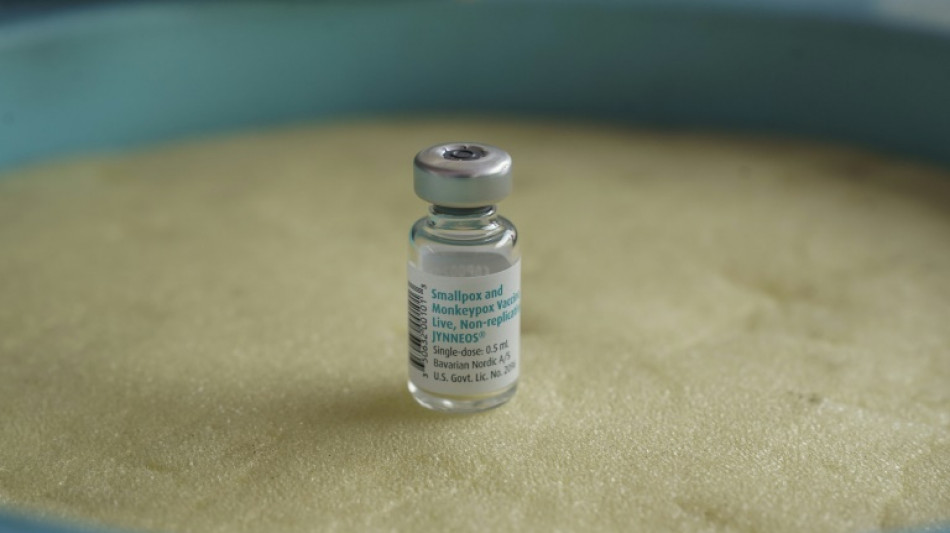
Pandemic agreement: key points / Photo: Aubin Mukoni - AFP

After more than three years of thorny negotiations, World Health Organization member states finalised early Wednesday a major agreement on pandemic prevention, preparedness and response.
Here are the main points in the accord, which will be submitted for final approval at the WHO's annual assembly next month.
- Objective -
The objective of the WHO Pandemic Agreement is "strengthening pandemic prevention, preparedness and response".
Following the glaring inequity and deficiencies exposed in the world's handling of the Covid-19 pandemic, the agreement is guided by the principles of equity, solidarity and transparency.
Respect for the sovereign rights of states -- an issue widely questioned by conspiracy theories that have surrounded the negotiations -- is also a key foundation, according to the text.
- Pathogen access, benefit sharing -
The heart of the agreement is the proposed Pathogen Access and Benefit-Sharing System (PABS) -- a new platform allowing the swift sharing of pathogen data with pharmaceutical companies, enabling them to start work quickly on pandemic-fighting products.
This was one of the trickiest parts to negotiate.
Developing countries had expressed concerns about handing over pathogens and data if they risked being cut off from accessing the resultant vaccines, tests and treatments, as happened at the start of the Covid-19 pandemic.
Under PABS, countries will commit to sharing data rapidly on emerging problematic pathogens, while vaccines and other health products derived from accessing that information would be shared on a more equitable footing.
The text calls for participating manufacturers to make available to the WHO at speed "20 percent of their real-time production" of pandemic-related health products, including "a minimum threshold of 10 percent" in the form of donations, and the rest "reserved at affordable prices" for the UN health agency.
Manufacturers, even those based in non-WHO countries, can choose freely to participate in the voluntary programme, for which the practical modalities still remain to be negotiated.
- Technology transfer -
Another main sticking point has been the modalities around the transfer of technology and know-how needed to produce pandemic-related health products, in particular to developing countries.
Some wealthier countries, notably ones where such products are currently produced, rejected the idea that such transfers should be mandatory.
The agreed-upon text instead calls for transfers to be undertaken on "mutually agreed" terms.
And it calls for the use of measures and incentives including licensing agreements and favourable conditions linked to things like financing and regulations to promote technology transfer.
- Prevention and surveillance -
Under this section, countries will take progressive steps to strengthen their pandemic prevention and surveillance capacities.
Subject to resources, countries are called on to develop, reinforce and implement comprehensive national pandemic prevention plans.
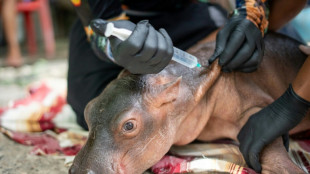
This would include things like routine immunisation, managing biological risks in laboratories, preventing antimicrobial resistance, and stopping the transmission of diseases from animals to humans.
- Sustainable local production -
The text calls for countries to take measures to ensure "more equitable geographical distribution and rapid scale-up of the global production of pandemic-related health products" like vaccines.
It also calls for more "sustainable, timely and equitable access to such products", and for countries to "reduce the potential gap between supply and demand during pandemic emergencies".
- Supply chain and logistics -
In an attempt to smooth out the flaws exposed by Covid-19, a Global Supply Chain and Logistics Network will be set up for equitable, timely and affordable access to pandemic-related health products.
During pandemic emergencies, countries should prioritise sharing pandemic-related health products through the network to ensure equitable distribution based on public health risk and need.
The structure and operational modalities of the network, which is to be coordinated by the WHO, will be defined at its first meeting, according to the text.
S.Yamamoto--JT