'It wasn't working': Canada province ends drug decriminalization / Photo: Deborah JONES - AFP

Over 35 years as a drug user, Vancouver resident Garth Mullins said he's had "hundreds and hundreds" of interactions with police, and long believed drug decriminalization was smart policy.
"I was first arrested for drug possession when I was 19, and it changes your life," said Mullins, who is now in his 50s and was an early backer of Canadian province British Columbia's decriminalization program that ended on Saturday.
"That time served inside can add up for a lot of people. They do a lifetime jolt in a series of three‑month bits," he told AFP.
BC's three-year experiment with drug decriminalization, which launched in 2023 and shielded people from arrest for possession of up to 2.5 grams of hard drugs, was groundbreaking for Canada.
Many praised it as a bold effort to ensure the intensifying addiction crisis devastating communities across the country was treated as a healthcare challenge, not a criminal justice issue.
But on January 14, BC's Health Minister Josie Osborne announced the province would not be extending the program.
"The intention was clear: to make it easier for people struggling with addiction to reach out for help without fear of being criminalized," Osborne said.
The program "has not delivered the results we hoped for," she told reporters.
For Mullins, the province's desired results were never realistic.
The former heroin user, who currently takes methadone, is an activist and broadcaster who co‑founded the Vancouver Area Network of Drug Users (VANDU), which advised BC's government on decriminalization.
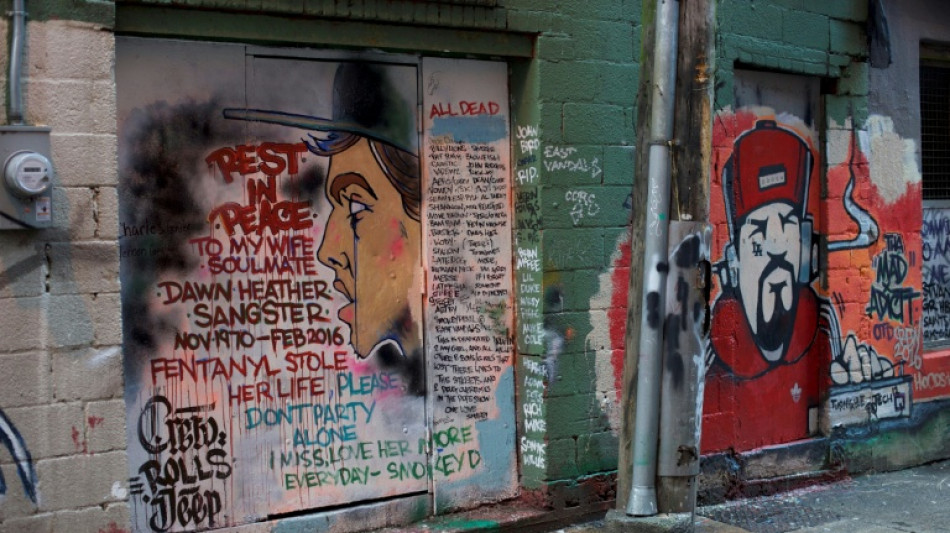
At VANDU's office in Vancouver's Downtown Eastside neighborhood, home to many drug users, the walls are full of pictures honoring those who have died from overdose.
"The idea behind decriminalization was one simple thing: to stop all of us from going to jail again and again and again," he said.
Breaking the cycle of arrests is crucial because criminal records make it more difficult to find work and housing, often perpetuating addiction, experts say.
But thinking decriminalization could help steer waves of users into rehab was misguided, and misinforming the public about the possible outcomes of the policy risked a backlash, Mullins said.
"For everybody out there, in society, sending fewer junkies to jail might not sound like a good thing to do."
- Plan not 'sufficient' -
After the province announced the program's expiration, Canadian media was filled with critics who said it had been mishandled.
Vancouver police chief Steven Rai said his force had been willing to support the plan, but "it quickly became evident that it just wasn't working."
Decriminalization "was not matched with sufficient investments in prevention, drug education, access to treatment, or support for appropriate enforcement," he added.
Cheryl Forchuk, a mental health professor at Western University who has worked on addiction for five decades, said BC "never really fully implemented" decriminalization because the essential complementary programs -- especially affordable housing supply -- were never ramped up.
"It was like they wanted to do something, but then really didn't put the effort into it and then said, gee, it didn't work," she told AFP.
- Public safety -
BC's experience mirrors that in the US state of Oregon, which rolled back its pioneering drug decriminalization program in 2024 after a four-year trial.
Like in Oregon, BC's program faced fierce criticism, with many saying public safety was threatened by a tolerance of open use.
A flashpoint moment in the western Canadian province was a 2024 incident where a person was filmed smoking what appeared to be a narcotic inside a Tim Hortons, the popular coffee shop chain frequented by families across the country.
Local politicians in Maple Ridge, BC, attributed the incident to a permissiveness about drugs ushered in by decriminalization.
But for Mullins, the incident spoke to broader misconceptions about the intent of the policy.
Decriminalization did not allow for drug use inside a restaurant, and the person could have been arrested.
Drug user advocates, he added, don't want policy that makes the broader public feel threatened.
"We need something where everybody feels safe, right? If people who are walking with their kids don't feel safe, that's a problem for me," he said.
But, he added, security also matters to users for whom "the world feels very scary and unsafe."
S.Yamada--JT