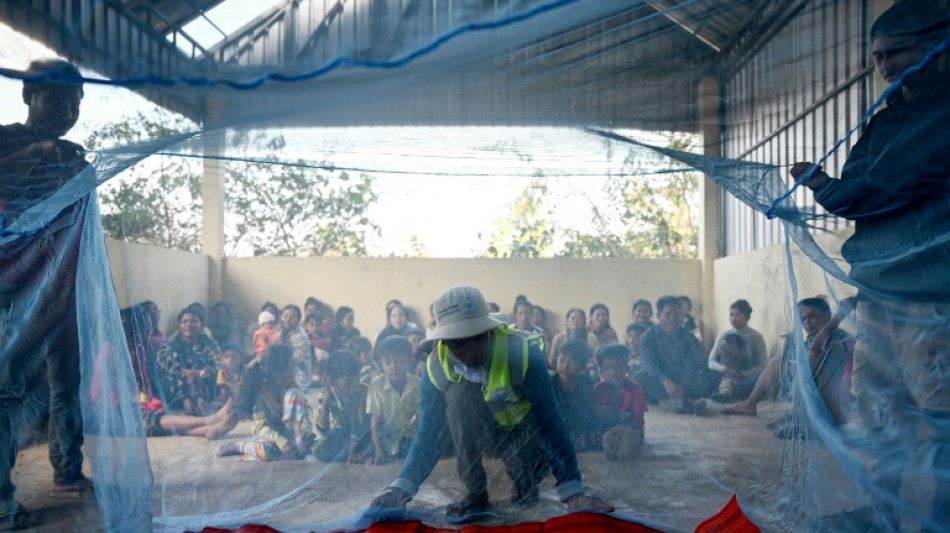
Cambodia nears Khmer Rouge survivor's dream of eradicating malaria / Photo: TANG CHHIN Sothy - AFP

Cambodian scientist Yeang Chheang has spent six decades fighting malaria -- even in the Khmer Rouge labour camp where his wife and baby died -- and stands tantalisingly close to fulfilling his life's work.
The kingdom is stepping up a "last mile" push to wipe out the mosquito-borne disease, focusing on hard-to-reach communities in remote, forested or mountainous areas.
From 170,000 cases and 865 deaths from malaria in 1997, only 355 cases were recorded last year -- and not a single fatality has been reported since 2018.
The hope is for zero cases this year -- a remarkable turnaround for a country that was formerly an epicentre of multi-drug resistant strains. And the landmark would be unthinkable without the work of Yeang Chheang, who rebuilt the malaria control programme after the fall of the Khmer Rouge.
The communist regime murdered, starved or worked to death around two million people during its 1975-79 rule -- including Yeang Chheang's three brothers, sister, mother, wife and son.
Aged 17, he began training as Cambodia's first medical entomologist with a French expert in 1954.
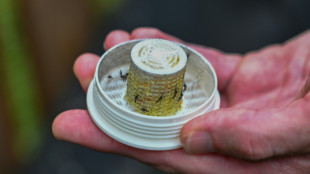
He helped with the first malaria elimination pilot project, setting up a lab under a leaf-roofed office, catching mosquitoes and larvae for experiments when he was deployed to a malaria hotspot in the northeast in the 1960s.
"When we started the work, it was so difficult because we lacked people with good knowledge," the 87-year-old told AFP from his home in Phnom Penh.
- Starved to death -
When the Khmer Rouge took power, Yeang Chheang and his family were sent from Phnom Penh to a labour camp where his wife and baby son starved to death.
Despite fearing for his life, he continued treating malaria patients, secretly handing out pills he had picked up from piles of medicine dumped in the streets when he left Phnom Penh.
That could have seen him killed for violating Khmer Rouge rules.
But the cadres spared him after a top commander fell sick with malaria.
"Because of my medicines, I could survive and did not have to work hard carrying soil or digging canals," Yeang Chheang said.
"The tablets saved our lives," he added, referring to himself and his three other sons.
After the Khmer Rouge was ousted in 1979, he joined with a handful of others to restore the national malaria control programme.
There were multiple outbreaks in subsequent years, and he led his team on foot through villages riddled with landmines in the former Khmer Rouge stronghold of Pailin, a hotpsot for drug-resistant malaria.
- 'Last inch' -
Malaria, caused by parasites transmitted via mosquitoes, was for decades a major cause of illness and death in Cambodia.
The government launched a national action plan in 2011, aiming to eliminate all cases in the country by 2025.
Within three years the kingdom stopped drug-resistant malaria, and in 2020 launched the so-called "last mile" efforts.
Nearly two-thirds of last year's reported cases were in the remote northeast, where local volunteers have signed up to help.
Nhoun Niyok, 37, joined the campaign a decade ago in Pu Kesh village in Mondulkiri province.
He carries out rapid tests, administers medicines and advises people on using insecticide-treated mosquito nets to protect themselves.
"I am so happy I could help my community and I think villagers won't be sick with malaria again," he said.
He last recorded a malaria case in his village in September.
"Perhaps, the dream will come true," he said. "It looks like malaria will be gone soon."
If there are no malaria cases this year, Cambodia would need to sustain zero indigenous infections for another three consecutive years from 2026 to be certified as malaria-free by the World Health Organization (WHO).
Success would make it only the second country in continental Asia to achieve the feat, after China.
"This year, we are entering the last inch, not last mile anymore," Huy Rekol, director of the National Center for Parasitology, Entomology and Malaria Control, told AFP.
Marianna Trias, the WHO representative to Cambodia, added that certification would set "a powerful example for other countries, inspiring them to pursue the same goal".
Experts warn climate change and cross-border transmission involving migrants and mobile populations could yet derail Cambodia's efforts.
And some of its initiatives were funded by the US Agency for International Development (USAID), with no clarity yet on whether they will be impacted by the Trump administration's aid freeze.
There were an estimated 263 million malaria cases worldwide in 2023 -- up 11 million on the previous year -- and 597,000 deaths, according to the WHO.
Despite Cambodia's success, Yeang Chheang considers global elimination of the disease "absolutely impossible" due to human migration.
"It will be around," he said. "I believe it won't be totally eliminated."
M.Matsumoto--JT