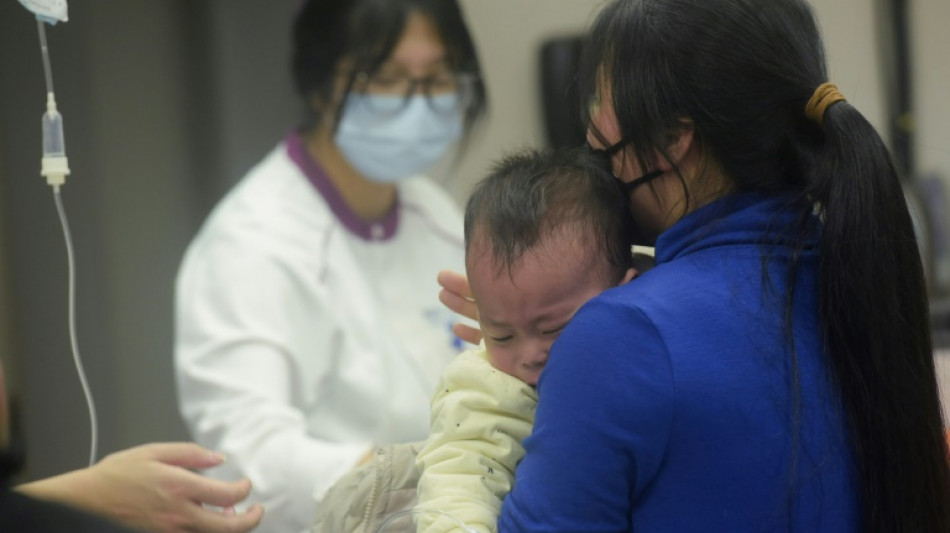
Virus disinformation drives anti-China sentiment, lockdown fears / Photo: STR - AFP

A deluge of disinformation about a flu-like virus called HMPV is stoking anti-China sentiment across Asia and spurring unfounded concerns of renewed lockdowns, despite experts dismissing comparisons with the Covid-19 pandemic five years ago.
AFP's fact-checkers have debunked a slew of social media posts about the usually non-fatal respiratory disease human metapneumovirus after cases rose in China. Many of these posts claimed that people were dying and that a national emergency had been declared.
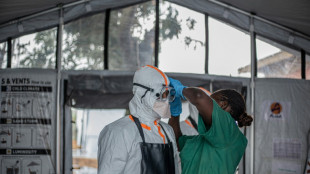
Garnering tens of thousands of views, some posts recycled old footage from China's draconian lockdowns during the Covid-19 pandemic, which originated in the country in late 2019, as well as of crowded hospitals and medics in hazmat suits.
The falsehoods and fearmongering, which researchers warn could jeopardise the public response to a future pandemic, surged even as the World Health Organization said China's HMPV outbreak was "within the expected range" for this season.
Philip Mai, co-director of the Social Media Lab at Toronto Metropolitan University, told AFP that the authors of some of these posts were "trying to scare people".
Mai said there was "an uptick in anti-Chinese rhetoric", with many on online platforms unfairly trying to blame HMPV cases "on an entire community or culture".
One video, shared by hundreds of users, showed a confrontation between Chinese citizens and police in medical suits, claiming that the country had begun to isolate the population to tackle HMPV.
AFP fact-checkers found that the sequence portrayed an unrelated altercation that occurred in 2022 in Shanghai.
- 'Monetising panic' -
Other posts claimed that HMPV and Covid-19 had "cross-mutated" into a more severe disease. But multiple virologists told AFP the viruses are from different families and impossible to merge.
Adding to the wave of disinformation were sensational, "clickbait" headlines in some mainstream media outlets that described HMPV as a "mystery illness" overpowering the Chinese healthcare system.
In reality, it is a known pathogen that has circulated for decades and generally causes only a mild infection of the upper respiratory tract.
"It's an example of monetising panic in an already bewildered public right on the heels of the Covid-19 pandemic," Katrine Wallace, an epidemiologist at the University of Illinois Chicago, told AFP.
"The truth is that the HMPV is not a mystery illness."
- 'Fearmongering' -
Such posts have led to a surge in anti-China commentary across Southeast Asia, with one Facebook user going as far as saying that Chinese people "shouldn't be allowed to enter the Philippines anymore".
One TikTok video shared an Indian TV news report on the virus but with an overlaid message: "China has done it again".
"Because of the psychological trauma inflicted by Covid-19 -- and by draconian lockdown policies -- citizens around the world react anxiously to the possibility of another pandemic emerging from China," Isaac Stone Fish, chief executive of the China-focused business intelligence firm Strategy Risks, told AFP.
"The right response is to distrust what Beijing says about public health, but not assume that means the (Chinese Communist) Party is covering up another pandemic, and certainly not to insult Chinese people," he added.
Much of the disinformation about HMPV in early January came from social media accounts with an Indian focus, before spreading to others with audiences in Africa, Indonesia and Japan, Mai said.
In an apparent bid to ramp up the anti-China sentiment, many of them peddled HMPV falsehoods alongside videos of people eating food that may seem strange or exotic to outsiders.
Others used spooky music and old images to sensationalise routine cautions issued by Chinese health authorities.
Many such posts on X reached millions of viewers without a Community Note, a crowd-sourced tool to debunk false information.
"My concern is that all of the fear-mongering about HMPV now will make it harder for public health officials to raise the alarm about future pandemics," Mai said.
burs-ac/dhw/stu/lb
Y.Hara--JT