The Japan Times - Why India's largest insurer is being listed?

EUR -
AED 4.279883
AFN 76.325698
ALL 92.208576
AMD 424.795971
ANG 2.085508
AOA 1069.680682
ARS 1764.441513
AUD 1.624398
AWG 2.097413
AZN 1.98181
BAM 1.953863
BBD 2.346453
BDT 143.072442
BGN 1.976656
BHD 0.439241
BIF 3484.036742
BMD 1.16523
BND 1.47982
BOB 13.450548
BRL 6.005712
BSD 1.165035
BTN 111.101982
BWP 15.568564
BYN 3.513486
BYR 22838.501721
BZD 2.343017
CAD 1.616733
CDF 2650.897751
CHF 0.938412
CLF 0.027225
CLP 1071.510477
CNY 7.833548
CNH 7.833915
COP 3647.366986
CRC 529.370588
CUC 1.16523
CUP 30.878587
CVE 110.75535
CZK 24.127421
DJF 207.084575
DKK 7.4751
DOP 67.812183
DZD 155.083932
EGP 58.555236
ERN 17.478445
ETB 187.124111
FJD 2.557095
FKP 0.854344
GBP 0.85723
GEL 3.035448
GGP 0.854344
GHS 13.044718
GIP 0.854344
GMD 85.64689
GNF 10227.799786
GTQ 8.888187
GYD 243.732066
HKD 9.134142
HNL 31.250747
HRK 7.535076
HTG 152.417571
HUF 361.957571
IDR 20658.356991
ILS 3.47186
IMP 0.854344
INR 111.115661
IQD 1527.033495
IRR 1601724.718003
ISK 140.608282
JEP 0.854344
JMD 184.602215
JOD 0.826144
JPY 185.738778
KES 150.7731
KGS 101.899191
KHR 4712.206546
KMF 492.891826
KPW 1048.707054
KRW 1614.64707
KWD 0.359776
KYD 0.970837
KZT 535.934825
LAK 26148.400753
LBP 104325.975256
LKR 382.815512
LRD 211.448535
LSL 18.025496
LTL 3.44062
LVL 0.704835
LYD 7.381754
MAD 10.794396
MDL 20.132039
MGA 5016.896603
MKD 61.460908
MMK 2446.596651
MNT 4193.468273
MOP 9.406374
MRU 46.724396
MUR 54.497676
MVR 18.014614
MWK 2022.83864
MXN 19.759843
MYR 4.691564
MZN 74.463982
NAD 18.608166
NGN 1567.292573
NIO 42.876936
NOK 10.896121
NPR 177.767744
NZD 1.960464
OMR 0.448036
PAB 1.165015
PEN 3.904687
PGK 5.166877
PHP 71.902899
PKR 323.40963
PLN 4.31156
PYG 6969.99955
QAR 4.247554
RON 5.257398
RSD 117.304873
RUB 98.317948
RWF 1716.098496
SAR 4.375277
SBD 9.344414
SCR 16.422039
SDG 700.303445
SEK 11.108169
SGD 1.48205
SHP 0.863279
SLE 28.723385
SLL 24434.282866
SOS 665.929611
SRD 43.998489
STD 24117.901779
STN 24.877654
SVC 10.193893
SYP 15150.316185
SZL 18.608534
THB 38.262681
TJS 10.752962
TMT 4.089956
TND 3.373925
TOP 2.805593
TRY 56.067006
TTD 7.914949
TWD 37.122121
TZS 3076.204035
UAH 51.908233
UGX 4354.682351
USD 1.16523
UYU 46.823575
UZS 13778.840739
VES 916.202972
VND 30418.320787
VUV 137.557015
WST 3.15781
XAF 655.301647
XAG 0.01709
XAU 0.000253
XCD 3.149091
XCG 2.0997
XDR 0.823878
XOF 655.307266
XPF 119.331742
YER 276.217353
ZAR 18.60637
ZMK 10488.392073
ZMW 22.105513
ZWL 375.203481
  • JRI

    -0.0150

    12.465

    -0.12%

  • CMSC

    -0.0200

    21.32

    -0.09%

  • BCC

    -1.0300

    80.01

    -1.29%

  • BCE

    -0.1450

    23.445

    -0.62%

  • BTI

    1.1050

    57.575

    +1.92%

  • BP

    -0.2400

    42.62

    -0.56%

  • CMSD

    -0.1050

    21.155

    -0.5%

  • RBGPF

    1.3300

    69.89

    +1.9%

  • RYCEF

    0.3500

    21.15

    +1.65%

  • VOD

    -0.1700

    15.96

    -1.07%

  • AZN

    -4.1700

    165.49

    -2.52%

  • NGG

    -0.5500

    80.62

    -0.68%

  • RELX

    -0.4800

    35.4

    -1.36%

  • GSK

    -0.5500

    51.52

    -1.07%

  • RIO

    -1.9000

    104.91

    -1.81%

Why India's largest insurer is being listed?


Why India's largest insurer is being listed?

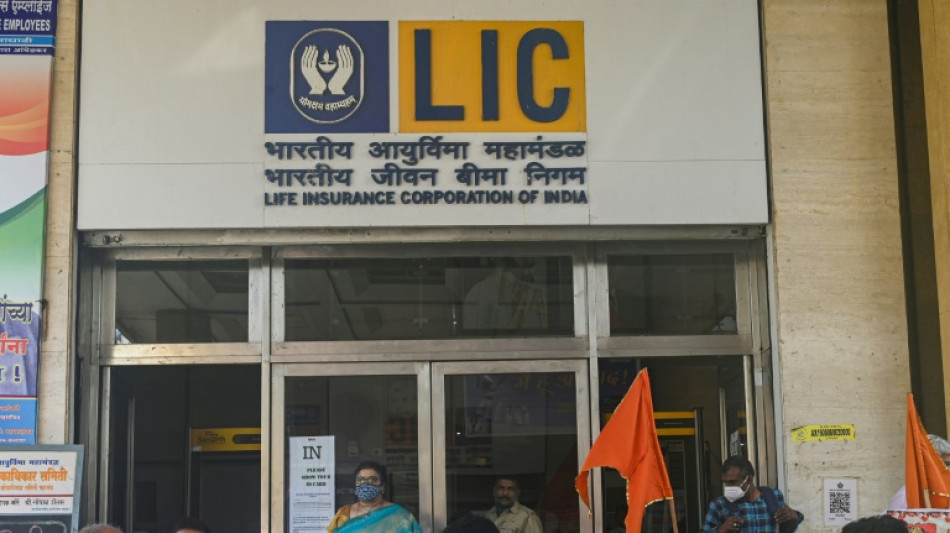
India is embarking on the blockbuster listing of the country's largest insurer as part of a wider privatisation drive to bolster public coffers drained by the coronavirus pandemic and fund new infrastructure.

Text size:

While the pricing has not yet been set, analysts expect the IPO of the Life Insurance Corporation of India (LIC) to be India's largest to date, potentially earning the government more than $10 billion.

After the listing, which is expected in March, LIC will be one of India's biggest publicly listed companies alongside giants such as Reliance and TCS.

- How big is the firm? -

LIC was created in 1956 and was synonymous with life insurance in post-independence India until private firms were allowed entry in 2000.

The company holds a two-thirds share in the domestic life insurance market. It manages assets of 36.7 trillion rupees ($491 billion), which equates to nearly 16 percent of India's gross domestic product.

It has more than 100,000 employees and one million insurance agents.

LIC's real estate assets include big offices at prime locations in various Indian cities, including a 15-storey building in the southern city of Chennai and a distinctively curved head office in the heart of Mumbai's financial district.

The firm is also believed to own a large collection of rare and valuable artwork that includes paintings by MF Hussain -- known as the Pablo Picasso of India -- although the value of these holdings has not been made public.

- Why is the IPO taking place? -

Asia's third-largest economy was already grappling with a prolonged slowdown even before the start of the coronavirus pandemic. India has recorded its worst recession since independence due to the Covid-19 crisis.

Efforts to contain the spread of the virus, such as through stringent lockdowns, created a significant budget deficit and pushed millions into joblessness and poverty.

The IPO of LIC will give a boost to the government's efforts to raise much-needed cash through privatisations, which are running badly behind schedule.

The government has raised just 120.3 billion rupees by selling stakes in various state-owned entities this financial year, well short of its target of 780 billion rupees.

Srinath Sridharan, an independent markets commentator, likened LIC to one of the Indian government's "family jewels".

- Is it an attractive investment? -

LIC is a household name in India and has a strong grip on the life insurance market in the vast South Asian nation despite the entrance of private players.

The company is offering its millions of policyholders the opportunity to invest in the IPO at a discount, promoting the offer through television advertisements and full-page newspaper ads.

Analysts expect retail investors, including many first-timers, to show strong appetite for snaring a stake in the venerable company.

But there are numerous uncertainties for investors. These include question marks over whether investment decisions can be made by LIC management without interference from the government.

It is also unclear if LIC will be able to retain its market share, with increased competition for younger consumers from more tech-savvy new entrants to the market.

T.Sasaki--JT