The Japan Times - UAE pulls out of OPEC oil cartels citing 'national interests'

EUR -
AED 4.193409
AFN 71.936261
ALL 94.313517
AMD 420.265722
ANG 2.044352
AOA 1047.066868
ARS 1689.072446
AUD 1.659662
AWG 2.056738
AZN 1.945481
BAM 1.958174
BBD 2.299788
BDT 140.730617
BGN 1.930714
BHD 0.430513
BIF 3396.988644
BMD 1.141839
BND 1.476978
BOB 7.907414
BRL 5.927742
BSD 1.141884
BTN 107.892443
BWP 15.517473
BYN 3.311486
BYR 22380.050817
BZD 2.296464
CAD 1.622442
CDF 2589.120289
CHF 0.923411
CLF 0.026737
CLP 1052.308099
CNY 7.762395
CNH 7.765695
COP 3935.109456
CRC 517.923377
CUC 1.141839
CUP 30.258742
CVE 110.39836
CZK 24.263572
DJF 203.332061
DKK 7.474417
DOP 67.901727
DZD 152.241244
EGP 56.290733
ERN 17.12759
ETB 184.085649
FJD 2.567711
FKP 0.865351
GBP 0.862115
GEL 3.020169
GGP 0.865351
GHS 12.914374
GIP 0.865351
GMD 83.354533
GNF 10010.092064
GTQ 8.711485
GYD 238.844337
HKD 8.955212
HNL 30.55778
HRK 7.534429
HTG 149.239626
HUF 354.896792
IDR 20413.803496
ILS 3.411302
IMP 0.865351
INR 107.964733
IQD 1495.800358
IRR 1570314.535312
ISK 143.803363
JEP 0.865351
JMD 179.797981
JOD 0.809586
JPY 184.907748
KES 147.869387
KGS 99.854174
KHR 4591.5264
KMF 495.557874
KPW 1027.655794
KRW 1762.782919
KWD 0.353502
KYD 0.951533
KZT 554.399998
LAK 25609.8242
LBP 102250.125882
LKR 383.942116
LRD 207.807389
LSL 18.760981
LTL 3.371555
LVL 0.690687
LYD 7.335862
MAD 10.700273
MDL 20.182026
MGA 4858.84815
MKD 61.634438
MMK 2397.462543
MNT 4087.701951
MOP 9.223981
MRU 45.571249
MUR 53.940134
MVR 17.641444
MWK 1979.957083
MXN 20.014748
MYR 4.648392
MZN 72.96563
NAD 18.761145
NGN 1577.838644
NIO 42.020576
NOK 11.338818
NPR 172.629779
NZD 2.023231
OMR 0.439035
PAB 1.141859
PEN 3.899293
PGK 5.013078
PHP 69.912559
PKR 317.516265
PLN 4.289605
PYG 6953.430104
QAR 4.162246
RON 5.242754
RSD 117.385642
RUB 88.243753
RWF 1676.195463
SAR 4.289363
SBD 9.194036
SCR 15.889801
SDG 685.104142
SEK 11.113739
SGD 1.477066
SHP 0.852498
SLE 28.318388
SLL 23943.80396
SOS 652.585457
SRD 42.812695
STD 23633.768713
STN 24.529739
SVC 9.991069
SYP 126.209896
SZL 18.756576
THB 38.008402
TJS 10.584701
TMT 3.996438
TND 3.3822
TOP 2.749276
TRY 53.256638
TTD 7.762343
TWD 36.406978
TZS 2997.331628
UAH 51.246329
UGX 4185.073842
USD 1.141839
UYU 45.945703
UZS 13761.684201
VES 708.800171
VND 30018.955918
VUV 136.083591
WST 3.175321
XAF 656.747467
XAG 0.019725
XAU 0.000284
XCD 3.085878
XCG 2.057877
XDR 0.817981
XOF 656.750346
XPF 119.331742
YER 272.471391
ZAR 18.766358
ZMK 10277.916815
ZMW 20.67261
ZWL 367.671798
  • JRI

    0.1380

    12.928

    +1.07%

  • BCC

    -2.4300

    78.59

    -3.09%

  • CMSD

    0.0300

    21.8

    +0.14%

  • BCE

    -0.6220

    22.298

    -2.79%

  • CMSC

    0.1100

    22.04

    +0.5%

  • RIO

    0.1400

    93.88

    +0.15%

  • RBGPF

    0.2000

    61.5

    +0.33%

  • GSK

    -0.0100

    52.49

    -0.02%

  • NGG

    0.7300

    83.74

    +0.87%

  • AZN

    1.2400

    189.65

    +0.65%

  • BTI

    -0.1800

    62.58

    -0.29%

  • RYCEF

    0.0500

    18.8

    +0.27%

  • VOD

    -0.1600

    13.73

    -1.17%

  • BP

    0.4600

    37.59

    +1.22%

  • RELX

    -0.0600

    31.28

    -0.19%

UAE pulls out of OPEC oil cartels citing 'national interests'
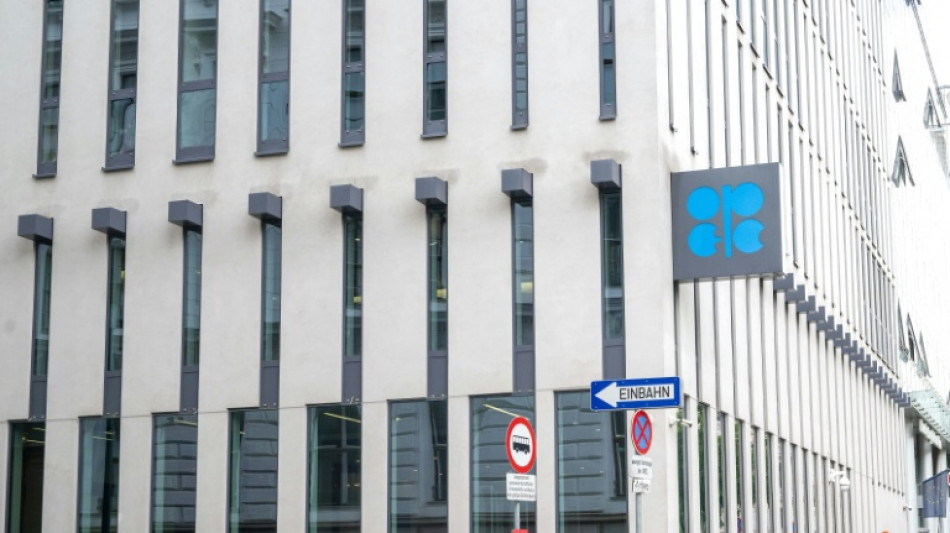
UAE pulls out of OPEC oil cartels citing 'national interests' / Photo: JOE KLAMAR - AFP/File

UAE pulls out of OPEC oil cartels citing 'national interests'

The United Arab Emirates will withdraw from the OPEC and OPEC+ oil cartels to focus on "national interests", it announced on Tuesday, causing fresh shockwaves as energy prices soar over the Middle East war.

Text size:

The UAE, one of the world's top oil producers, which has previously chafed at OPEC production quotas, will pull out on Friday, a statement carried by the official WAM news agency said.

The UAE has been an OPEC member through the emirate of Abu Dhabi since 1967, four years before the former British protectorate became a country.

The last OPEC member to withdraw from the cartel was Angola in 2024.

"This decision reflects the UAE's long-term strategic and economic vision and evolving energy profile," the UAE statement said.

"During our time in the organisation, we made significant contributions and even greater sacrifices for the benefit of all," it added.

"However, the time has come to focus our efforts on what our national interest dictates."

The decision, in the midst of the biggest oil shock since the 1970s, is likely to weaken OPEC, dominated by the UAE's neighbour and rival Saudi Arabia, indicating further turbulence for markets, analysts said.

Gulf oil shipments are currently being strangled by Iran's blockade of the Strait of Hormuz, which flows past the UAE and normally carries one-fifth of the world's oil.

The UAE, hard-hit by Iranian attacks, has also faced trouble in its relationship with Saudi Arabia, the world's top oil exporter, after a stand-off between rival forces backed by the two countries in Yemen.

- 'More volatile oil market' -

Pre-war, the UAE was the fourth biggest producer in the 22-member OPEC+, behind Saudi Arabia, Russia and Iraq.

Jorge Leon, an analyst at Rystad Energy, said its withdrawal may not immediately impact oil markets while Hormuz shipments remain on hold.

But the UAE will now be free to raise production, "raising broader questions about the sustainability of Saudi Arabia's role as the market's central stabiliser -- and pointing to a potentially more volatile oil market as OPEC's capacity to smooth supply imbalances diminishes".

Jamie Ingram, managing editor for the Middle East Economic Survey, posted that OPEC is losing 13 percent of its production capacity with the UAE's departure, citing the International Energy Agency.

Founded in 1960, the 12-member OPEC cartel in 2016 partnered up with 10 other producers to form OPEC+ to gain more clout.

The Vienna-based group drew international attention in 1973, when it imposed an oil embargo against Israel's allies in the midst of the Yom Kippur War, triggering the first oil crisis.

Within just a few months, prices quadrupled, highlighting the cartel's dominance.

Faced with rising competitors in the 1980s, it introduced its famous quota system that enabled it to exert more control over the market.

This strategy meant the group fared relatively well during the 2008 financial crisis and the price shock in the wake of the Covid pandemic, despite increased internal tensions.

Y.Mori--JT