UN to agree on plan for 'historic' plastics treaty

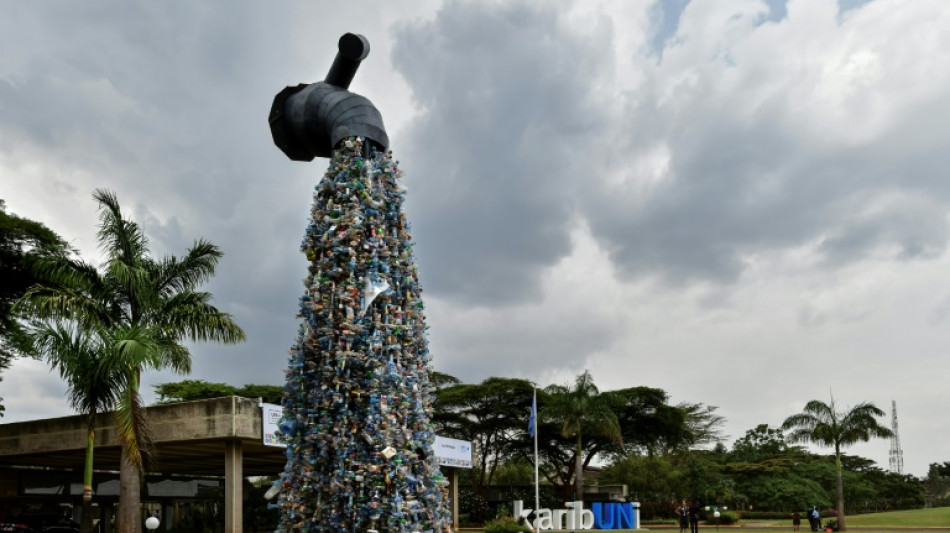
More than 100 nations convening in Nairobi next week are expected to take the first steps toward establishing a historic global treaty to tackle the plastic crisis afflicting the planet.
Plastic has been found in Arctic sea ice, the bellies of whales and Earth's atmosphere, and governments have been under increasing pressure to unite in action against the global scourge.
Negotiators are hammering out the framework for a legally binding plastic treaty that diplomats say is the most ambitious environmental pact since the 2015 Paris Agreement on climate change.
"This is a big moment. This is one for the history books," Inger Andersen, head of the UN Environment Programme (UNEP), told AFP this week.
The exact scope of the treaty remains to be defined. There are competing proposals being drafted ahead of a three-day UN environment summit starting Monday in Nairobi.
World leaders and environment ministers meeting in-person and virtually are expected to kickstart the treaty process by appointing a negotiating committee to finalise the policy details over the next two years.
But more than 50 countries, along with scientists, businesses and environment groups, have publicly called for tough new regulations on industry to curb the torrent of plastic entering the environment.
This could include caps on the production of new plastic -- which is made from oil and gas, and forecast to double by 2040 -- redesigning products to make recycling easier or less harmful, and phasing out single-use items.
- 'Treaty with teeth' -
Many countries, including major plastic producers like the United States and China, have expressed general support for a treaty, but stopped short of endorsing any specific measures.
But there is broad consensus that countries acting alone cannot fix the problem, and a coordinated global response is needed.
Since the 1950s, the rate of plastic production has grown faster than any other material, vastly outpacing national efforts to keep the environment clean.
Today, approximately 300 million tonnes of plastic waste -– equivalent to the weight of the human population –- are produced every year.
Less than 10 percent is recycled, with most ending up in landfill or the oceans.
By some estimates, a garbage truck's worth of plastic is dumped in the sea every minute, choking marine life and befouling coastlines around the globe. Microscopic particles of plastic can also enter the food chain, eventually joining the human diet.
"It is not something that stops at the border. As we know from plastics in the ocean... your trash becomes my trash, and my trash becomes your trash," said Andersen.
In October, dozens of major corporations including Coca-Cola and Unilever said a plastics treaty with binding targets was "crucial to set a high common standard of action for all countries to abide by."
Environment groups remain wary and want concrete targets and enforcement mechanisms enshrined in any treaty to ensure accountability.
"We are looking at something that is legally binding and has consequences, and not just a treaty that people can sign onto.... but doesn't have the teeth to bite back," said Erastus Ooko from Greenpeace Africa.
- 'Ready for change' -
Some of the world's largest plastics manufacturers have also expressed support for a treaty, but say banning certain materials would create supply chain disruptions and hinder improvements to recycling.
Environment groups have warned that plastic giants would try to steer talks in Nairobi away from firm commitments intended to push companies into making less plastic.
Two of the treaty proposals adopt a "source to sea" approach: targeting not just trash in oceans and landfill, but also pollution caused by manufacturing new plastic from fossil fuels.
These proposals –- one sponsored by Rwanda and Peru, and the other by Japan -– have broad support and are being merged to reach consensus, said sources with close knowledge of the negotiations in Nairobi.
A third proposal from India -– which called for voluntary measures -– does not have wide support.
"I think the world is ready for a change in the way we relate to plastic," said Marco Lambertini, director general of WWF.
M.Ito--JT