Cayenne Turbo Electric 2026

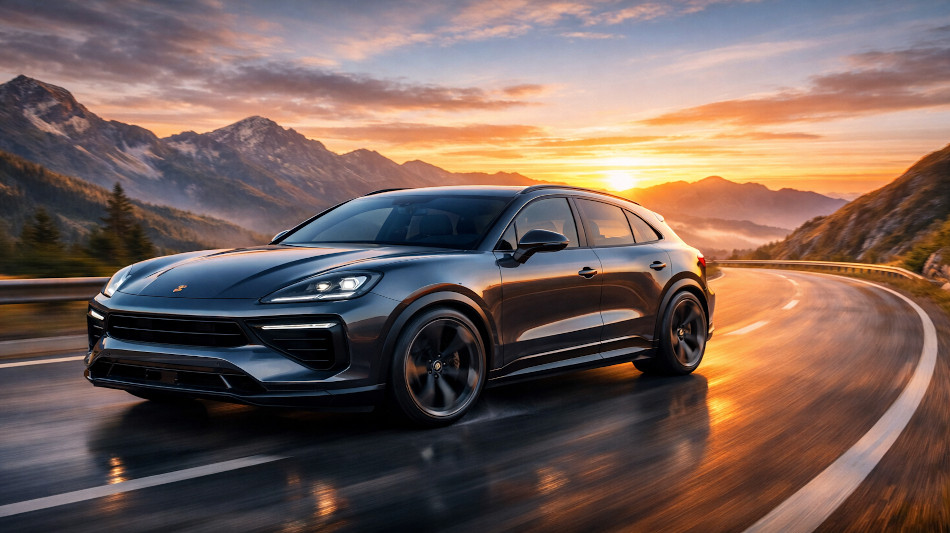
With the Cayenne Turbo Electric, the Stuttgart-based sports car manufacturer is finally entering the age of fully electric SUVs. Back in 2002, the Cayenne was the model with which Porsche conquered the luxury off-road vehicle segment. With the fourth generation, a pure battery-powered vehicle is now available for the first time. Two variants will be launched in spring 2026: the Cayenne Electric and the top-of-the-range Cayenne Turbo Electric. Both feature all-wheel drive with one permanently excited synchronous motor per axle. The electric Cayennes are longer and wider than the previous models, yet still offer the characteristic silhouette with a low bonnet, curved roofline and striking fenders.
Supercar-level performance and driving dynamics
In the Turbo version, the E-Cayenne delivers a system output of up to 850 kW (1,156 hp) when the start or ‘push-to-pass’ function is activated. In normal operation, 630 kW (857 hp) is available; an additional boost of 130 kW (176 hp) can be called up for ten seconds at the touch of a button. The maximum torque is 1,500 Nm. With this power, the SUV, which weighs just under 2.72 tonnes, sprints to 100 km/h in 2.5 seconds and reaches 200 km/h in just 7.4 seconds. The top speed is 260 km/h. The standard Cayenne Electric achieves 300 kW (408 hp) in normal driving mode and 325 kW (442 hp) with the aid of Launch Control. It accelerates from 0–100 km/h in 4.8 seconds and reaches a top speed of 230 km/h. Both versions feature electronic Porsche Traction Management (ePTM), which regulates the power distribution between the front and rear axles in milliseconds.
The driving dynamics are characterised by a new drive system. Direct oil-cooled electric motors on the rear axle enable high continuous power and high recuperation performance. The standard air suspension with Porsche Active Suspension Management (PASM) adjusts the damper characteristics and vehicle height in a flash. Rear-axle steering and Porsche Active Ride active chassis control, which almost completely compensates for body movements, are available as options. A limited-slip differential with Porsche Torque Vectoring Plus provides additional traction in the Turbo.
Recuperation and battery: efficiency and range
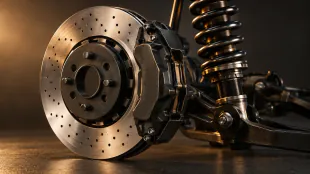
The high-voltage battery in the Cayenne Electric has a gross capacity of 113 kWh. It consists of large-format pouch cells and is temperature-controlled on both sides – a world first that enables optimum temperature maintenance. In the WLTP cycle, the Cayenne Turbo Electric achieves a range of up to 623 kilometres; the Cayenne Electric even achieves up to 642 kilometres. Energy recovery reaches Formula E level: up to 600 kW can be recovered during braking, meaning that around 97 per cent of all deceleration takes place without mechanical brakes.
Charging is carried out using 800-volt technology. The DC charging capacity is up to 390 kW; under optimal conditions, the charge level can be increased from 10 to 80 per cent in less than 16 minutes. A range of around 315 kilometres can be recharged in ten minutes. The Cayenne charges with alternating current at up to 22 kW; wireless charging is available as an option for the first time in the automotive sector: the vehicle can be fully charged overnight in around ten hours via an 11 kW induction plate in the garage. Intelligent thermal management keeps the battery temperature in the optimum range, enabling fast charging even at extreme temperatures.
Aerodynamics and design
The Cayenne Electric combines typical Porsche proportions with an advanced design. It is 4,985 mm long, 1,980 mm wide and 1,674 mm high; the wheelbase has grown by almost 13 cm to 3,023 mm. This significantly increases the interior space. Thanks to numerous measures, the SUV achieves a drag coefficient of 0.25 – the best in its segment. Active elements include adjustable cooling air flaps, an adaptive roof spoiler and, for the first time, active aeroblades at the rear of the Turbo, which extend sideways to optimise airflow and downforce. The underbody is almost completely covered, air curtains at the front reduce turbulence, and special rims and a rear diffuser further improve efficiency. For off-road use, there is a package with a modified front and a larger ramp angle. The towing capacity is 3.5 tonnes, which is outstanding in the electric SUV segment.
Interior: digital, comfortable and customisable
The cockpit of the E-Cayenne is characterised by a digital operating concept. At its heart is the Flow Display, a 14.25-inch OLED screen that angles towards the centre console and merges into an optional 14.9-inch passenger display. This is complemented by a 14.25-inch instrument cluster and a head-up display that projects an 87-inch image virtually onto the windscreen. Despite the digitalisation, analogue switches for climate and volume control remain, and a hand rest pad makes operation easier.
The seats can be adjusted electrically; in the rear, they can be moved individually and the backrest angle can be varied as standard. Mood modes adjust the seat position, ambient lighting, air conditioning and sound to suit the mood and situation. The panoramic roof can be dimmed electrically from transparent to matt, while surface heating warms the armrests and door panels in addition to the seats. Porsche offers 13 paint colours, nine wheel designs and twelve interior combinations; additional accent and exclusive packages as well as Race Tex upholstery or Pepita fabric are available as options. Thanks to Porsche Exclusive Manufaktur and the special request programme, the Cayenne can be customised down to the last detail, from the colour scheme to a matching wristwatch model.
Digital connectivity and assistance systems
With the new Digital Interaction, Porsche combines intelligent software with modern hardware. Widgets allow the display surfaces to be personalised, and the theme app adjusts the colour of all displays. A voice assistant powered by artificial intelligence understands complex questions and responds like a real conversation partner. The navigation system uses augmented reality arrows in the head-up display, and the Digital Key allows vehicle functions to be controlled via smartphone and digital keys to be shared with up to seven people. Over-the-air updates expand the vehicle's functions over time.
Space and everyday practicality
Thanks to its larger exterior dimensions, the E-Cayenne offers more space than its predecessors. The boot capacity is 781 litres and can be expanded to 1,588 litres; there is also a 90-litre frunk. The longer wheelbase means that rear passengers in particular benefit from more legroom. Despite the spacious interior, the SUV remains manoeuvrable; the optional rear-axle steering reduces the turning circle. One highlight is the towing capacity of 3.5 tonnes, which makes it truly suitable for long distances with a caravan or boat trailer.
Development and production: digital and flexible
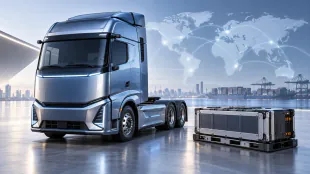
Porsche has partially shifted the development of the Cayenne Electric to the virtual world. Around 120 classic prototypes have been replaced by digital twins. Simulations and artificial intelligence enabled a 20 per cent reduction in development time and reduced resource consumption. Nevertheless, testing took place under extreme conditions: the E-SUV was tested at -35°C in Scandinavia and +50°C in Death Valley to perfect its fast-charging capability and thermal management. The Cayenne Electric is built in Bratislava on the same line as the combustion and hybrid models. The battery modules are produced in a dedicated ‘Smart Battery Shop’ in Horná Streda; Porsche develops and manufactures them entirely in-house to maximise performance, efficiency and quality.
Prices and market launch
The variants available to order will initially be the Cayenne Electric and the Cayenne Turbo Electric. The price for the base model is €105,200, while the Turbo version starts at €165,500. The market launch is planned for spring 2026. In parallel with the electric version, variants with combustion and hybrid drives will continue to be offered to meet different customer needs.
Conclusion on the Cayenne Turbo Electric 2026
With the Cayenne Turbo Electric, Porsche is redefining the electric luxury SUV segment. The combination of brute power, long range and ultra-fast charging makes the car the benchmark among electric SUVs. At the same time, thanks to air suspension, variable mood modes and extensive customisation options, it remains suitable for everyday use and comfortable. The expansion of the digital driving experience and the consistent in-house development of the batteries underline the brand's claim to be a leader in technology and design. The Cayenne Turbo Electric is not only the most powerful production Porsche ever, but also a sign that electric mobility at Porsche goes hand in hand with emotion, tradition and technical excellence.