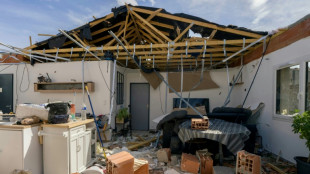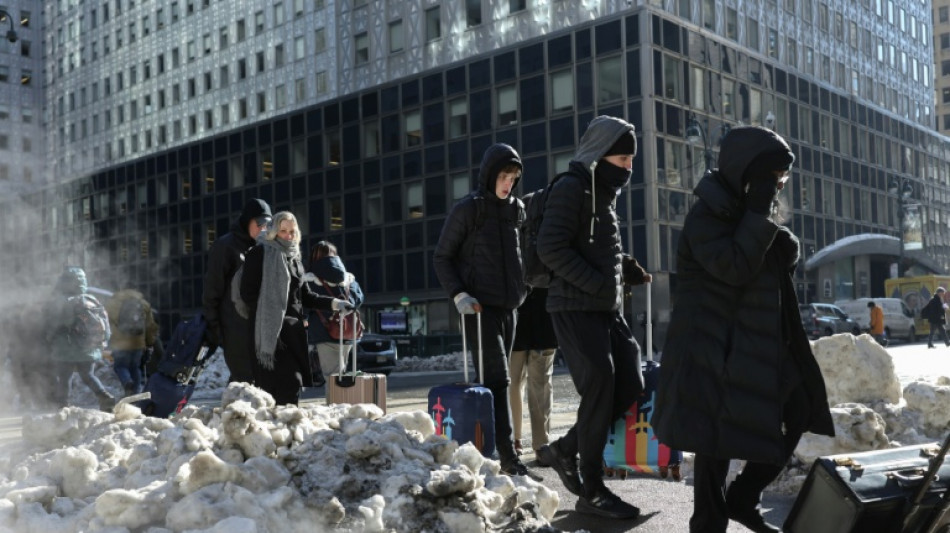
Snow storm barrels into southern US as blast of icy weather widens / Photo: ANGELA WEISS - AFP

A powerful snow storm bore down Saturday on southern states as icy weather that has left more than 100 dead across a swath of the United States intensified in regions not used to subzero conditions.
Heavy snows were falling Saturday morning in North Carolina and neighboring states, as authorities urged residents to stay off the roads and warned oceanfront structures were threatened by the storm.
The freezing weather forced NASA to postpone a key fueling test over the weekend of the 322-foot (98-meter) rocket that is on the Cape Canaveral launch pad in Florida. That in turn is likely to push back by at least a couple of days a planned, manned Moon flyby slated for next month.
The National Weather Service said Saturday that an explosively deepening coastal cyclone will bring moderate to heavy snow, high winds, and possibly blizzard conditions for the Carolinas.
"An intense surge of arctic air behind the coastal storm will send below freezing temperatures down toward South Florida by Sunday morning," the service said, adding that it could experience the coldest temperatures there since 1989.
It issued a winter storm warning for all of North and South Carolina into portions of Georgia, eastern Tennessee and Kentucky, as well as southern Virginia.
In South Carolina, the public works department in the state capital Columbia was preparing its eight snow plows for deployment for the first time in five years, local news network WIS10 reported.
The mercury was set to dip there to a low of -9C at the weekend. On average it ranges between 2C and 15C during January.
The new cold front comes just days after the onset of a major winter storm that has killed more than 100 people, according to tally of official figures and local media reports. The storm blanketed a vast swath from New Mexico in the southwest to Maine in the northeast in snow, sleet and icy rain.
In United States, nearly 200,000 customers remained without power Saturday, mostly in the south, according to poweroutage.us, with Mississippi, Tennessee and Louisiana hardest hit.
In North Carolina, the National Park Service announced the closure of campgrounds and some beaches at the Outer Banks, a series of barrier islands off the coast of southern state that are vulnerable to storms.
It said oceanfront structures were threatened, and a section of highway that threads through its dunes was closed.
In another southern state, Mississippi, Governor Tate Reeves said the US Army Corps of Engineers helped to install generators at critical sites, and authorities were opening 79 shelters and warming centers across the state.
S.Fujimoto--JT