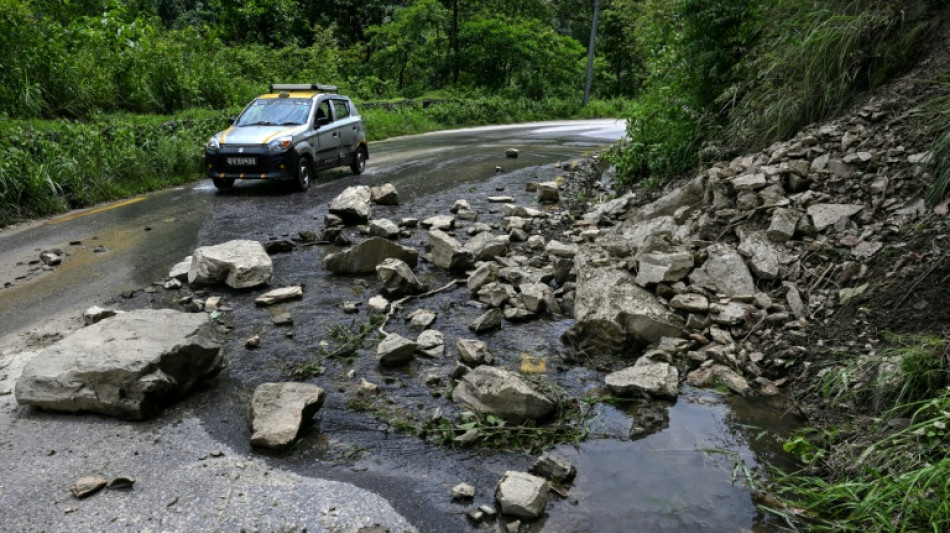
Landslide-prone Nepal tests AI-powered warning system / Photo: Prakash MATHEMA - AFP

Every morning, Nepali primary school teacher Bina Tamang steps outside her home and checks the rain gauge, part of an early warning system in one of the world's most landslide-prone regions.
Tamang contributes to an AI-powered early warning system that uses rainfall and ground movement data, local observations and satellite imagery to predict landslides up to weeks in advance, according to its developers at the University of Melbourne.
From her home in Kimtang village in the hills of northwest Nepal, 29-year-old Tamang sends photos of the water level to experts in the capital Kathmandu, a five-hour drive to the south.
"Our village is located in difficult terrain, and landslides are frequent here, like many villages in Nepal," Tamang told AFP.
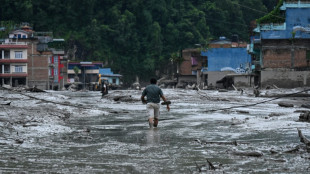
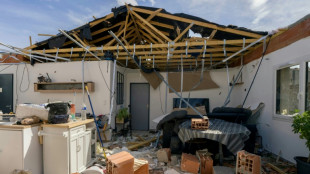
Every year during the monsoon season, floods and landslides wreak havoc across South Asia, killing hundreds of people.
Nepal is especially vulnerable due to unstable geology, shifting rainfall patterns and poorly planned development.
As a mountainous country, it is already "highly prone" to landslides, said Rajendra Sharma, an early warning expert at the National Disaster Risk Reduction and Management Authority.
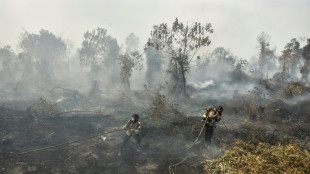
"And climate change is fuelling them further. Shifting rainfall patterns, rain instead of snowfall in high altitudes and even increase in wildfires are triggering soil erosion," Sharma told AFP.
- Saving lives -
Landslides killed more than 300 people last year and were responsible for 70 percent of monsoon-linked deaths, government data shows.
Tamang knows the risks first hand.
When she was just five years old, her family and dozens of others relocated after soil erosion threatened their village homes.
They moved about a kilometre (0.6 miles) uphill, but a strong 2015 earthquake left the area even more unstable, prompting many families to flee again.
"The villagers here have lived in fear," Tamang said.
"But I am hopeful that this new early warning system will help save lives."
The landslide forecasting platform was developed by Australian professor Antoinette Tordesillas with partners in Nepal, Britain and Italy.
Its name, SAFE-RISCCS, is an acronym of a complex title -- Spatiotemporal Analytics, Forecasting and Estimation of Risks from Climate Change Systems.
"This is a low-cost but high-impact solution, one that's both scientifically informed and locally owned," Tordesillas told AFP.
Professor Basanta Adhikari from Nepal's Tribhuvan University, who is involved in the project, said that similar systems were already in use in several other countries, including the United States and China.
"We are monitoring landslide-prone areas using the same principles that have been applied abroad, adapted to Nepal's terrain," he told AFP.
"If the system performs well during this monsoon season, we can be confident that it will work in Nepal as well, despite the country's complex Himalayan terrain."
In Nepal, it is being piloted in two high-risk areas: Kimtang in Nuwakot district and Jyotinagar in Dhading district.
- Early warnings -
Tamang's data is handled by technical advisers like Sanjaya Devkota, who compares it against a threshold that might indicate a landslide.
"We are still in a preliminary stage, but once we have a long dataset, the AI component will automatically generate a graphical view and alert us based on the rainfall forecast," Devkota said.
"Then we report to the community, that's our plan."
The experts have been collecting data for two months, but will need a data set spanning a year or two for proper forecasting, he added.
Eventually, the system will deliver a continuously updated landslide risk map, helping decision makers and residents take preventive actions and make evacuation plans.
The system "need not be difficult or resource-intensive, especially when it builds on the community's deep local knowledge and active involvement", Tordesillas said.
Asia suffered more climate and weather-related hazards than any other region in 2023, according to UN data, with floods and storms the most deadly and costly.
And while two-thirds of the region have early warning systems for disasters in place, many other vulnerable countries have little coverage.
In the last decade, Nepal has made progress on flood preparedness, installing 200 sirens along major rivers and actively involving communities in warning efforts.
The system has helped reduce flooding deaths, said Binod Parajuli, a flood expert with the government's hydrology department.
"However, we have not been able to do the same for landslides because predicting them is much more complicated," he said.
"Such technologies are absolutely necessary if Nepal wants to reduce its monsoon toll."
T.Kobayashi--JT