GSK
0.0100

By March 8, 2026, Israel’s campaign against Iran no longer looks like a tightly bounded military operation designed merely to restore deterrence. It now appears to be something broader, harsher, and more politically ambitious: an effort to keep striking until the Islamic Republic can no longer function with strategic coherence, political confidence, or an orderly chain of succession.
What began with attacks on military, leadership, and nuclear-related targets has moved steadily closer to the core machinery of power. The shift is unmistakable. Israel is not only trying to degrade missiles, commanders, and command networks. It is also bearing down on the institutions that allow clerical rule to intimidate society, absorb shocks, and recover after crisis. The logic is brutal but clear: a regime can survive heavy battlefield damage if its internal organs of coercion and succession remain intact. Once those organs begin to fracture, however, a military campaign starts to bleed into a political one.
That is why the death of Ali Khamenei changed the meaning of the war. Removing the supreme leader did not simply decapitate the man at the top of the system. It forced Iran into the most sensitive test the Islamic Republic can face in wartime: whether it can reproduce legitimacy and authority fast enough to prevent elite panic, institutional rivalry, and public defiance. In ordinary times, succession in Iran is opaque by design. In wartime, under bombardment, opacity becomes weakness. Uncertainty multiplies. Rumor becomes strategy. Every delay in producing a stable successor creates space for fear, hedging, and internal competition.
Iran may still move quickly to formalize a new supreme leader. Reports now indicate that the body responsible for choosing the next leader has reached a decision, even if the identity of that choice has not yet been officially unveiled. But speed is not the same as stability. A successor selected under bombardment, under threat, and under suspicion of outside manipulation would inherit authority under siege from the first moment. In practical terms, that means the regime is trying to project continuity while the ground beneath it is still shaking.
Israel seems determined to exploit exactly that vulnerability. Its public rhetoric has become far more explicit than the old language of deterrence or preemption. Israeli leaders are no longer speaking only about removing immediate threats. They are openly describing a war that could create the conditions in which Iranians themselves bring down the system. That matters because language follows intent. States do not repeatedly invoke the possibility of internal collapse unless they believe the battlefield and the political arena are beginning to merge.
The strategic logic now visible is that Israel is not preparing to stop at symbolic punishment. It is pressing forward with a theory of victory that blends military attrition, leadership decapitation, succession chaos, and pressure on internal repression. In that framework, air power is not meant to conquer Iran in any conventional sense. It is meant to hollow out the regime’s ability to command, to frighten, and to replace itself.
Seen through that lens, Israel’s widening target selection makes grim sense. Strikes against organs of internal security are about more than military efficiency. They are about weakening the very structures that monitored dissidents, suppressed protest movements, enforced fear, and kept the streets manageable whenever public anger surged. Attacks on fuel depots and energy infrastructure serve a parallel purpose. They do not merely increase the cost of war for Tehran; they test the state’s ability to preserve daily life in the capital. A regime that cannot keep fuel flowing, smoke off the skyline, and basic confidence intact starts to look less like an enduring order and more like a system under slow liquidation.
Israel also appears to believe that this moment is unusually favorable because the war is landing on top of a pre-existing domestic crisis. Iran was already under severe internal strain before the latest wave of strikes. The economy had been battered by sanctions, currency collapse, inflation, shortages, blackouts, and chronic water stress. Public anger had already spilled into the streets. What makes the present moment especially dangerous for Tehran is not only that people are exhausted, but that the base of discontent has widened. Social exhaustion, merchant unrest, student anger, and the steady erosion of economic confidence can be managed one by one. When they begin to overlap, authoritarian systems stop looking immovable.
That social dimension matters enormously. Governments can often suppress unrest when it is confined to students, activists, or a single urban class. It becomes more serious when discontent reaches people who usually prefer order to upheaval: traders, families worried about food prices, workers struggling with shortages, and citizens who may not share the same ideology but do share the same exhaustion. A regime loses more than popularity when that happens. It loses the sense that daily life, however difficult, still has a workable center.
Yet collapse is not automatic. Regimes built on fear, patronage, and force often survive far longer than outside observers expect. Iran’s system still retains organized coercive power, ideological loyalists, and a security culture that was built precisely to withstand moments like this. The Revolutionary Guard remains the most decisive institution in the country, and history offers no guarantee that pressure from the air will produce a democratic opening on the ground. There is an equally serious possibility that the opposite could happen: that a weakened clerical order gives way not to pluralism, but to a more nakedly militarized state dominated by hardline security factions.
That is one of the central uncertainties now hanging over the succession. Iran’s constitutional framework provides a temporary leadership mechanism and assigns the task of choosing a new supreme leader to the clerical establishment. In theory, that offers continuity. In practice, continuity is exactly what Israel appears unwilling to allow. By signaling that any successor who preserves the same strategic line could also become a target, Israel is turning succession itself into a battlefield. The aim, in effect, is not merely to kill a leader, but to break the regime’s confidence that leadership can be regenerated at all.
This is a profound shift. Deterrence usually works by threatening pain if an adversary acts. What is emerging here looks closer to regime denial: the effort to convince Tehran that it may no longer be able to maintain a functioning model of rule. Once that threshold is crossed, the question is no longer only whether Iran can retaliate. It is whether Iran can still govern.
That is why the phrase “Israel won’t let up” should now be taken literally. From Jerusalem’s perspective, stopping too soon may be more dangerous than continuing. A paused campaign could leave a bruised but surviving regime determined to rebuild, rearm, and retaliate with even greater urgency. An incomplete victory would allow Tehran to present survival itself as triumph, purge internal hesitation, and return later with a sharper sense of strategic revenge. For Israeli decision-makers, the conclusion seems to be that if the Islamic Republic remains intact at the center, then even serious battlefield damage may prove temporary.
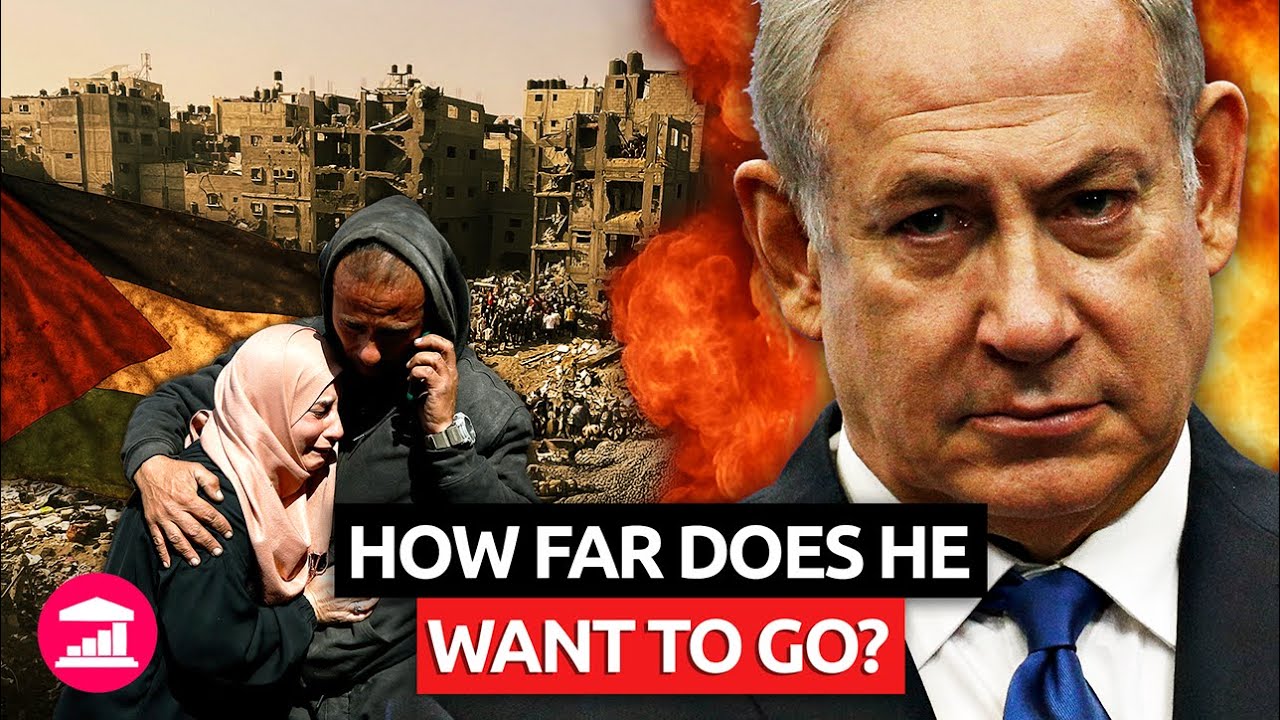
Yet the costs of pursuing this logic are already immense and rising. The war has produced a mounting civilian death toll inside Iran, severe damage across several fronts, toxic smoke over Tehran, regional strikes on critical infrastructure, and expanding instability far beyond the immediate battlefield. Lebanon is bleeding again. Gulf states are being dragged deeper into the conflict. Energy markets are on edge. What began as a direct confrontation has become a region-wide stress test of state resilience, civilian endurance, and international restraint.
Nor is there any clean political endgame in sight. Even if Israel succeeds in pushing the clerical system toward fracture, what comes next remains deeply uncertain. A public uprising is not a government. A leadership vacuum is not a constitution. The Iranian opposition is diverse, divided, and burdened by history. Many Iranians may despise the current order without wanting their future written by foreign bombardment. Others may welcome the weakening of the state’s coercive apparatus while rejecting any externally favored replacement. National anger against the regime and national anger against foreign attack can coexist at the same time. That is one reason why regime change is always easier to imagine than to stabilize.
Still, one conclusion is now difficult to avoid. Israel is no longer treating the survival of the Islamic Republic as a tolerable outcome so long as its missiles and nuclear infrastructure are degraded. It is increasingly treating regime durability itself as part of the threat. That is the real significance of the present moment. The campaign is not just about what Iran has. It is about what Iran is: a clerical-security state that Israeli leaders now appear to believe cannot be safely contained if it remains politically intact.
As of March 8, 2026, the gamble is therefore stark. Israel seems to believe that sustained pressure can turn military disruption into political decomposition. Iran, meanwhile, is trying to prove that even after the death of its supreme leader, the state can still reproduce authority, suppress panic, and project continuity. One side is pushing for breakdown. The other is fighting for survival.
Whether that struggle ends in regime collapse, regime mutation, or prolonged regional war remains unknown. But the direction of travel is already clear. Israel is not acting as if this war ends with a repaired deterrent balance. It is acting as if the war ends only when the system that threatened it can no longer stand in recognizable form.