Capillus HairBand Review: Stylish Red-Light Therapy with Practical Drawbacks

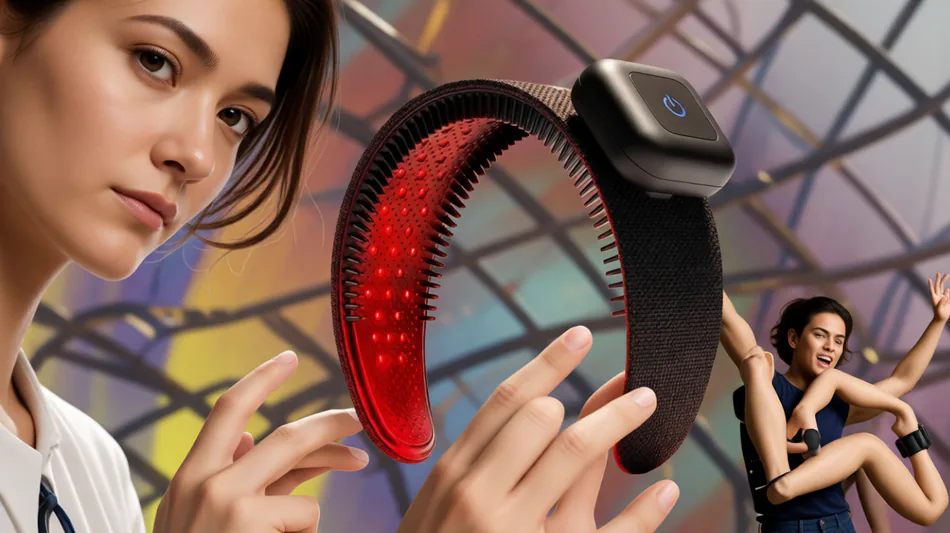
The Capillus HairBand offers a discreet alternative to bulky red-light therapy devices, featuring a fabric-covered headband with 82 laser diodes. However, extended testing reveals substantial drawbacks regarding fit, treatment duration, and regulatory clearance that may deter potential users despite its stylish appearance.
The market for at-home red-light therapy devices has long been dominated by equipment that prioritizes function over form, resulting in headgear that often resembles science fiction props more than personal care accessories. From helmet-like structures to visors designed for fictional characters, these devices are rarely intended for public wear. The Capillus HairBand enters this crowded field with a different approach: a discreet, fabric-covered headband that mimics the silhouette of a standard hair accessory, aiming to remove the social stigma associated with using light therapy for hair loss.
Priced at $599, the HairBand contains 82 laser diodes emitting light at a wavelength of 650 nanometers. Capillus positions the device to target areas where hair loss is most visually apparent, specifically the hairline and temples. This pricing places it significantly below the company’s full-coverage cap models, which range from $1,699 for basic versions to $3,299 for triple-wavelength units with 312 diodes. The HairBand’s design relies on laser diodes rather than standard LEDs; lasers produce collimated beams that travel in straight lines, allowing for more focused energy delivery to hair follicles compared to the diffuse light of LED panels.
Clinical studies suggest that red-light therapy can energize hair follicles that have recently entered a dormant phase, though it cannot revive follicles that are scarred or dead. While previous testing of competitor devices, such as Hairmax’s LaserBand 82 ComfortFlex, showed some regrowth in the center of the part, isolating the specific efficacy of the HairBand presents challenges. After five weeks of exclusive use following a period with the competitor device, any remaining growth could be attributed to prior treatment or natural variation, making precise measurement of the HairBand’s independent impact difficult.
The primary criticisms of the HairBand emerge from its daily usability rather than its theoretical mechanism. The device is only two inches wide and requires five minutes of application per section. For a user with a full part, this results in a minimum 15-minute treatment session. This duration stands in stark contrast to the LaserBand 82, which covers a wider three-inch area and requires only 30 seconds per section, totaling just 90 seconds per session, used three times a week.
For individuals with busy schedules, such as full-time working parents, the time commitment is a significant barrier. Beyond duration, the physical fit of the device introduces further complications. The HairBand features comb-like teeth to secure it in place, but the attached battery pack, which sits on one side of the headband, adds weight that pulls the device forward. This imbalance causes the band to slip when the wearer leans over or moves their head, necessitating manual holding during use. This requirement eliminates the possibility of multitasking, a common expectation for users of at-home beauty devices.
The design also raises questions regarding gender neutrality and fit. Weighing only six ounces, the device felt small and precarious on the tester’s head, despite no prior issues with hat sizing. The aesthetic is distinctly feminine; in household sharing scenarios, male partners may decline to use a device perceived as women’s fashion accessory. Marketing materials for Capillus often feature young women admiring their reflections, a demographic that typically does not experience the perimenopausal hair loss that drives demand for such medical-grade devices.
Additional practical concerns include the lack of physical documentation and regulatory status. The product box contained only the headband and a USB-C charging cord, omitting a user guide despite claims of quick-start instructions online. While the operation is simple—pressing a button on the battery pack initiates a timed cycle—the absence of printed materials is notable at this price point.
More critically, the Capillus HairBand is not currently FDA-cleared for treating hair loss or promoting regrowth. FDA clearance requires manufacturers to demonstrate that their product is "substantially equivalent" to an already cleared device, ensuring safety but not necessarily efficacy. While Capillus’s cap-style devices hold clearance, the HairBand was released in September of this year without it. A company representative stated that the brand intends to secure FDA clearance by 2027.
The HairBand succeeds in its primary design goal: offering a red-light therapy device that does not look ridiculous. However, the trade-offs in treatment time, physical stability, gendered design, and lack of immediate regulatory approval present significant hurdles for consumers seeking a convenient and proven solution for hair loss. The device represents a stylistic evolution in the category, but its practical utility remains limited by ergonomic and regulatory constraints.
K.Okada--JT