The Japan Times - Great Barrier Reef sees fragile coral comeback

EUR -
AED 4.284503
AFN 77.077368
ALL 96.672535
AMD 444.268837
ANG 2.088356
AOA 1069.812202
ARS 1666.951235
AUD 1.755223
AWG 2.099959
AZN 1.977594
BAM 1.958282
BBD 2.348677
BDT 142.67084
BGN 1.958842
BHD 0.439657
BIF 3445.467236
BMD 1.166644
BND 1.510615
BOB 8.058214
BRL 6.356688
BSD 1.166078
BTN 104.846244
BWP 15.492637
BYN 3.352535
BYR 22866.217636
BZD 2.345263
CAD 1.611893
CDF 2603.949043
CHF 0.936867
CLF 0.027523
CLP 1079.732385
CNY 8.248289
CNH 8.244613
COP 4474.067141
CRC 569.622013
CUC 1.166644
CUP 30.91606
CVE 110.405889
CZK 24.214831
DJF 207.653207
DKK 7.468667
DOP 74.634602
DZD 151.273095
EGP 55.344765
ERN 17.499656
ETB 180.875365
FJD 2.63714
FKP 0.874627
GBP 0.874563
GEL 3.144117
GGP 0.874627
GHS 13.264757
GIP 0.874627
GMD 85.164683
GNF 10132.80021
GTQ 8.932437
GYD 243.968192
HKD 9.076121
HNL 30.71293
HRK 7.536985
HTG 152.653493
HUF 381.862915
IDR 19474.784235
ILS 3.771351
IMP 0.874627
INR 105.17941
IQD 1527.629771
IRR 49130.280577
ISK 149.003932
JEP 0.874627
JMD 186.64658
JOD 0.827088
JPY 181.000109
KES 150.848748
KGS 102.023311
KHR 4668.917998
KMF 492.323307
KPW 1049.978797
KRW 1710.652425
KWD 0.358124
KYD 0.971828
KZT 589.724967
LAK 25286.943606
LBP 104425.214634
LKR 359.684369
LRD 205.24279
LSL 19.763266
LTL 3.444796
LVL 0.705691
LYD 6.339035
MAD 10.770352
MDL 19.841064
MGA 5201.59318
MKD 61.718495
MMK 2449.482257
MNT 4138.521318
MOP 9.351013
MRU 46.501943
MUR 53.782159
MVR 17.948159
MWK 2022.063027
MXN 21.188759
MYR 4.794321
MZN 74.559923
NAD 19.763266
NGN 1691.446479
NIO 42.914211
NOK 11.778815
NPR 167.75163
NZD 2.015712
OMR 0.447547
PAB 1.166178
PEN 3.919768
PGK 4.948251
PHP 68.736353
PKR 326.920482
PLN 4.229381
PYG 8020.165807
QAR 4.250542
RON 5.09217
RSD 117.549501
RUB 89.447988
RWF 1696.650557
SAR 4.378528
SBD 9.602169
SCR 15.76892
SDG 701.729618
SEK 10.946788
SGD 1.510938
SHP 0.875285
SLE 27.662086
SLL 24463.93409
SOS 665.243216
SRD 45.066272
STD 24147.170324
STN 24.530989
SVC 10.20389
SYP 12899.390409
SZL 19.748031
THB 37.140688
TJS 10.699299
TMT 4.09492
TND 3.42078
TOP 2.808998
TRY 49.655234
TTD 7.9058
TWD 36.31996
TZS 2852.443816
UAH 48.955252
UGX 4125.211153
USD 1.166644
UYU 45.608396
UZS 13950.742787
VES 296.971426
VND 30758.562652
VUV 141.585177
WST 3.253316
XAF 656.789501
XAG 0.020047
XAU 0.000277
XCD 3.152913
XCG 2.101655
XDR 0.816835
XOF 656.789501
XPF 119.331742
YER 278.303287
ZAR 19.749998
ZMK 10501.191496
ZMW 26.960173
ZWL 375.658814
  • RBGPF

    0.0000

    78.35

    0%

  • RELX

    -0.2200

    40.32

    -0.55%

  • GSK

    -0.1600

    48.41

    -0.33%

  • AZN

    0.1500

    90.18

    +0.17%

  • NGG

    -0.5000

    75.41

    -0.66%

  • BTI

    -1.0300

    57.01

    -1.81%

  • BP

    -1.4000

    35.83

    -3.91%

  • CMSC

    -0.0500

    23.43

    -0.21%

  • VOD

    -0.1630

    12.47

    -1.31%

  • RYCEF

    -0.0500

    14.62

    -0.34%

  • SCS

    -0.0900

    16.14

    -0.56%

  • JRI

    0.0400

    13.79

    +0.29%

  • RIO

    -0.6700

    73.06

    -0.92%

  • CMSD

    -0.0700

    23.25

    -0.3%

  • BCC

    -1.2100

    73.05

    -1.66%

  • BCE

    0.3300

    23.55

    +1.4%

Great Barrier Reef sees fragile coral comeback
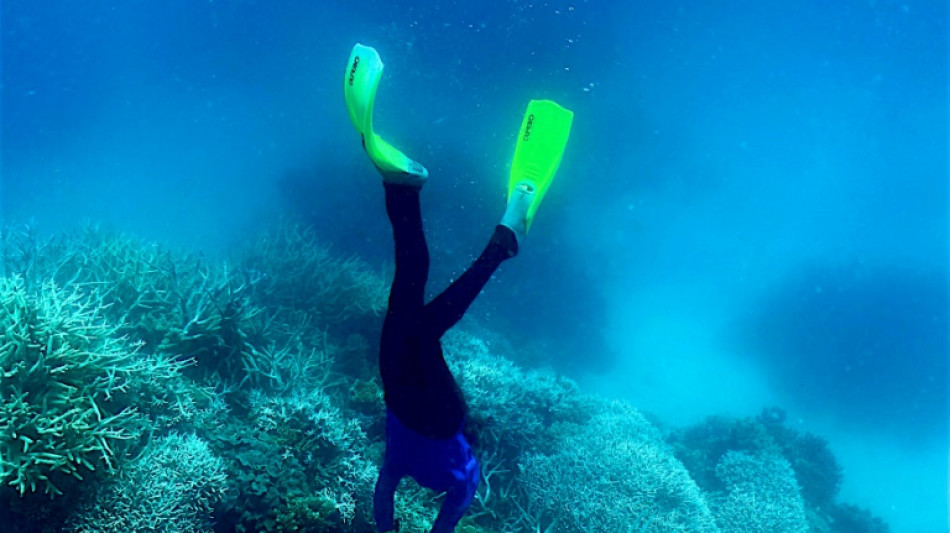
Great Barrier Reef sees fragile coral comeback / Photo: Glenn NICHOLLS - AFP

Great Barrier Reef sees fragile coral comeback

Parts of Australia's beleaguered Great Barrier Reef now have the highest levels of coral cover seen in decades, a government report said Thursday, suggesting the aquatic wonder could survive given the chance.

Text size:

Portions of the vast UNESCO heritage site showed a marked increase in coral cover in the last year, reaching levels not seen in 36 years of monitoring, the Australian Institute of Marine Science said.

Scientists surveying 87 sites said northern and central parts of the reef had bounced back from damage more quickly than some had expected, thanks mainly to fast-growing Acropora -- a branching coral that supports thousands of marine species.

"These latest results demonstrate the reef can still recover in periods free of intense disturbances," said the Australian Institute of Marine Science's CEO Paul Hardisty.

But far from declaring victory, Hardisty warned the gains could easily be reversed by cyclones, new bleaching events or crown-of-thorns outbreaks.

He pointed to a reversal in fortunes for the southern portion of the reef, which a year ago had appeared to be on the mend, but was now in decline again.

"This shows how vulnerable the reef is to the continued acute and severe disturbances that are occurring more often, and are longer-lasting," he said.

Coral coverage has increased by 36 percent across sites monitored in the northern part of the reef, up from 27 percent in 2021.

But the picture was less encouraging as the scientists moved south, with a smaller increase in cover in the reef's central belt and a marked decrease in coral cover in the south.

The spread of coral-killing crown-of-thorns starfish has also taken a toll.

Only fierce lobbying by the Australian government stopped the reef from being labelled "in danger" by UNESCO -- a potentially devastating blow to the country's multi-billion-dollar tourism industry.

Many fear that the speeding rate of damage could cause the reef to be destroyed entirely.

Marine scientist Terry Hughes said it was "good news" that coral was regrowing, but warned the species driving the recovery were very vulnerable to ocean heating.

He added that replacing large, old, slow-growing corals that had defined the reef was likely "no longer possible. Instead we're seeing partial reassembly of fast-growing, weedy corals before the next disturbance."

Zoe Richards a researcher at the Coral Conservation and Research Group at Curtin University also cautioned against over-optimism.

"This recovery trend is driven by a handful of Acropora species which often grow in a boom-and-bust pattern," she said. "This means that the next thermal stress event could easily decimate these coral communities once again."

"We are already finding evidence that each mass bleaching event leads to local extinctions of rarer species, so the short-term success of a handful of fast-growing coral species masks the full story about the largely hidden losses of biodiversity."

S.Ogawa--JT