The Japan Times - Scientists sound alarm as ocean temperatures hit new record

EUR -
AED 4.235181
AFN 72.652685
ALL 96.063881
AMD 433.704627
ANG 2.064353
AOA 1057.499887
ARS 1610.206312
AUD 1.624146
AWG 2.07579
AZN 1.96188
BAM 1.95537
BBD 2.316929
BDT 141.168957
BGN 1.971203
BHD 0.435402
BIF 3416.033994
BMD 1.153216
BND 1.47017
BOB 7.950252
BRL 5.990977
BSD 1.150367
BTN 106.247636
BWP 15.633122
BYN 3.450956
BYR 22603.041528
BZD 2.313921
CAD 1.579734
CDF 2612.035303
CHF 0.905875
CLF 0.026502
CLP 1046.440069
CNY 7.942028
CNH 7.93722
COP 4267.604159
CRC 539.286086
CUC 1.153216
CUP 30.560235
CVE 110.240758
CZK 24.440233
DJF 204.842982
DKK 7.472479
DOP 70.225166
DZD 152.359466
EGP 60.255785
ERN 17.298246
ETB 179.61526
FJD 2.546936
FKP 0.867021
GBP 0.863736
GEL 3.124951
GGP 0.867021
GHS 12.535243
GIP 0.867021
GMD 84.758236
GNF 10082.739062
GTQ 8.813062
GYD 240.707068
HKD 9.039458
HNL 30.451568
HRK 7.533156
HTG 150.916159
HUF 388.682936
IDR 19557.397004
ILS 3.574336
IMP 0.867021
INR 106.538457
IQD 1507.162036
IRR 1515326.355866
ISK 143.598865
JEP 0.867021
JMD 180.991769
JOD 0.817659
JPY 183.28126
KES 149.236476
KGS 100.848857
KHR 4616.964699
KMF 492.423264
KPW 1037.945396
KRW 1714.158155
KWD 0.353669
KYD 0.958785
KZT 554.36569
LAK 24689.463672
LBP 103028.590428
LKR 358.27966
LRD 210.543701
LSL 19.247284
LTL 3.405149
LVL 0.697569
LYD 7.364231
MAD 10.788828
MDL 20.070499
MGA 4789.199319
MKD 61.626525
MMK 2421.931154
MNT 4122.169257
MOP 9.286618
MRU 45.767333
MUR 53.762617
MVR 17.817532
MWK 1994.978598
MXN 20.357556
MYR 4.510246
MZN 73.701863
NAD 19.247284
NGN 1565.180636
NIO 42.340506
NOK 11.050817
NPR 169.998091
NZD 1.970189
OMR 0.443409
PAB 1.150547
PEN 3.932435
PGK 4.963908
PHP 68.738037
PKR 321.172143
PLN 4.261538
PYG 7457.196184
QAR 4.194778
RON 5.092836
RSD 117.427402
RUB 94.997468
RWF 1682.644573
SAR 4.329805
SBD 9.277836
SCR 15.960176
SDG 693.082886
SEK 10.703118
SGD 1.472432
SHP 0.865211
SLE 28.371698
SLL 24182.383878
SOS 656.361356
SRD 43.389742
STD 23869.251239
STN 24.494614
SVC 10.066743
SYP 127.863901
SZL 19.247763
THB 37.237966
TJS 11.027675
TMT 4.04779
TND 3.391554
TOP 2.776668
TRY 50.982781
TTD 7.80625
TWD 36.746662
TZS 3008.429877
UAH 50.542597
UGX 4343.044952
USD 1.153216
UYU 46.769715
UZS 13961.869212
VES 516.419716
VND 30326.131789
VUV 137.909859
WST 3.176199
XAF 655.818471
XAG 0.014671
XAU 0.000231
XCD 3.116625
XCG 2.073535
XDR 0.815493
XOF 655.710461
XPF 119.331742
YER 275.099806
ZAR 19.241988
ZMK 10380.331955
ZMW 22.441357
ZWL 371.335212
  • RBGPF

    0.1000

    82.5

    +0.12%

  • NGG

    -0.4700

    90.42

    -0.52%

  • VOD

    0.1500

    14.75

    +1.02%

  • CMSC

    -0.0400

    22.95

    -0.17%

  • GSK

    -0.3600

    53.41

    -0.67%

  • BCE

    0.1100

    26.01

    +0.42%

  • RIO

    -0.0600

    89.8

    -0.07%

  • RYCEF

    0.6900

    16.81

    +4.1%

  • BTI

    -0.3900

    60.55

    -0.64%

  • AZN

    -0.7200

    191.29

    -0.38%

  • RELX

    -0.1800

    34.29

    -0.52%

  • CMSD

    -0.0700

    22.88

    -0.31%

  • JRI

    -0.0800

    12.46

    -0.64%

  • BCC

    1.2000

    72.92

    +1.65%

  • BP

    0.9500

    43.85

    +2.17%

Scientists sound alarm as ocean temperatures hit new record
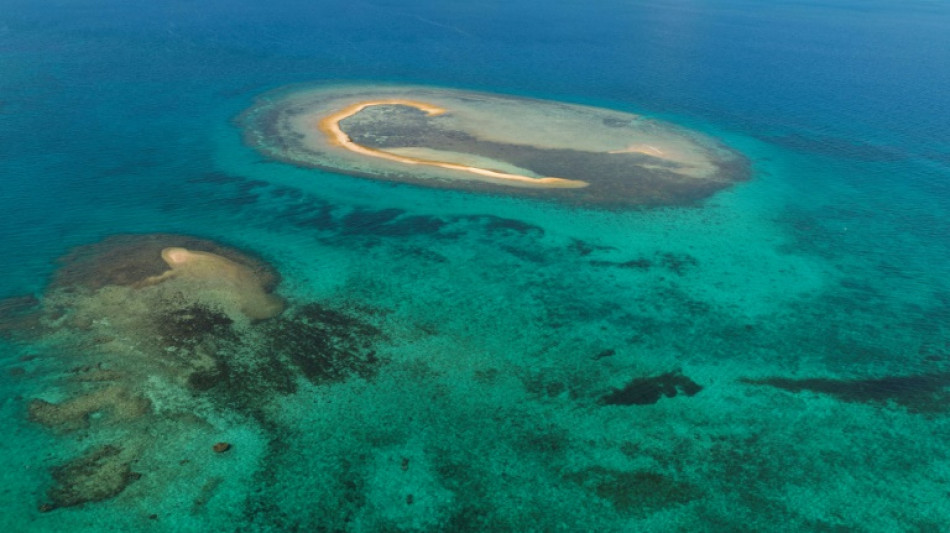
Scientists sound alarm as ocean temperatures hit new record / Photo: Fred Payet - AFP/File

Scientists sound alarm as ocean temperatures hit new record

The world's oceans, which have absorbed most of the excess heat caused by humanity's carbon pollution, continued to see record-breaking temperatures last year, according to research published Wednesday.

Text size:

Climate change has increased surface temperatures across the planet, leading to atmospheric instability and amplifying extreme weather events such as storms.

Oceans absorb about 90 percent of the excess heat from greenhouse gas emissions, shielding land surfaces but generating huge, long-lasting marine heatwaves that are already having devastating effects on underwater life.

The study, by researchers in China, the US, Italy and New Zealand, said that 2022 was "the hottest year ever recorded in the world's oceans".

Heat content in the oceans exceeded the previous year's levels by around 10 Zetta joules -- equivalent to 100 times the electricity generation worldwide in 2021, according to the authors.

"The oceans are absorbing most of the heating from human carbon emissions," said co-author Michael Mann, a professor at the University of Pennsylvania.

"Until we reach net zero emissions, that heating will continue, and we'll continue to break ocean heat content records, as we did this year," he said. "Better awareness and understanding of the oceans are a basis for the actions to combat climate change."

Records going back to the late 1950s show a relentless rise in ocean temperatures with almost continuous increases going back to around 1985.

- 'Nightmare for marine life' -

Scientists have warned that climbing temperatures have wrought major changes to ocean stability faster than previously thought.

The research, published in the journal Advances in Atmospheric Sciences, was based on observations from 24 scientists across 16 institutes worldwide.

It also found other indications suggesting that ocean health is deteriorating.

Increasing water temperatures and ocean salinity -- also at an all-time high -- directly contribute to a process of "stratification", where water separates into layers that no longer mix.

This has wide-ranging implications because it affects the exchange of heat, oxygen and carbon between the ocean and atmosphere, with effects including a loss of oxygen in the ocean.

"Deoxygenation itself is a nightmare for not only marine life and ecosystems but also for humans and our terrestrial ecosystems," the researchers said in a statement.

Updated data released this week showed that average global atmospheric temperatures across 2022 made it the fifth warmest year since records began in the 19th century, according to Europe's Copernicus Climate Change Service.

Countries across the world have faced a cascade of unprecedented natural disasters made more likely and deadly by climate change.

Many of these impacts can be linked to a fast-warming ocean and the related changes in the hydrological cycle.

"Some places are experiencing more droughts, which lead to an increased risk of wildfires, and other places are experiencing massive floods from heavy rainfall, often supported by increased evaporation from warm oceans," said co-author Kevin Trenberth, of the US National Center for Atmospheric Research and the University of Auckland.

H.Hayashi--JT