The Japan Times - Sea cows threatened with extinction

EUR -
AED 4.324911
AFN 77.866489
ALL 96.409931
AMD 449.114585
ANG 2.108465
AOA 1079.903315
ARS 1708.163201
AUD 1.762313
AWG 2.122711
AZN 2.002069
BAM 1.951952
BBD 2.371115
BDT 143.855173
BGN 1.954691
BHD 0.444041
BIF 3473.452201
BMD 1.177648
BND 1.512718
BOB 8.163974
BRL 6.53854
BSD 1.177274
BTN 105.593722
BWP 15.495451
BYN 3.415666
BYR 23081.906763
BZD 2.367752
CAD 1.615298
CDF 2661.485262
CHF 0.930271
CLF 0.027164
CLP 1065.677816
CNY 8.291763
CNH 8.264335
COP 4444.809771
CRC 582.162173
CUC 1.177648
CUP 31.20768
CVE 110.048044
CZK 24.290939
DJF 209.638485
DKK 7.469134
DOP 73.465788
DZD 152.598496
EGP 55.975748
ERN 17.664725
ETB 183.419951
FJD 2.682035
FKP 0.875147
GBP 0.872826
GEL 3.162005
GGP 0.875147
GHS 13.332828
GIP 0.875147
GMD 86.555407
GNF 10288.716127
GTQ 9.019219
GYD 246.296526
HKD 9.160196
HNL 31.031822
HRK 7.538594
HTG 154.277158
HUF 390.638309
IDR 19760.938545
ILS 3.762003
IMP 0.875147
INR 105.500216
IQD 1542.172751
IRR 49578.993741
ISK 148.018669
JEP 0.875147
JMD 188.258854
JOD 0.83498
JPY 184.039936
KES 151.857052
KGS 102.985114
KHR 4717.699208
KMF 493.434674
KPW 1059.837556
KRW 1745.768826
KWD 0.361897
KYD 0.981066
KZT 599.702798
LAK 25501.940294
LBP 105423.955268
LKR 364.429991
LRD 208.369207
LSL 19.651591
LTL 3.477289
LVL 0.712348
LYD 6.370441
MAD 10.737531
MDL 19.812939
MGA 5375.448122
MKD 61.562947
MMK 2472.879226
MNT 4184.666939
MOP 9.431486
MRU 46.948244
MUR 54.136818
MVR 18.206667
MWK 2041.392794
MXN 21.114374
MYR 4.785966
MZN 75.253041
NAD 19.651757
NGN 1712.395046
NIO 43.324771
NOK 11.87083
NPR 168.950354
NZD 2.021351
OMR 0.452805
PAB 1.177289
PEN 3.962554
PGK 5.081981
PHP 69.312832
PKR 329.776955
PLN 4.223924
PYG 8021.186489
QAR 4.302917
RON 5.089913
RSD 117.39385
RUB 92.06424
RWF 1714.719486
SAR 4.417063
SBD 9.594005
SCR 16.29021
SDG 708.34855
SEK 10.821481
SGD 1.514644
SHP 0.883541
SLE 28.322403
SLL 24694.700431
SOS 671.581701
SRD 45.229349
STD 24374.942235
STN 24.452209
SVC 10.300693
SYP 13021.134153
SZL 19.649262
THB 36.681385
TJS 10.830839
TMT 4.121769
TND 3.435527
TOP 2.835495
TRY 50.438557
TTD 8.00828
TWD 37.057647
TZS 2910.821564
UAH 49.57227
UGX 4253.632161
USD 1.177648
UYU 45.979353
UZS 14191.96075
VES 332.284833
VND 31008.657498
VUV 143.133076
WST 3.278554
XAF 654.666346
XAG 0.016991
XAU 0.000265
XCD 3.182654
XCG 2.121735
XDR 0.815868
XOF 654.666346
XPF 119.331742
YER 280.867062
ZAR 19.681053
ZMK 10600.247152
ZMW 26.605773
ZWL 379.202273
  • CMSC

    0.0582

    23.195

    +0.25%

  • RYCEF

    0.0300

    15.53

    +0.19%

  • AZN

    0.7400

    92.29

    +0.8%

  • RELX

    -0.1150

    40.865

    -0.28%

  • RBGPF

    0.0000

    80.22

    0%

  • GSK

    0.2450

    48.835

    +0.5%

  • RIO

    0.9800

    81.08

    +1.21%

  • BP

    0.4000

    34.54

    +1.16%

  • NGG

    0.6650

    77.075

    +0.86%

  • SCS

    0.0200

    16.14

    +0.12%

  • BTI

    0.1600

    56.93

    +0.28%

  • JRI

    0.0100

    13.38

    +0.07%

  • BCC

    -1.0850

    73.145

    -1.48%

  • VOD

    0.1500

    13.03

    +1.15%

  • CMSD

    -0.1150

    23.085

    -0.5%

  • BCE

    -0.0640

    22.666

    -0.28%

Sea cows threatened with extinction
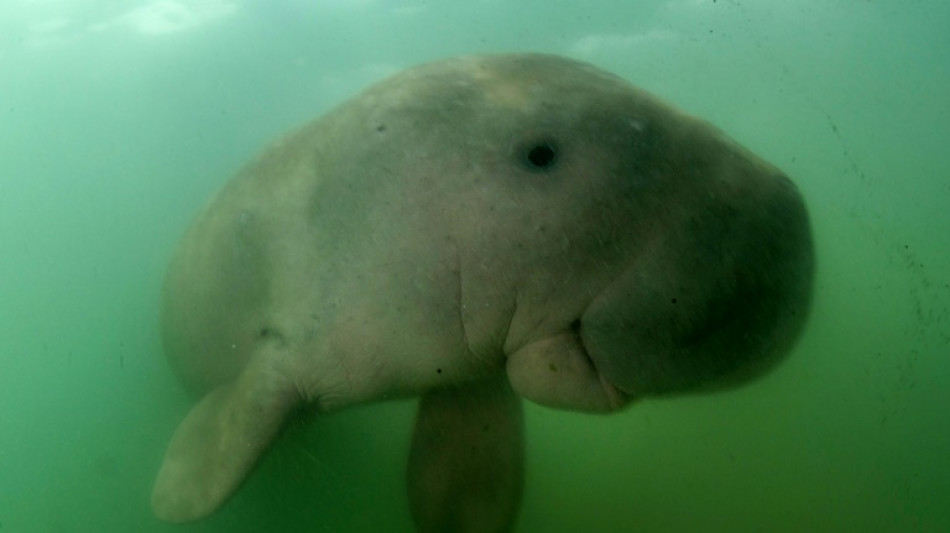
Sea cows threatened with extinction / Photo: Sirachai ARUNRUGSTICHAI - AFP/File

Sea cows threatened with extinction

Dugongs -- large herbivorous marine mammals commonly known as "sea cows" -- are now threatened with extinction, according to an official list updated Friday.

Text size:

These gentle cousins of the manatee graze on seagrass in shallow coastal waters -- but their populations in East Africa and New Caledonia have now entered the IUCN (International Union for Conservation of Nature) Red List as "critically endangered" and "endangered," respectively.

Globally, the species remains classified as "vulnerable."

Their primary threats are unintentional capture in fishing gear in East Africa and poaching in New Caledonia, as well as boat injuries in both locations.

In East Africa, fossil fuel exploration and production, pollution and unauthorized development are also degrading their seagrass food source, while in New Caledonia seagrass is being damaged by agricultural run-off and pollution from nickel mining, among other sources.

Habitat degradation is compounded by climate change throughout the dugongs' range.

"Today's IUCN Red List update reveals a perfect storm of unsustainable human activity decimating marine life around the globe," said Bruno Oberle, IUCN Director General.

The updated list comes as delegates from across the world meet in Montreal for a UN biodiversity conference to finalize a new framework for "a peace pact with nature," with key goals to preserve Earth's forests, oceans and species.

In other updates to the IUCN list, 44 percent of all abalone shellfish are now threatened with extinction, while pillar coral has moved to "critically endangered."

Abalone species are considered gastronomic delicacies, leading to unsustainable extraction and poaching by international organized crime networks, for example in South Africa.

They are also deeply susceptible to climate change, with a marine heatwave killing 99 percent of Roe's abalones off Western Australia in 2011.

Agricultural and pollution run-off also cause harmful algal blooms, which have eliminated the Omani abalone, a commercial species found in the Arabian Peninsula, across half of its former range.

Twenty of the world's 54 abalone species are now threatened with extinction.

"Abalones reflect humanity's disastrous guardianship of our oceans in microcosm: overfishing, pollution, disease, habitat loss, algal blooms, warming and acidification, to name but a few threats," said Howard Peters of the University of York who led the assessment.

"They really are the canary in the coal mine."

Pillar coral, which are found throughout the Caribbean, moved from "vulnerable" to "critically endangered" after its population shrunk by over 80 percent across most of its range since 1990.

Bleaching caused by sea surface temperature rise -- as well as antibiotics, fertilizers and sewage running into the oceans -- have left them deeply susceptible to Stony coral tissue soss disease, which has ravaged their numbers over the past four years.

Overfishing around coral reefs has piled on more pressure by depleting the number of grazing fish, allowing algae to dominate.

M.Saito--JT