The Japan Times - A quarter of World Cup games risk searing heat: scientists

EUR -
AED 4.301369
AFN 72.61664
ALL 95.571751
AMD 431.753162
ANG 2.097054
AOA 1075.195968
ARS 1630.356139
AUD 1.615523
AWG 2.109692
AZN 1.989761
BAM 1.955671
BBD 2.358985
BDT 143.770526
BGN 1.955873
BHD 0.441849
BIF 3485.018135
BMD 1.171238
BND 1.490489
BOB 8.093709
BRL 5.886877
BSD 1.171243
BTN 112.033661
BWP 15.778432
BYN 3.263657
BYR 22956.261284
BZD 2.355625
CAD 1.605545
CDF 2624.743572
CHF 0.915773
CLF 0.0264
CLP 1039.02867
CNY 7.953817
CNH 7.948301
COP 4442.235669
CRC 533.173971
CUC 1.171238
CUP 31.037802
CVE 110.623175
CZK 24.331119
DJF 208.152658
DKK 7.473949
DOP 69.396024
DZD 155.171775
EGP 61.983428
ERN 17.568567
ETB 184.323544
FJD 2.582755
FKP 0.86579
GBP 0.866072
GEL 3.139163
GGP 0.86579
GHS 13.239874
GIP 0.86579
GMD 85.500625
GNF 10280.538227
GTQ 8.935411
GYD 245.040129
HKD 9.171847
HNL 31.166938
HRK 7.534101
HTG 152.965144
HUF 358.447383
IDR 20497.715975
ILS 3.409116
IMP 0.86579
INR 112.174484
IQD 1534.321545
IRR 1537835.258793
ISK 143.628715
JEP 0.86579
JMD 185.232259
JOD 0.830423
JPY 185.033285
KES 151.300243
KGS 102.42502
KHR 4697.834644
KMF 493.091385
KPW 1054.133717
KRW 1748.330392
KWD 0.361034
KYD 0.976065
KZT 549.719082
LAK 25708.670405
LBP 105119.549576
LKR 380.121443
LRD 214.512526
LSL 19.220345
LTL 3.458361
LVL 0.70847
LYD 7.40808
MAD 10.744643
MDL 20.087277
MGA 4889.917874
MKD 61.62673
MMK 2458.760711
MNT 4192.649925
MOP 9.44796
MRU 46.849839
MUR 54.825636
MVR 18.049315
MWK 2039.711853
MXN 20.114311
MYR 4.602378
MZN 74.831569
NAD 19.219795
NGN 1605.18286
NIO 42.990287
NOK 10.746096
NPR 179.260544
NZD 1.975516
OMR 0.450344
PAB 1.171263
PEN 4.015592
PGK 5.106538
PHP 72.036981
PKR 326.312866
PLN 4.248664
PYG 7162.528021
QAR 4.267406
RON 5.208725
RSD 117.422465
RUB 86.872914
RWF 1710.007218
SAR 4.401596
SBD 9.407684
SCR 16.32793
SDG 703.328487
SEK 10.926384
SGD 1.490669
SHP 0.874447
SLE 28.810289
SLL 24560.273944
SOS 669.367056
SRD 43.563074
STD 24242.258167
STN 24.888804
SVC 10.248325
SYP 129.514263
SZL 19.307805
THB 37.889502
TJS 10.968658
TMT 4.111045
TND 3.373744
TOP 2.820059
TRY 53.21226
TTD 7.946612
TWD 36.922685
TZS 3042.466155
UAH 51.504267
UGX 4391.785595
USD 1.171238
UYU 46.527729
UZS 14146.21033
VES 595.064556
VND 30862.702192
VUV 138.181319
WST 3.165549
XAF 655.930578
XAG 0.013484
XAU 0.00025
XCD 3.165328
XCG 2.110843
XDR 0.813974
XOF 654.135719
XPF 119.331742
YER 279.486648
ZAR 19.236545
ZMK 10542.544236
ZMW 22.107204
ZWL 377.1381
  • CMSC

    -0.0600

    23.05

    -0.26%

  • AZN

    3.1800

    187.72

    +1.69%

  • BCC

    -0.9500

    66.98

    -1.42%

  • BCE

    -0.0800

    24.39

    -0.33%

  • GSK

    0.0900

    50.99

    +0.18%

  • BP

    -0.2600

    44.14

    -0.59%

  • NGG

    -0.2600

    86.98

    -0.3%

  • BTI

    1.7100

    65.35

    +2.62%

  • RIO

    2.5400

    112.04

    +2.27%

  • CMSD

    -0.0400

    23.56

    -0.17%

  • RBGPF

    -0.2100

    60.79

    -0.35%

  • RYCEF

    -0.1700

    16.03

    -1.06%

  • RELX

    -1.1500

    31.62

    -3.64%

  • VOD

    0.4150

    15.51

    +2.68%

  • JRI

    -0.0100

    13.13

    -0.08%

A quarter of World Cup games risk searing heat: scientists
A quarter of World Cup games risk searing heat: scientists / Photo: CHARLY TRIBALLEAU - AFP/File

A quarter of World Cup games risk searing heat: scientists

One in four 2026 World Cup games could take place in very hot conditions as climate change has increased the risk of extreme heat in North America since the US hosted the 1994 tournament, researchers warned Thursday.

Text size:

Concerns about heat already prompted FIFA to mandate a cooling break during each half of the World Cup matches that will take place between June 11 and July 19 in 16 stadiums across the United States, Mexico and Canada.

"Players and fans face a much higher risk of gruelling heat and humidity at the 2026 World Cup compared to the 1994 tournament on the same continent," World Weather Attribution, a network of climate scientists, said in a statement.

WWA's scientific analysis estimates that 26 of the 104 matches could occur in conditions reaching at least 26C Wet Bulb Globe Temperature (WBGT) -- an index that measures how effectively the human body can cool itself under heat, humidity, sun exposure and wind.

At 26C WBGT, the international footballers' union FIFPRO recommends cooling breaks as heat strain becomes a real risk for players.

Of those 26 matches, 17 will be played in stadiums with cooling systems, reducing risks for players and fans.

During the 1994 World Cup hosted by the United States, 21 games would have been expected to reach a similar heat threshold, according to WWA.

Five games are expected to be played in conditions of 28C WBGT or higher, a level that FIFPRO says should lead to the delay or postponement of matches until conditions are safer for players and fans.

That risk has nearly doubled compared to the 1994 World Cup.

"It's dangerous for players, but of course there are also the fans who might gather outdoors and they are at even more risk because they will not be taken care of by a lot of medical doctors," said Friederike Otto, WWA co-founder and climate science professor at Imperial College London.

Three of the 16 stadiums -- in Dallas, Houston and Atlanta -- have air conditioning.

But more than a third of the games with a one in 10 chance of exceeding 26C will take place in venues without air conditioning.

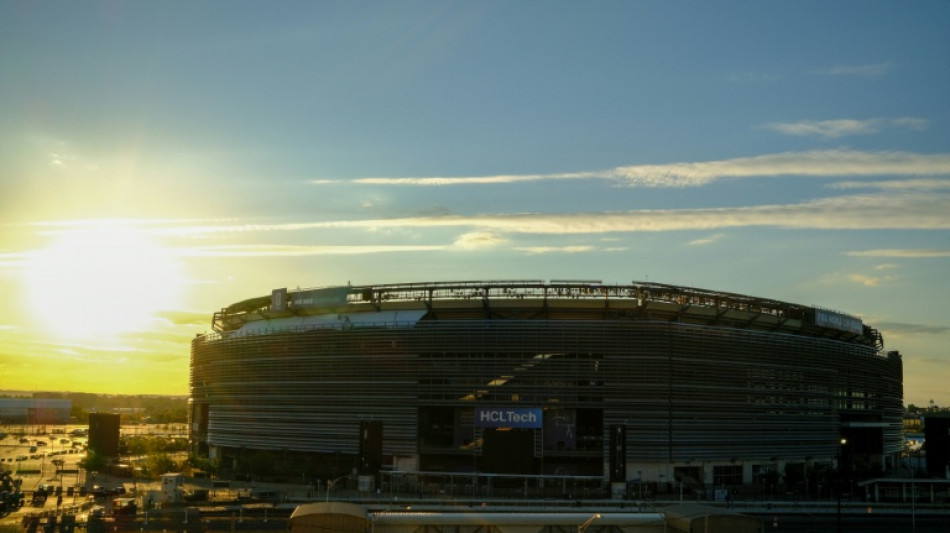
The final, which will be played on July 19 at MetLife Stadium in New Jersey, has a one in eight chance of seeing 26C WBGT conditions and a 2.7 percent risk of 28C, according to WWA.

"That the World Cup Final itself -- one of the biggest sporting occasions on the planet -- faces a non-insignificant risk of being played in 'cancellation-level' heat should be a wake-up call for FIFA and fans," Otto said.

Y.Hara--JT