South Africa Mourns Dr Phumzile Mlambo-Ngcuka; Legacy of Economic Inclusion for Women Passes to New Generation

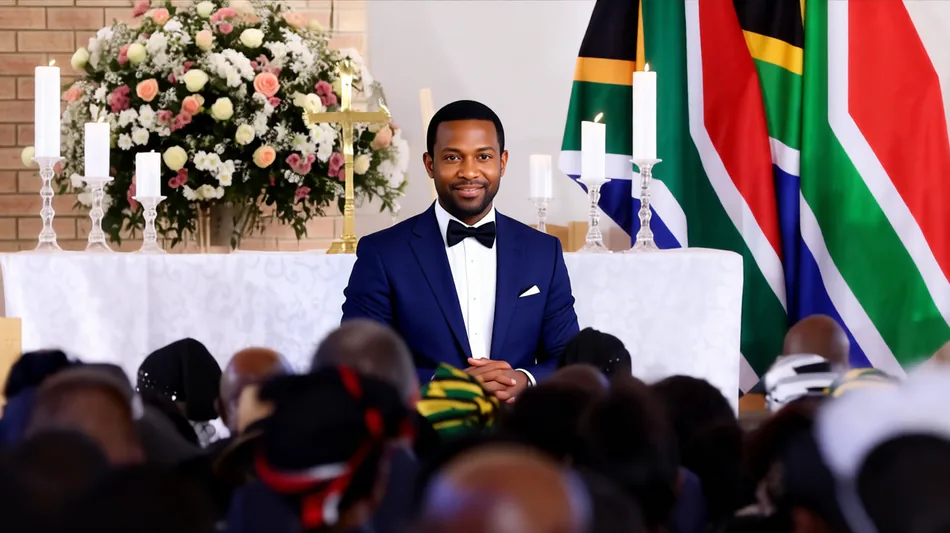
South Africa has laid to rest Dr Phumzile Mlambo-Ngcuka, its first woman deputy president and a prominent international advocate for gender equality, who died on November 20 at age 71. Her passing marks the end of an era for women’s rights, but her work to secure economic freedom for women remains unfinished.
South Africa has laid to rest Dr Phumzile Mlambo-Ngcuka, the country’s first woman deputy president and a globally recognized advocate for women’s rights, who died on November 20 at the age of 71. Her death concludes a life defined by a steadfast commitment to the dignity, advancement, and economic freedom of women, leaving behind a mandate that her unfinished work now passes to the next generation.
The national mourning period serves as a moment for reflection on a specific aspect of her legacy: the conviction that political freedom is insufficient without economic agency. Dr Mlambo-Ngcuka argued that true liberty requires that women possess the means, opportunities, and resources necessary to shape their own futures. This philosophy guided her career across government, business, and international diplomacy.
Her approach to inclusion was comprehensive. She defined it not merely as access to a single institution or product, but as the ability for a woman to learn, earn, own assets, lead organizations, and make decisions safely. For her, financial inclusion meant the power to participate in the economy on fair terms, challenging the status quo by bringing together business leaders, government officials, and community members as partners in progress.
During her tenure as minister of minerals and energy, she championed women’s participation in the mining sector. As deputy president, she promoted skills development and inclusive growth, supporting initiatives such as Jobs for Growth, which assisted businesses and cooperatives owned by women. Her influence extended to the international stage when she served as executive director of UN Women from 2013 to 2021, helping to advance gender equality as a global priority, including through the 2030 Agenda for Sustainable Development.
The urgency of her work is underscored by current economic data. Statistics South Africa reported that in early 2026, almost four in 10 young women aged 15 to 24 were not in work, education, or training, a rate higher than that of young men. Furthermore, disparities in access to capital remain stark; in 2023, only 4.9% of women running informal businesses received formal start-up financing, compared with 12.7% of men.
These gaps raise fundamental questions about how to build an economy that recognizes and supports women’s work, enterprise, and potential. Dr Mlambo-Ngcuka believed empowerment must begin before a woman enters the workforce or starts a business. Through the Umlambo Foundation, she invested in teachers and pupils, emphasizing that while education opens doors, financial literacy and life skills help girls and young women walk through them with confidence.
She had previously cautioned that at the current pace of progress, gender equality might not be achieved until 2094. She viewed this timeline as unacceptable, framing it instead as a challenge to accelerate efforts. The call now is for practical action taken in partnership across sectors.
Business leaders are urged to open the first door by providing fair pay, apprenticeships, real pathways to leadership, and fair access to contracts for businesses owned by women. Governments are called upon to keep girls in school, ensure safety in homes, streets, and workplaces, and design job programs with young women in mind. Schools, families, and communities are tasked with teaching girls early about money, work, and their rights, while backing their ambitions.
Financial institutions and funders are asked to look beyond traditional metrics like payslips and collateral to recognize the many ways women earn and support their homes and communities. Additionally, every individual is encouraged to mentor, sponsor, or employ a young woman and make room for her voice.
Dr Mlambo-Ngcuka’s legacy is described not as a monument to admire, but as a baton to carry. Those who hold it now have a duty to pay it forward to women, girls, and everyone vulnerable to being left out. This involves opening doors for the next woman so that no one has to find the way alone.
The commitment extends to measuring progress by outcomes rather than intentions. Dr Mlambo-Ngcuka did not wait for the world to change; she worked to change it, bringing others along with her. The greatest honor in continuing her work is building a society where a woman’s circumstances do not determine the limits of her possibilities.
Y.Watanabe--JT