Ohio Leads Nationwide Wave of Defeats for Data Center Developers in Local Elections

Data center developers faced a significant electoral defeat last week, losing 40 of 41 local ballot measures across the United States. Ohio emerged as the primary battleground for the anti-data center movement, where voters in multiple communities rejected proposals to allow large facilities within city limits, signaling growing resistance to the industry's rapid expansion.
Data center developers suffered a historic electoral setback last week, losing 40 of 41 local ballot measures nationwide. The wave of rejections marks a significant shift in the political landscape for an industry that has long relied on local support to build massive facilities required for artificial intelligence and cloud computing. Ohio served as the epicenter of this backlash, where voters in at least 21 communities decisively rejected data center expansion, outpacing other states such as Illinois, which had four measures, and Maine, with three.
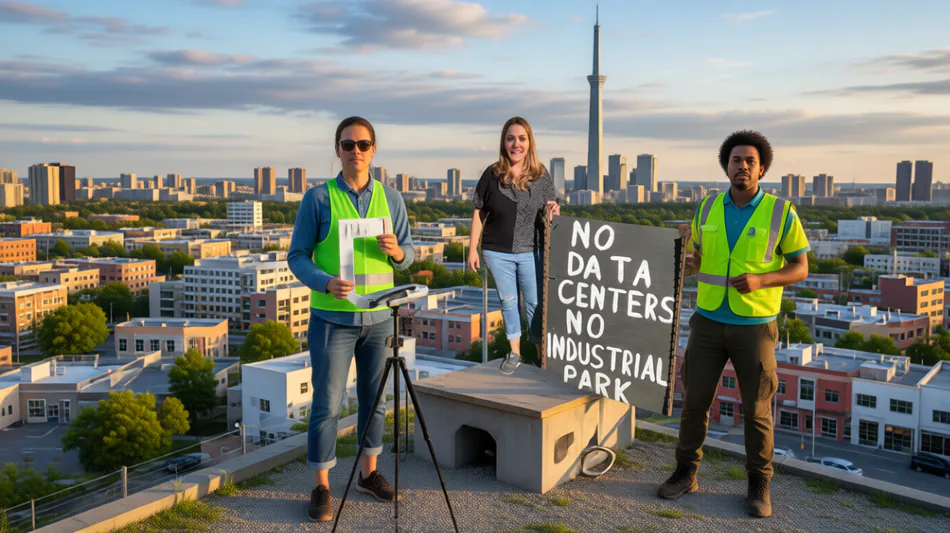
In Sunbury, a suburb of Columbus, approximately 20 volunteers gathered signatures, distributed yard signs, and knocked on doors to support a referendum banning large data centers within city limits. The campaign succeeded with 79 percent of the vote. Alicia Doty, a resident living near a proposed Amazon Web Services facility that inspired the measure, described the victory as a testament to the power of community organizing.
"We are much stronger together," Doty said in an interview following the election. She noted that the campaign’s success stemmed from genuine community concerns regarding the scale of these projects, their potential emissions, and their substantial demands for electricity and water. Opponents argue that these resources could drive up costs and strain supplies for other local users. Fears related to artificial intelligence also played a role, as the largest data centers provide the computing power necessary for AI systems.
The campaign in Sunbury was further aided by missteps from opponents of the ban. NetChoice, a trade group representing members including Amazon, led the visible opposition against the referendum. NetChoice canvassers and printed materials attempted to discredit the ballot measure by labeling it as funded by "extreme California special interests." One door-hanger distributed in Sunbury featured a cartoon wolf holding a clipboard with the text "PATASKALA BEWARE" and the phrase "There is a California wolf at our door," referencing a neighboring city that also held a referendum.
Pataskala, located 23 miles from Sunbury, saw its own voters reject data centers by a margin of 74 percent to 26 percent. The warning about funding from California referred to a $10,000 donation to Conserve Ohio, a statewide organization opposing data centers, from PowerSwitch Action, an Oakland-based nonprofit supporting progressive causes. This donation was the largest of $16,356 listed in Conserve Ohio’s recent report filed with the Ohio Secretary of State. Excluding this contribution, the average donation to the group was $40.
Austin Baurichter, a leader at Conserve Ohio, highlighted the irony of data center developers, many based on the West Coast, criticizing his group for accepting funds from a California organization. "We are and will continue to be grateful for any donation help we can get from anyone," Baurichter said. Doty clarified that her local group spent approximately $5,000, raised largely from its own members, and dismissed the notion that PowerSwitch Action was funding the Sunbury campaign directly.
NetChoice did not respond to requests for comment. An Amazon spokesperson stated in an email that the company appreciates the opportunity to engage with communities on the benefits of data center investments and remains committed to responsible development. In a blog post published on October 1, Amazon outlined its approach to addressing common objections regarding infrastructure projects.
Dan Diorio, executive vice president of state policy and government affairs for the Data Center Coalition, issued a statement emphasizing the industry's commitment to engaging with residents and local leaders. He warned that communities indicating they are "closed for business and investment" may lose opportunities, costing them high-wage jobs and tax revenue.
The election results were viewed as a major victory for Conserve Ohio, which worked with opposition campaigns across the state on a small budget to advise residents on getting measures on local ballots. Nikki Gerber, a leader at Conserve Ohio and owner of an outdoor tourism business, expressed amazement at the results. "Voters acted like they want democracy back, and that gave me hope," she said. Gerber joined the push against data centers after Amazon Web Services proposed building a facility in her county.
In Sprigg Township, which includes the proposed project site, voters passed a referendum last week to establish zoning regulations limiting data centers. However, Gerber expressed concern that the referendum text, revised by township officials, may not be strong enough. She also voiced wariness regarding potential state or local efforts to override local opposition.
When asked if she was pleased with the election of Democrat Amy Acton, former director of the Ohio Department of Health, as governor, Gerber remained skeptical. Acton has supported a "conditional moratorium" on data center development. "I still don’t have any faith in the government until I see the government do something for us," Gerber said.
According to Ballotpedia, data center opponents won in 40 of the 41 local races where development was on the ballot. The only exception was Harwood, North Dakota, near Fargo, where voters rejected a referendum requiring additional review of proposed development by a margin of 76 percent to 24 percent. The regional chamber of commerce had opposed the measure, arguing that taxes would increase with new limits on development.
Equity analysts viewed the nationwide results as potentially harmful to the economy. Morgan Stanley, the investment bank, noted in a report cited by the Associated Press that the electoral success of Democrats increases the chances of restrictions on development. The bank suggested this could "split the country into areas that are open to new data centers and those without." Morgan Stanley identified Acton and incoming Texas Governor Gina Hinojosa as officials who could restrict data center development.
Ohio and Texas are among the top U.S. markets for data center development, making these electoral outcomes significant for the industry. While developers may hope that the backlash will lose momentum, Doty stated that the Sunbury campaign was not an isolated incident. Organizers are prepared to challenge any effort to build a data center despite the referendum’s outcome, as well as projects in other industries they believe are not in the community’s best interests.
"Our group is not going away," Doty said.
The election results coincide with broader developments in energy policy and climate negotiations. The U.S. Senate has begun debate on the Bipartisan American Affordability and Jobs Act, or BAAJA, following a procedural vote of 73-25. While the vote indicates support for the measure, several Democrats stated the bill needs changes before final passage. Environmental organizations have warned that the legislation could lead to a massive buildout of natural gas power plants.
Meanwhile, at the United Nations Conference of the Parties climate talks in Turkey, observers noted the continued reliance on fossil fuels, with airplanes and buses transporting attendees to the event. This year’s gathering highlighted decades of stalled efforts and false starts in global climate policy.
In other energy developments, Silicon Ranch announced the first commercial-scale solar array in Christiana, Tennessee, that incorporates cattle grazing. The project represents a significant step forward for agrivoltaics, which combines agriculture and solar power. Additionally, the International Energy Agency published its annual renewable energy report ahead of COP31, forecasting the addition of 3.6 terawatts of solar power capacity by 2031. This growth would drive global renewable electricity to reach approximately 45 percent market share in 2031, up from 33 percent in 2025. More than half of this growth would come from utility-scale projects, with the remainder from rooftop solar and other customer-owned systems.
T.Kobayashi--JT