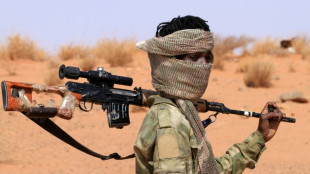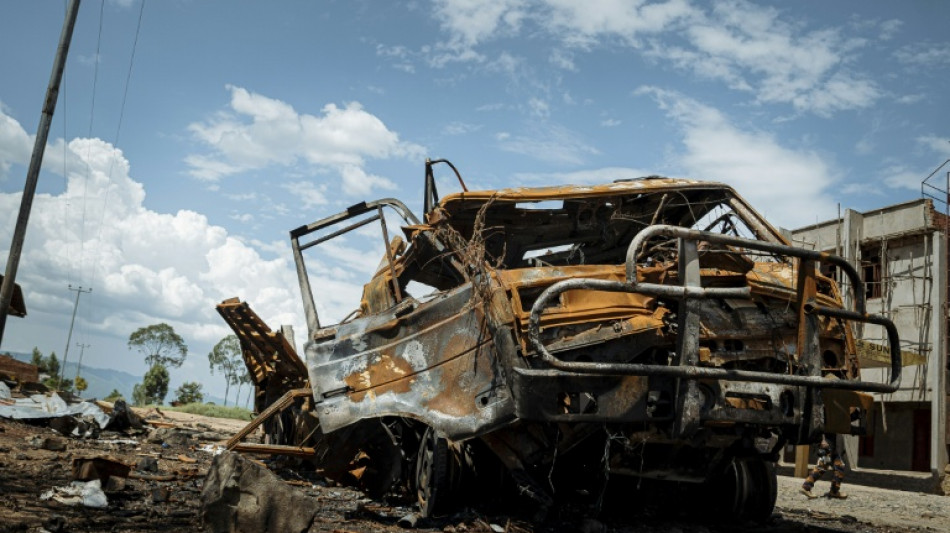
Ceasefire verification mission heads to east DR Congo / Photo: Jospin Mwisha - AFP

A mission to verify a fragile ceasefire between the Congolese army and Rwanda-backed M23 armed group was deployed Monday to the eastern Democratic Republic of Congo as the two sides traded accusations of abuse.
The eastern DRC has suffered decades of conflict with multiple armed groups fighting over its mineral-rich territory, including the M23, which seized swathes of the region last year.
Peace efforts led by Qatar and the United States saw two separate peace accords signed last year, but fighting has continued on the ground.
On Sunday, the Swiss government announced that the DRC and M23 had agreed to a fresh roadmap for peace talks, following negotiations held in Switzerland.
It also said a mission would be deployed to verify violations of a previous ceasefire agreement signed in Doha in July 2025.
The mission, the first of its kind, comprises members of the Congolese government and M23, as well as observers from member countries of the International Conference on the Great Lakes Region (ICGLR).
It was deployed on Monday by UN helicopters to Minembwe in South Kivu province, which has seen intense clashes in recent months, according to UN and government sources.
The mission will also travel to the lakeside town of Uvira, from where the M23 withdrew in January, as well as to the territory of Kalehe, where fighting has been reported in recent weeks, South Kivu governor Jean-Jacques Purusi told AFP.
Neither the DRC nor M23 authorities have yet reacted to the announcement of the mission.
Rwanda has long denied any direct support for the M23, and President Paul Kagame did not address the new agreement during a long press conference on Monday in Kigali.
He said previous agreements had failed as they did not tackle "the root cause" of the conflict, namely the continued presence in eastern DRC of Hutu militants linked to the 1994 genocide in Rwanda.
- Alleged abuses -
Several international mediation efforts in eastern DRC, where a myriad of armed groups are active, have failed.
The DRC in a statement on Monday condemned alleged "crimes and serious human rights violations" committed by the M23 in the territories under its control and accused the group of killing "more than 300 people" in June and July.
An M23 spokesperson on X countered that government forces had launched a "deadly attack" with artillery on a village near Minembwe.
Both sides have regularly accused the other of alleged abuses and ceasefire violations, often unverifiable by independent parties.
The area surrounding Minembwe, which has been fiercely contested for months, has been particularly difficult for international organisations to access.
Reports by NGOs and UN experts have said the M23 has also silenced dissenting voices, including journalists and human rights activists in areas under its control.
In April, the DRC and M23 agreed to facilitate humanitarian aid and release prisoners following talks in Switzerland. An initial group of prisoners was handed over to the M23 by the Congolese government earlier this month.
New talks were held behind closed doors from August 17 to August 21 which included representatives from the US, Qatar, Switzerland, the African Union Commission, and Togo, serving as African Union mediator.
The two sides said they had "agreed on the importance of a standardised method for reporting allegations of ceasefire violations", according to the Swiss government statement on Sunday.
They also agreed to establish a "mechanism tasked with reviewing progress and addressing challenges in implementation of obligations and commitments under the Doha Framework Agreement", it added.
T.Shimizu--JT