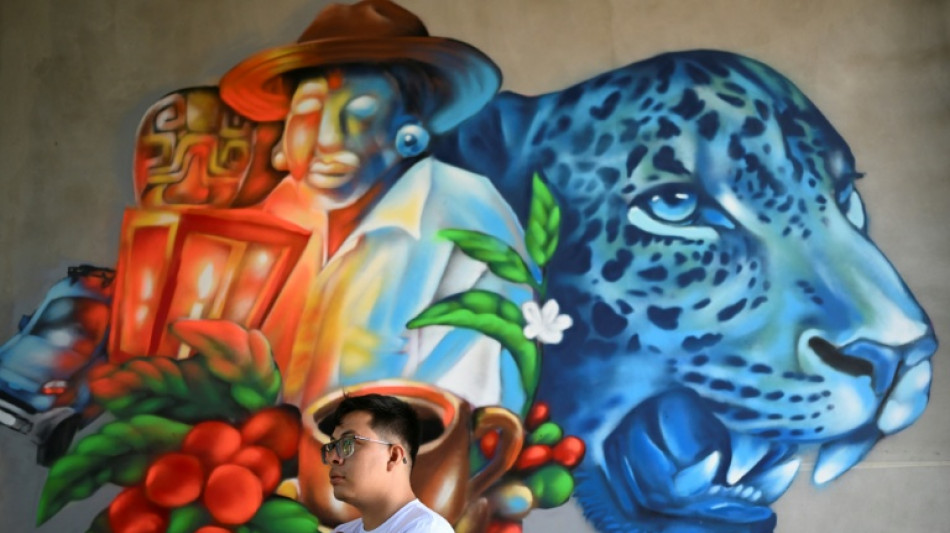
Winning back walls from gangs, artists fill El Salvador's towns with color / Photo: Marvin RECINOS - AFP

On the walls where gang members in El Salvador once marked their turf, urban artists are now creating large murals in a traveling festival that fills the streets of the Central American country with color.
Cans of paint are used by a dozen painters to depict jaguars, faces, flowers, birds, and other local elements, this time in the picturesque town of Concepcion de Ataco, Ahuachapan, nestled among coffee-growing mountains about 65 km (40 miles) west of San Salvador.
Before, it was "frightening" to go out into gang territories and paint murals because of the "harassment" from gangs, said Isaac Sosa, 31, founder and organizer of the Pigmen Trip festival, which he has been holding for eight years in different locations in El Salvador.
Gangs have lost power in this small nation due to the "war" waged since 2022 by President Nayib Bukele, a conflict marred by allegations of abuses that could constitute crimes against humanity, according to NGOs.
"With this change, this rebirth we are experiencing as a country...it's a different atmosphere, more peaceful, more enjoyable, and with greater freedom of expression," said Sosa.
"Years later, we won back the walls from the gangs," said the muralist who considers art a "magical tool" for "social transformation."
- "It wasn't so easy to paint" -
More than 200 murals have been created since the festival began, which, in addition to Salvadoran artists, has also featured artists from Colombia, Mexico, Brazil, Peru and Argentina.
Darwin Flores, a 36-year-old artist, recalls that before the gangs were neutralized, they couldn't attempt to paint in the "hot zones" without taking every precaution.
"You had to know exactly where you were going to be, who you were going to be painting the mural with, because we couldn't afford to be ignorant," Flores said in this town of cobblestone streets and clay tile roofs.
Now he says he can enter any neighborhood, as he recently did in La Campanera, which for years was subjected to the terror of the gangs.
"It wasn't so easy to paint back then, but now everything is very different," says Cristian Juarez, a 29-year-old who works with a prosthesis after losing his right leg in an accident 11 years ago.
Standing in front of his mural, depicting the face of a girl with a feathered headdress, he laments that many artists were victims of the gangs and are now "disappeared."
Alongside him, Cristian Lara, a 50-year-old merchant, thanked the festival organizers for "blessing" his house with a mural, and stated that there are "new winds of change" in El Salvador.
M.Fujitav--JT