IMF cuts 2026 world growth forecast, flags risks from new Mideast fighting / Photo: Stefani Reynolds - AFP/File

The IMF cut its 2026 global growth projection again Wednesday, flagging "uncertainty and risks" to the economic outlook as fighting reignited in the Middle East.
Global economic growth is estimated at 3.0 percent this year, said the International Monetary Fund, down from 3.1 percent in its April forecast.
The projection, in its World Economic Outlook update, was made before renewed exchanges of fire between the United States and Iran in recent hours.
"Developments overnight illustrate the uncertainty and risks that surround the outlook," said Petya Koeva Brooks, deputy director at the IMF's research department.
"We're going to be monitoring developments very closely," she told reporters.
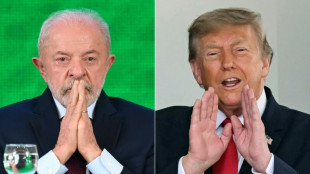
Her comments Wednesday came after US President Donald Trump declared Washington's ceasefire with Tehran over, before adding that US forces would strike Iran hard in the coming night.
It is the second time this year that the fund has lowered its overall growth expectations. The growth rate marks a cooling from 2025 as well.
Global inflation is anticipated to accelerate to 4.7 percent this year, higher than earlier projected.
Koeva Brooks expects normalization from the war to gradually unfold over three quarters of a year, although shocks that lead to higher oil prices and inflation expectations could take further tolls on the global economy.
- AI offset -
For now, the overall growth downgrade is modest, as momentum in artificial intelligence -- driven by demand -- partially offsets the war's effects.
The IMF expects global growth to pick up in 2027 to 3.4 percent.
Deniz Igan, division chief at the IMF's research department, describes the bounceback as "a V-shaped recovery."
For this year, a delayed recovery from war on Iran, longer disruptions and higher costs is part of the reason the world economy will take a bigger hit, she told AFP.
Yet, fallout varies widely.
"Energy exporters outside the conflict zone benefit from favorable terms of trade, whereas economies plugged into the technology-led upturn experience stronger activity even if they are energy importers," the fund said.
"In contrast, activity weakens for energy importers with limited participation in the technology value chain," it added.
US-Israeli strikes targeting Iran since February 28 sparked Tehran's retaliation in virtually blocking off the Strait of Hormuz, plunging the Middle East into war.
As traffic stalled in the key waterway, global oil prices soared -- weighing on economies.
Oil and gas shipments resumed as a temporary US-Iran deal paused hostilities, but fighting has restarted.
- 'Glaring differences' -
Although the world economy has weathered shocks from the war better than feared, the IMF warned: "The global picture blurs glaring differences across countries."
Retail gasoline costs jumped by 30 percent in emerging Asia after the onset of war, and only by 15 percent in Latin America.
While the US economy is still set to expand 2.3 percent this year, growth in the Middle East and central Asia was downgraded by 1.2 percentage points to 0.7 percent.
The euro area is set to grow 0.9 percent this year, also a downward revision. Growth in France is pegged at 0.6 percent -- 0.3 percentage points lower than earlier expected.
The world's second biggest economy, China, saw its growth projection adjusted upwards slightly to 4.6 percent.
Still, the IMF warns that effects of the war have not fully passed through.
The release of strategic reserves has provided some relief amid reduced energy flows, but there could still be weakness ahead.
Trade fragmentation could accelerate too, risking higher prices.
Nonetheless, there were some bright spots, the IMF said.
There was a "positive surprise" from some economies key to global technology supply chains, despite their exposure to disruptions from the war.
The top four net exporters of AI-related hardware -- Taiwan, South Korea, Thailand and Malaysia -- saw resilient growth.
Igan added that expectations of higher inflation this year merely mark a pause, "not a break from the disinflation trend."
T.Maeda--JT