The Japan Times - IMF boosting financial support for four African nations over war impact

EUR -
AED 4.248105
AFN 75.770596
ALL 92.762559
AMD 422.720519
ANG 2.0703
AOA 1061.880869
ARS 1706.354669
AUD 1.637736
AWG 2.083564
AZN 1.971037
BAM 1.955432
BBD 2.326962
BDT 141.823334
BGN 1.962242
BHD 0.435718
BIF 3453.950583
BMD 1.156733
BND 1.477822
BOB 13.465468
BRL 6.040925
BSD 1.155383
BTN 110.192281
BWP 15.565073
BYN 3.514139
BYR 22671.957183
BZD 2.323663
CAD 1.60514
CDF 2629.253412
CHF 0.941015
CLF 0.026895
CLP 1056.7913
CNY 7.800083
CNH 7.801606
COP 3603.822404
CRC 519.802266
CUC 1.156733
CUP 30.653411
CVE 110.244272
CZK 24.210763
DJF 205.741316
DKK 7.473191
DOP 67.627285
DZD 152.299364
EGP 57.668157
ERN 17.350988
ETB 186.897659
FJD 2.584377
FKP 0.853399
GBP 0.855002
GEL 3.019524
GGP 0.853399
GHS 12.651621
GIP 0.853399
GMD 85.024294
GNF 10149.091752
GTQ 8.815343
GYD 241.67456
HKD 9.077054
HNL 30.972177
HRK 7.532994
HTG 151.121586
HUF 363.017812
IDR 20622.34285
ILS 3.418265
IMP 0.853399
INR 110.410701
IQD 1513.515426
IRR 1590030.052589
ISK 142.166837
JEP 0.853399
JMD 182.965599
JOD 0.820169
JPY 184.272161
KES 149.331922
KGS 101.156702
KHR 4675.120976
KMF 493.925187
KPW 1041.059598
KRW 1638.477341
KWD 0.357061
KYD 0.962819
KZT 536.1092
LAK 26076.097131
LBP 103462.246866
LKR 384.457714
LRD 209.700572
LSL 18.691186
LTL 3.415531
LVL 0.699696
LYD 7.356617
MAD 10.715985
MDL 20.034233
MGA 4974.064769
MKD 61.518433
MMK 2428.743274
MNT 4161.410395
MOP 9.338444
MRU 46.399276
MUR 54.486429
MVR 17.871955
MWK 2003.423313
MXN 19.69164
MYR 4.726298
MZN 73.927211
NAD 18.691186
NGN 1572.659254
NIO 42.522005
NOK 10.922567
NPR 176.30785
NZD 1.963226
OMR 0.444768
PAB 1.155383
PEN 3.896867
PGK 5.190024
PHP 71.098608
PKR 320.900664
PLN 4.306226
PYG 6934.696128
QAR 4.211808
RON 5.236186
RSD 117.317942
RUB 97.377191
RWF 1698.980555
SAR 4.340955
SBD 9.310058
SCR 15.912008
SDG 694.622124
SEK 11.020235
SGD 1.480159
SHP 0.856984
SLE 28.344188
SLL 24256.10146
SOS 660.275854
SRD 43.926343
STD 23942.02751
STN 24.495394
SVC 10.109099
SYP 15039.835978
SZL 18.688486
THB 38.337629
TJS 10.669694
TMT 4.060131
TND 3.387463
TOP 2.785134
TRY 55.369898
TTD 7.827528
TWD 37.04043
TZS 3061.72433
UAH 51.684982
UGX 4292.192975
USD 1.156733
UYU 46.291296
UZS 13754.413873
VES 890.810236
VND 30246.82002
VUV 137.249116
WST 3.163007
XAF 655.833689
XAG 0.017878
XAU 0.000264
XCD 3.126128
XCG 2.082208
XDR 0.81787
XOF 655.833689
XPF 119.331742
YER 274.381102
ZAR 18.703474
ZMK 10411.984809
ZMW 21.835894
ZWL 372.467396
  • CMSC

    -0.0250

    21.45

    -0.12%

  • BCC

    -0.8900

    83.24

    -1.07%

  • NGG

    -0.1500

    81.05

    -0.19%

  • RIO

    -0.4100

    95.68

    -0.43%

  • RBGPF

    0.0000

    71.34

    0%

  • BP

    0.2196

    42.53

    +0.52%

  • GSK

    -0.4785

    49.52

    -0.97%

  • BCE

    0.1500

    23.47

    +0.64%

  • BTI

    -0.2900

    57.06

    -0.51%

  • AZN

    -0.7900

    156.45

    -0.5%

  • JRI

    0.0635

    12.61

    +0.5%

  • CMSD

    -0.0100

    21.58

    -0.05%

  • RELX

    -0.2400

    34.43

    -0.7%

  • VOD

    0.2000

    16.42

    +1.22%

  • RYCEF

    0.1300

    20.84

    +0.62%

IMF boosting financial support for four African nations over war impact
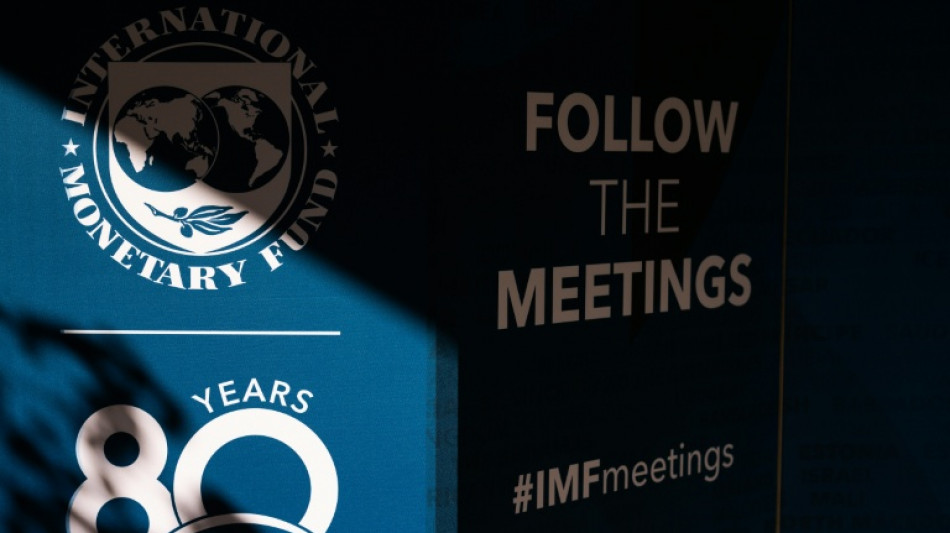
IMF boosting financial support for four African nations over war impact / Photo: Tierney CROSS - AFP

IMF boosting financial support for four African nations over war impact

The International Monetary Fund on Thursday announced it was stepping up financial support for at least four African countries to help them manage the economic fallout of the US-Israel war on Iran.

Text size:

IMF chief spokesperson Julie Kozack told reporters in Washington that the multilateral lender would provide increased or accelerated access to funds to Ethiopia, The Gambia and Burkina Faso.

The Fund was also in "accelerated" talks with Malawi on a new IMF financial assistance program.

The war has plunged the Middle East into violence, with Tehran's retaliatory action sending global energy prices skyrocketing after it virtually blockaded the key Strait of Hormuz.

The move has also blocked supply chains for fertilizers, causing food security concerns across the world and particularly in Africa, where many countries are dependent on imports from the Middle East.

In Ethiopia, the IMF's staff will propose to its board accelerated access to a $200 million tranche of an existing loan to the government. Ethiopia has an ongoing $3.4 billion program, with a $468 million tranche cleared for release this week.

In The Gambia, authorities have requested a 20 percent augmentation of their existing $172 million program, Kozack said, with a six-month extension and rephasing of access also in the cards.

In Burkina Faso, the IMF has reached an agreement with authorities on increasing the size of the country's program by $51 million, in part to ease balance of payments concerns caused by higher fertilizer import prices.

At the IMF's Spring Meetings this year, the organization's chief Kristalina Georgieva highlighted that the war had caused it to reduce its global growth forecast.

She estimated that vulnerable economies would need between $20-50 billion in financial assistance due to the economic fallout of the conflict.

On Thursday, IMF spokesperson Kozack said economic disruptions due to the war -- including higher commodity prices and supply chain issues -- were beginning to show up in macroeconomic data.

"There are also indications, as we discussed, that the shock is feeding into inflation, short-term inflation expectations have risen," she said.

Kozack said the shock was having an "asymmetric impact," with some developed economies and oil-exporting countries relatively cushioned while others were struggling to manage rising import bills.

"Not all countries are benefiting from robust tech investment," she said. "Some countries are hit harder by the war than others. We're particularly concerned about energy importing countries that are vulnerable or have weaker fiscal space."

Developed economies were not immune from the effects.

The effects of the war had forced the IMF to delay its timeline for US inflation returning to the Federal Reserve's two-percent target to late 2027, from a previous expectation of mid-2027, she said.

M.Saito--JT