The Japan Times - Pesticides causing widespread harm to animals and plants: study

EUR -
AED 4.127189
AFN 72.488144
ALL 90.959033
AMD 405.219302
ANG 2.011378
AOA 1031.658001
ARS 1736.882499
AUD 1.624648
AWG 2.025667
AZN 1.909796
BAM 1.959278
BBD 2.257607
BDT 139.217123
BGN 1.96423
BHD 0.423251
BIF 3360.480113
BMD 1.12381
BND 1.434653
BOB 13.32141
BRL 6.193991
BSD 1.12089
BTN 105.204748
BWP 15.400858
BYN 3.356258
BYR 22026.673375
BZD 2.254402
CAD 1.587454
CDF 2574.648533
CHF 0.920732
CLF 0.027662
CLP 1088.713242
CNY 7.498961
CNH 7.490698
COP 3681.769693
CRC 507.701216
CUC 1.12381
CUP 26.901753
CVE 110.459109
CZK 24.330539
DJF 199.604316
DKK 7.474617
DOP 68.201063
DZD 152.917826
EGP 60.194969
ERN 16.857148
ETB 181.101852
FJD 2.530597
FKP 0.837412
GBP 0.836171
GEL 2.910871
GGP 0.837412
GHS 13.098017
GIP 0.837412
GMD 83.161866
GNF 9930.672041
GTQ 8.565204
GYD 234.982934
HKD 8.815671
HNL 30.12594
HRK 7.60708
HTG 146.920798
HUF 362.419661
IDR 20327.75381
ILS 3.543097
IMP 0.837412
INR 105.0093
IQD 1702.571947
IRR 2137807.209253
ISK 137.206007
JEP 0.837412
JMD 178.066084
JOD 0.796751
JPY 177.670942
KES 146.005725
KGS 98.277027
KHR 4574.119484
KMF 493.352211
KPW 1011.428836
KRW 1503.483414
KWD 0.349224
KYD 0.934158
KZT 502.902699
LAK 25285.72228
LBP 100377.879988
LKR 372.70158
LRD 190.558258
LSL 18.508945
LTL 3.318318
LVL 0.679781
LYD 7.202786
MAD 10.951144
MDL 20.204865
MGA 5163.906558
MKD 61.549374
MMK 2359.659667
MNT 4047.345118
MOP 9.05317
MRU 45.498765
MUR 52.729462
MVR 17.318108
MWK 1943.650158
MXN 20.746538
MYR 4.555933
MZN 71.822747
NAD 18.508923
NGN 1513.333631
NIO 41.1536
NOK 10.600393
NPR 168.324796
NZD 1.993785
OMR 0.432098
PAB 1.12099
PEN 3.857047
PGK 5.045348
PHP 70.623023
PKR 310.865325
PLN 4.382342
PYG 7006.437072
QAR 4.097473
RON 5.343153
RSD 117.624686
RUB 93.005244
RWF 1658.343713
SAR 4.225993
SBD 9.099824
SCR 15.594276
SDG 675.970589
SEK 10.987466
SGD 1.435684
SHP 0.836199
SLE 25.791802
SLL 23565.735929
SOS 640.63719
SRD 42.201279
STD 23260.595265
STN 24.543567
SVC 9.808411
SYP 14611.775525
SZL 18.427218
THB 37.513108
TJS 10.289966
TMT 3.944573
TND 3.379855
TOP 2.705864
TRY 56.45206
TTD 7.602495
TWD 36.977856
TZS 2972.47485
UAH 51.063452
UGX 4590.066103
USD 1.12381
UYU 45.200235
UZS 13445.867654
VES 1008.260017
VND 28774.589716
VUV 134.858429
WST 3.124307
XAF 655.957
XAG 0.021361
XAU 0.0002739523
XCD 3.037152
XCG 2.020186
XDR 0.794592
XOF 655.957
XPF 119.331742
YER 265.783459
ZAR 18.401386
ZMK 10115.639965
ZMW 22.782441
ZWL 361.866318
SSP 6457.203087
MXV 2.331682
  • RYCEF

    0.1000

    19.81

    +0.5%

  • VOD

    -0.2500

    16.33

    -1.53%

  • CMSC

    -0.2800

    20.12

    -1.39%

  • RBGPF

    -2.0000

    65

    -3.08%

  • RIO

    -0.2500

    94.16

    -0.27%

  • BTI

    -1.2000

    54.85

    -2.19%

  • NGG

    -0.3000

    74.94

    -0.4%

  • GSK

    -0.3500

    49.35

    -0.71%

  • BCE

    -0.4200

    20.14

    -2.09%

  • CMSD

    -0.3400

    19.93

    -1.71%

  • BP

    -0.9100

    43.52

    -2.09%

  • RELX

    0.1700

    33.24

    +0.51%

  • BCC

    -0.6200

    75.97

    -0.82%

  • AZN

    -1.9400

    164.21

    -1.18%

  • JRI

    0.0000

    10.77

    0%

Pesticides causing widespread harm to animals and plants: study
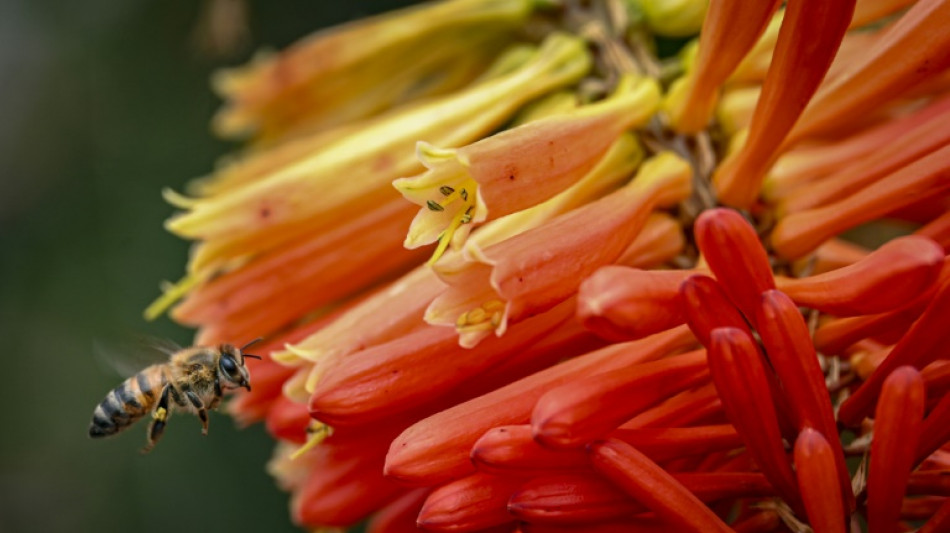
Pesticides causing widespread harm to animals and plants: study / Photo: MARTIN BERNETTI - AFP/File

Pesticides causing widespread harm to animals and plants: study

Pesticides are significantly harming wildlife across the planet, stunting growth, damaging reproduction and even causing behavioural changes in animals not meant to be targeted, according to a large-scale study published on Thursday.

Text size:

Species loss has reached a level not seen since an asteroid smashed into earth and wiped out the dinosaurs 66 million years ago, with scientists warning that human activity is pushing the world into its sixth mass extinction event.

Researchers have already shown that pesticides are detrimental to a wide range of species -- adding to the damage to the natural world caused by habitat loss and, increasingly, climate change.

In a new study, published in the journal Nature Communications, scientists in China and Europe looked at 1,700 previous research papers to look into how these chemicals harm animals and plants across the world.

The authors said that unlike previous studies with a narrower focus on specific habitats or species like fish or bees, the new research looked to build a comprehensive picture of global impacts from 471 different pesticide types used in farms, businesses and homes.

"It is often assumed that pesticides are toxic primarily to the target pest and closely related organisms but this is clearly not true," said co-author Dave Goulson of the University of Sussex.

"Concerningly, we found pervasive negative impacts across plants, animals, fungi and microbes, threatening the integrity of ecosystems."

More than 800 species in land and in water were assessed to have suffered detrimental effects, including reducing how fast they grow, their reproductive success and even their ability to catch prey or attract mates.

Ultimately, the authors said this can lead to death.

- UN talks on protecting nature -

Co-author Dr Ben Woodcock, at the UK Centre for Ecology and Hydrology, said the chemicals were "a necessary evil, without which global food production and farmers' livelihoods would likely collapse".

But researchers in the latest study said that farmers can cut pesticide use by planting crops at different times, or sowing wildflowers to encourage pest-eating species.

The study comes ahead of United Nations negotiations on biodiversity in Rome later in February that aim to secure funding to protect species from deforestation, overexploitation, climate change and pollution.

In a landmark report in December, UN biodiversity experts warned that overconsumption and unsustainable farming are fuelling overlapping crises in nature and the climate, having already warned that a million species are threatened with extinction.

Antonis Myridakis of Brunel University in London -- who was not part of the research -- said the study reinforced concerns that pesticides are "contributing significantly to biodiversity loss".

He said the dataset used only covered a relatively small sample of species potentially affected.

"Therefore, there is the possibility that the true extent of pesticide harm is even greater than reported."

K.Abe--JT