The Japan Times - Maersk's net profit sinks amid Red Sea attacks

EUR -
AED 4.067465
AFN 71.990312
ALL 90.627335
AMD 404.431297
ANG 1.982267
AOA 1016.726333
ARS 1710.57938
AUD 1.618319
AWG 1.993581
AZN 1.885599
BAM 1.951914
BBD 2.255104
BDT 139.582093
BGN 1.935801
BHD 0.422399
BIF 3349.448824
BMD 1.107545
BND 1.431386
BOB 13.27906
BRL 6.184308
BSD 1.119667
BTN 105.224999
BWP 15.360735
BYN 3.352428
BYR 21707.879833
BZD 2.25182
CAD 1.579387
CDF 2563.966445
CHF 0.922723
CLF 0.02768
CLP 1089.391844
CNY 7.387712
CNH 7.383974
COP 3633.744028
CRC 506.439696
CUC 1.107545
CUP 26.869503
CVE 110.055817
CZK 24.385893
DJF 199.380138
DKK 7.475377
DOP 67.911228
DZD 151.620647
EGP 59.307255
ERN 16.613173
ETB 182.237045
FJD 2.512077
FKP 0.834016
GBP 0.835438
GEL 2.875558
GGP 0.834016
GHS 13.111375
GIP 0.834016
GMD 81.958112
GNF 9919.191373
GTQ 8.555738
GYD 234.619355
HKD 8.687078
HNL 30.096931
HRK 7.496982
HTG 146.761713
HUF 364.725177
IDR 20197.188604
ILS 3.516289
IMP 0.834016
INR 103.903604
IQD 1697.220851
IRR 2111063.625609
ISK 136.60431
JEP 0.834016
JMD 177.702241
JOD 0.785284
JPY 176.954675
KES 143.936361
KGS 96.854353
KHR 4566.34137
KMF 489.534619
KPW 996.790358
KRW 1475.859262
KWD 0.344856
KYD 0.932943
KZT 499.834834
LAK 25202.439053
LBP 100264.926457
LKR 372.104421
LRD 190.338224
LSL 18.356059
LTL 3.270292
LVL 0.669943
LYD 7.177326
MAD 10.922187
MDL 20.12003
MGA 5066.347521
MKD 61.552219
MMK 2325.539036
MNT 3992.592734
MOP 9.04589
MRU 45.167354
MUR 52.242751
MVR 17.054243
MWK 1941.501024
MXN 20.606424
MYR 4.520889
MZN 70.773444
NAD 18.354157
NGN 1490.467247
NIO 41.201874
NOK 10.597665
NPR 168.360757
NZD 1.991039
OMR 0.425858
PAB 1.119697
PEN 3.815503
PGK 5.028465
PHP 70.506385
PKR 307.425688
PLN 4.411466
PYG 6911.831479
QAR 4.081442
RON 5.346007
RSD 117.612262
RUB 91.993569
RWF 1656.551393
SAR 4.177896
SBD 8.960866
SCR 15.436901
SDG 666.186966
SEK 11.057951
SGD 1.423373
SHP 0.829901
SLE 25.365438
SLL 23224.66743
SOS 639.883773
SRD 41.69459
STD 22923.943087
STN 24.453631
SVC 9.796495
SYP 14400.298304
SZL 18.361018
THB 37.422282
TJS 10.289642
TMT 3.876407
TND 3.336957
TOP 2.666702
TRY 55.661878
TTD 7.592883
TWD 36.472
TZS 2944.030377
UAH 50.925177
UGX 4568.419925
USD 1.107545
UYU 45.303891
UZS 13406.308178
VES 997.333655
VND 28442.306534
VUV 132.84321
WST 3.087613
XAF 655.957
XAG 0.021468
XAU 0.000278102224
XCD 2.993196
XCG 2.017683
XDR 0.783092
XOF 655.957
XPF 119.331742
YER 261.939612
ZAR 18.387073
ZMK 9969.292258
ZMW 22.81264
ZWL 356.629003
SSP 6408.834546
MXV 2.315332
  • RYCEF

    0.1000

    19.81

    +0.5%

  • VOD

    -0.2500

    16.33

    -1.53%

  • CMSC

    -0.2800

    20.12

    -1.39%

  • RBGPF

    -2.0000

    65

    -3.08%

  • RIO

    -0.2500

    94.16

    -0.27%

  • BTI

    -1.2000

    54.85

    -2.19%

  • NGG

    -0.3000

    74.94

    -0.4%

  • GSK

    -0.3500

    49.35

    -0.71%

  • BCE

    -0.4200

    20.14

    -2.09%

  • CMSD

    -0.3400

    19.93

    -1.71%

  • BP

    -0.9100

    43.52

    -2.09%

  • RELX

    0.1700

    33.24

    +0.51%

  • BCC

    -0.6200

    75.97

    -0.82%

  • AZN

    -1.9400

    164.21

    -1.18%

  • JRI

    0.0000

    10.77

    0%

Maersk's net profit sinks amid Red Sea attacks
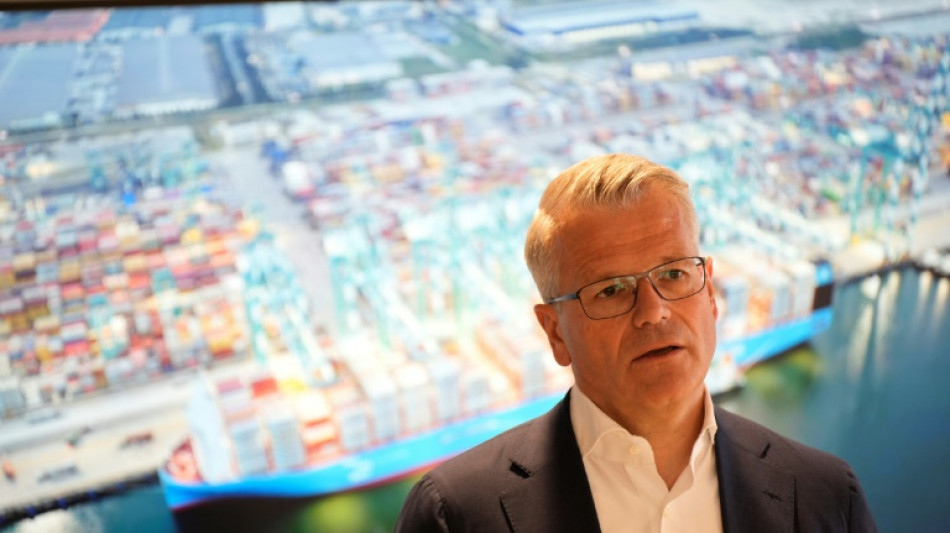
Maersk's net profit sinks amid Red Sea attacks / Photo: Emil Helms - Ritzau Scanpix/AFP

Maersk's net profit sinks amid Red Sea attacks

Danish shipping giant Maersk posted a huge drop in net profit for the first quarter on Thursday as Yemeni rebel attacks force it to avoid the vital Red Sea route.

Text size:

Maersk reported a net profit of $177 million in the first three months of the year, a 13-fold drop from the same period last year.

Turnover fell 13 percent to $12.4 billion, slightly lower than forecast by analysts surveyed by financial data firm FactSet.

The company raised, however, its outlook for the full year, citing higher demand and increased rates.

It now expects an underlying core profit ranging between $4 billion and $6 billion, up from $1 billion-$6 billion previously.

"We had a positive start to the year with a first quarter developing precisely as we expected," Maersk chief executive Vincent Clerc said in a statement.

"Demand is trending towards the higher end of our market growth guidance and conditions in the Red Sea remain entrenched," he said.

"This not only supported a recovery in the first quarter compared to the previous quarter, but also provides an improved outlook for the coming quarters, as we now expect these conditions to stay with us for most of the year."

The Maersk share price was nonetheless down by almost five percent on the Copenhagen stock exchange around two hours after the earnings report was released, on a largely flat market.

- Costly alternate route -

Iran-backed Huthi rebels, who control the Yemeni capital Sanaa and much of the country's Red Sea coast, have launched dozens of attacks on ships since November, claiming solidarity with Palestinians caught up in the Israel-Hamas war.

The United States in December announced a maritime security initiative to protect Red Sea shipping from the attacks, which have forced commercial vessels to divert from the route that normally carries 12 percent of global trade.

Maersk and other shipping groups have instead chosen to send their fleets around the Cape of Good Hope, which takes about two weeks longer, incurring additional costs.

According to the International Maritime Organization, 60 percent of the container transport that previously passed through the Suez Canal now passes south of Africa.

The Danish group said the alternate route led to a seven percent increase in its first quarter operating costs compared to the corresponding period last year.

In its maritime shipping unit, Maersk's main business, loaded volumes increased during the quarter by 7.5 percent, led by higher demand primarily on Asia-Europe, North America and Asia routes.

The average loaded freight rate decreased by 18 percent year-on-year, but increased by 23 percent from the previous quarter, driven by the situation in the Red Sea and Gulf of Aden.

Maersk said efforts to reorganise its traffic have enabled it to cope with the situation and improve the use of its ships to 95 percent even though "reliability suffered".

T.Ikeda--JT