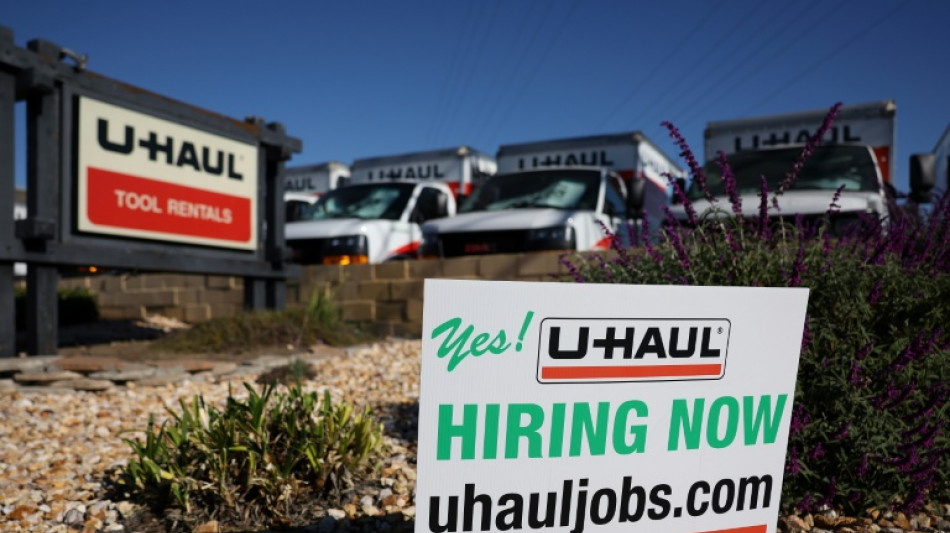
What is behind the US economy's surprising strength? / Photo: JUSTIN SULLIVAN - GETTY IMAGES NORTH AMERICA/AFP/File

The US has seen GDP growth blow past predictions, hiring numbers surge unexpectedly and consumers still spending even as interest rates climbed -- deftly averting a dreaded recession in 2023.
While interest rates have hit the highest level in more than two decades, a situation ordinarily accompanied by higher unemployment and a consumption pullback, it has not been the case this time.
What accounts for the surprise?
- 'Value of talent' -
Low unemployment, wage growth and hiring have underpinned consumers' willingness to spend.
The situation stems from turmoil businesses experienced during Covid-19 when executives struggled to hire, train and retain talent.
This has made them think twice before resorting to job cuts, even when faced with a possible economic slowdown, said EY chief economist Gregory Daco.
Instead, they favored reducing hiring.
"As a result, we've seen more resilience in the labor market," Daco told AFP.
"A unique facet of this business cycle is that the value of talent has shifted," he added.
Meanwhile, even as private sector hiring cooled, "non-cyclical government, healthcare and education propelled much of employment growth," said Nationwide chief economist Kathy Bostjancic.
- Purchasing power -
Americans are snagging jobs and wage increases, while annual real wage growth has been positive since May 2023, said ZipRecruiter chief economist Julia Pollak.
"Declining inflation and rising purchasing power are fueling strong consumer spending," she told AFP.
Although online job posting numbers have fallen steadily from a peak in November 2021, Pollak said the level remains historically high.
But she noted that the labor market is slackening, with applications per job posting rising 30 percent on-year in January based on ZipRecruiter data.
- Government spending -
Another factor is a series of measures including the $2.2 trillion CARES Act in 2020 and $1.9 trillion American Rescue Plan a year later, through which the government approved economic aid for recovery from the Covid-19 pandemic.
The payments were certainly "effective in providing inflationary pressures," said Dan North, senior economist at Allianz Trade North America.
Shortly after, President Joe Biden signed the Bipartisan Infrastructure Law in 2021, allowing $1.2 trillion in transportation and infrastructure spending, and rolled out his landmark climate action plan, the Inflation Reduction Act in 2022.
While the Federal Reserve has fought to slow the economy and quell inflation with rate hikes, North said "fiscal policy has been doing exactly the opposite."
"Government subsidies for electric vehicle, microchip, and infrastructure investments are boosting business investment at a time when high interest rates might otherwise have caused it to plummet," Pollak added.
About 30 percent of GDP growth last year came from the government sector, which represents some 14 percent of the economy, said Daco.
- Locked-in rates -
The economy also fared well despite aggressive rate hikes due to the stretch of much lower rates in prior years.
In 2020, the Fed brought the benchmark lending rate down to virtually zero before starting to raise it again in March 2022.
This "allowed corporations to issue debt at very low interest rates," North said, adding that many companies did just that.
"Now in aggregate, corporations are paying the lowest interest payments on record," he added.
In a similar vein, consumers locked low mortgage rates, softening the blow from Fed rate increases.
- Lagged effects -
Economists say it takes time for the impact of rate hikes to flow through the economy as well.
The last hike was announced in July, and North expects it can take six quarters -- 1.5 years -- for the full effect to bear out in the form of a slowdown.
But the outlook this year remains positive with interest rate cuts on the horizon as inflation has fallen -- a development that generally spurs business activity.
A National Association for Business Economics survey released this month showed that only a quarter of respondents believe a recession will occur in 2024.
S.Fujimoto--JT