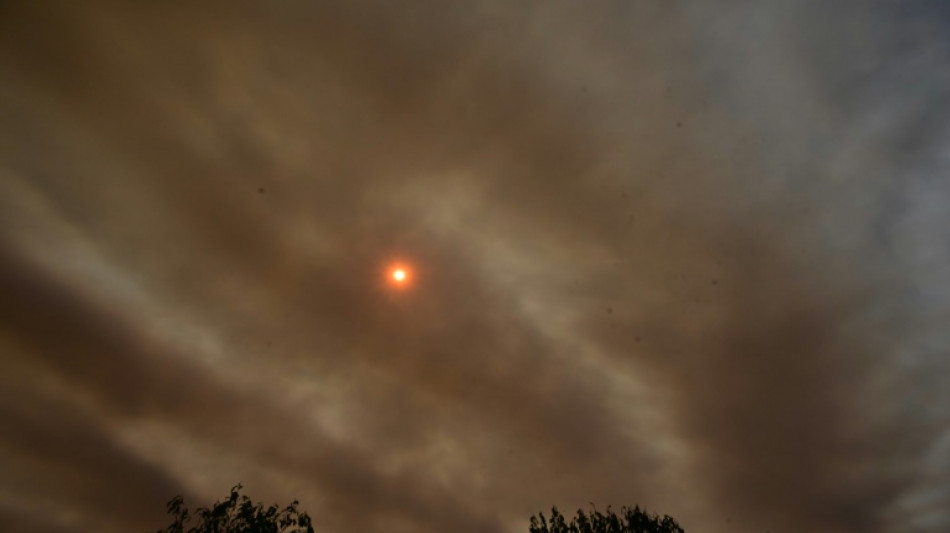
Fires in Brazil's Pantanal push wetlands community to limit / Photo: Pablo PORCIUNCULA - AFP

A riverside community in Brazil's Pantanal wetlands narrowly escaped raging wildfires last month, but some say the record-setting blazes -- still burning nearby -- are compounding threats to their way of life.
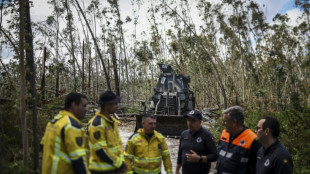
"The river was the only thing separating us from the flames. On the other side, the fire devastated everything," said Virginia Paes, a local leader in the Baia Negra Environmental Protection Area (APA), where 28 families live.
Four years ago, similar fires blazed through the 5,400-hectare (13,300-acre) preserve along the Paraguay River, in southwest Brazil's Mato Grosso do Sul state.
"We were just trying to recover from the 2020 fire, which devastated our Pantanal. We had not fully recovered and now we are facing this again," Paes, a volunteer firefighter and president of the APA's Association of Women Producers, told AFP.
Though homes and lives were spared, the 53-year-old said, dense smoke from the fires made breathing and daily routines difficult.
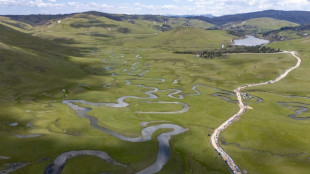
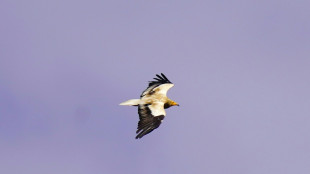
This year's fires set January-June records in the Pantanal, a massive area of tropical wetlands that is home to millions of caimans, parrots, giant otters and the world's highest density of jaguars.
The Baia Negra APA, just outside the border city of Corumba and neighboring Ladario, is the first created in the biodiversity-rich Pantanal allowing for sustainable resource exploitation.
The population there lives off fishing, craft-making, and a robust eco-tourism industry, among other jobs.
- 'Guardians' under threat –
According to the Corumba social assistance office and the NGO Ecoa, in 2020, 651 families lived in the riverside city and Ladario.
These "traditional communities of the Pantanal are the true guardians of the ecosystems they manage," said Andre Luiz Siqueira, Director of Programs and Projects at the NGO Ecoa.
"They are the ones that suffer the most impacts from the fires," he warned.
"I am concerned that in a few years we could have climate displaced people in the biome."
On the shore of Bracinho Island, which was burned in fires last month, three fishermen try their luck.
According to them, fishing has become more difficult due to fires poisoning the fish and make the activity difficult.
A heavy drought, which scientists say has exacerbated this year's fires, has also dropped the water-level in the river.
"Everything disappeared: the fish, the bait," 33-year-old Marcelo Henrique told AFP.
He said he used to live off fishing, but has now taken a job in a steel mill in Ladario.
"The bays dried up... Before there were 30, 40 boats circulating here. Now you barely see any."
- Evening curfew –
In his cabin off the MS 428 state highway, Renato Andrade remembers better days when hunting and fishing were abundant -- and threats from jaguars more rare.
The 52-year-old told AFP that after the 2020 fire, capybaras -- the natural prey of jaguars -- became "scarce."
"Before, there was no talk of jaguar attacks nearby. Now, I hear roars around the house. I can't have dogs, we've lost count of how many were eaten by jaguars," he said.
Fearing for his own life, he said he has changed his daily routine.
"At night, now you have to stay inside the house. After 6:30 pm, no one wants to be outside" over fears of attacks.
He said he has also stopped fishing alone at night, like he used to do.
"I can't or I will end up a jaguar's dinner."
K.Nakajima--JT