Senegal-made sickle cell treatment raises hopes, reduces costs / Photo: SEYLLOU - AFP

Mamadou Tahirou is 18 but looks more like a 12-year-old, his frame frail from the ravages of sickle cell disease, which one Senegalese laboratory is hoping to attenuate with affordable drug production.
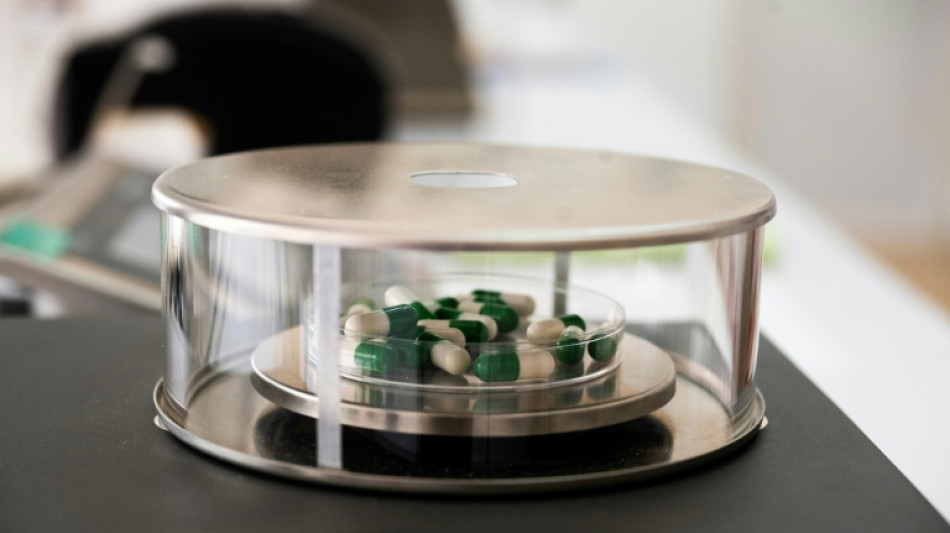
The lab is producing generic hydroxyurea, the gold standard in sickle cell treatment, for the first time ever in Africa.
Speaking to AFP from his family home near Dakar, Tahirou, eyes bulging and features marked by fatigue, described a life dictated by the hereditary disease, which affects nearly eight million people worldwide.
Bone pain, severe anaemia, extreme fatigue and intense headaches: these symptoms frequently land him in the hospital, Tahirou said, while his 40-year-old mother, Rabiatou, watched helplessly nearby, her eyes swelling with tears.
Fits of pain sometimes flare up while he is in class, disrupting his education and forcing him to miss school regularly.
Africa accounts for nearly 80 percent of all sickle cell disease cases.
Yet the continent remains largely dependent on expensive medicines imported from Europe and the Americas, especially hydroxyurea, the treatment recommended by the World Health Organization (WHO).
The medication helps reduce painful crises, hospitalisations, the need for blood transfusions and death, according to the organisation.
- Interest across west Africa -
"I was three years old when I was diagnosed with sickle cell disease. I've been living with it ever since", Tahirou told AFP, slumped in the family living room.
Senegalese pharmaceutical firm Teranga Pharma is producing a local treatment it touts as more affordable and better suited to patients' realities.
In November 2025, the company launched Drepaf, available in 500 milligram doses for adults and 100 milligram doses for children, with the goal of "reducing the crisis threefold".
The generic drug offers hope for addressing the shortage of treatments and reducing reliance on more costly imported medication.
And it is already garnering interest from several countries across the continent.
The initiative is backed by 4 billion CFA ($7.1 million) in funding and comes at a time when access to imported treatments has become difficult.
A study published in 2023 in Blood, a medical journal of the American Society of Hematology, reported that 78 percent of healthcare professionals surveyed across 13 French-speaking sub-Saharan African countries cited frequent disruption of supplies of hydroxyurea.
The two versions of Drepaf are sold to pharmacies at a wholesale price of 3,000 and 1,500 CFA respectively.
Hydrea and Siklos, hydroxyurea drugs already on the market, cost up to three times as much.
Teranga Pharma CEO Mouhamadou Sow, himself a pharmacist, said that Drepaf's paediatric version fulfils the critical need for a formula suitable for use from the age of nine months.
He spoke to AFP from the company's 9,000 square-metre (97,000 square-foot) factory in Mbao, on the outskirts of Dakar.
Before Drepaf, if a person was unable to obtain or afford imported medicine, no local solution was available.
"Doctors often had to treat the consequences of the disease rather than addressing its root cause, the red blood cells", he said.
Teranga Pharma is working with an Indian technical partner to ramp up production and supply other African nations.
The laboratory says it is already working with Burkina Faso, Guinea and Ivory Coast, and that it has received requests from the Democratic Republic of Congo, Gabon and Cameroon.
- Step forward -
The company aims to meet demand from the entire sub-Saharan continent by 2030, as part of a strategy to strengthen Africa's pharmaceutical sovereignty.
Drepaf represents a significant step forward in the care of children, said Magueye Ndiaye, president of the Senegalese Association for the Fight Against Sickle Cell Disease (ASD).
"Until now, patients had to buy two boxes of 20 tablets. Now a single box of Drepaf, which contains 60, is enough and for the same price", he said.
Lala Dieng, whose 17-year-old son was diagnosed six years ago, noticed an improvement.
"Doctors used to prescribe Hydrea 500 to alleviate his episodes. He recently switched to Drepaf 100, and I've noticed he has far fewer attacks", she told AFP.
Ndiaye said increased awareness about early screening is also helping, since babies who are treated early fare better, and pre-marital testing can even help couples decide whether they want to move forward and conceive together.
As a genetic carrier of sickle cell disease, he has for 20 years now been sharing his experience and advocating for awareness.
On World Sickle Cell Day on June 19, he brought together specialists to advocate for comprehensive care combining medication and psychosocial support to improve patients' life expectancy.
T.Ueda--JT