'Master key' vaccine technique may 'prevent next pandemic': researchers / Photo: JOE RAEDLE - GETTY IMAGES NORTH AMERICA/AFP

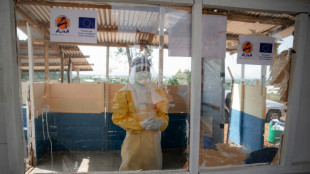
Known by acronyms that need no explanation, viruses like Covid, Sars and Ebola conjure up images of medics in protective suits and spark fear in populations worldwide.
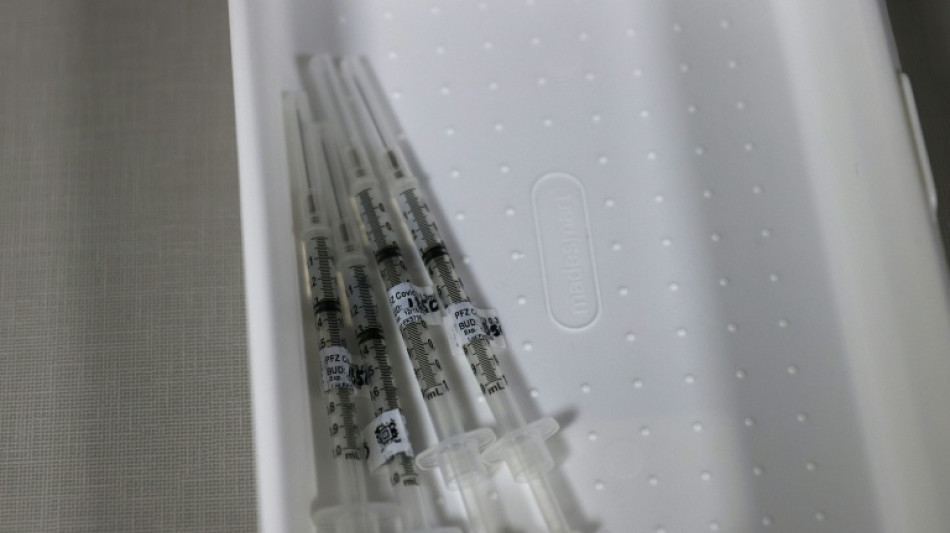
Vaccines for individual viruses have provided some relief, but new strains pose a constant challenge.
Now, new AI-aided vaccine technology developed by scientists at Cambridge University offer potential immunity against whole families of viruses and could even prevent the next pandemic, according to researchers.
Professor Jonathan Heeney of Cambridge University likened the new technique to having the "master key" for an apartment block.
The main problem with vaccines, he said, was that they were "all historic" so the strain you are vaccinated with might not be the one you end up being exposed to in six months time.
Vaccines were "always chasing the virus", the project lead researcher told AFP in an interview.
"So we're getting rid of that variability by making something that's across the board recognisable by your immune system that should cover you from all these eventualities ... a real big paradigm change," he said.
Canadian Heeney, of the lab of viral zoonotics at Cambridge University's Department of Veterinary Medicine, began work on the project after the 2013-16 Ebola outbreak in west Africa where he was then based.
- 'Horse bolted' -
Ebola had previously been seen in the central African Democratic Republic of Congo, not in west Africa and it was initially misidentified as lassa fever, gastroenteritis or cholera.
The west African outbreak eventually claimed around 11,300 lives, according to the World Health Organization (WHO).
But Heeney said three or four months were spent trying to discover what it was before work could even begin on a vaccine.
"In that time, it spread from Guinea, to Sierra Leone to Liberia, three different countries quickly. The horse had bolted, the fire was raging," he said, adding many health workers were among the victims.
Returning to Cambridge after the west African outbreak, Heeney said there was a determination that "we've got to change the way this works, we can't go through it again".
Harnessing early AI, he said, his team used all the information they could get about various viruses and brought it together.
This allowed them to look for the "similarities and the differences in the important parts of the virus that the immune system responds to", recognising not just one variant but all of them.
The new technology was all the more vital given the frequency with which viruses are now emerging due to population growth, greater movement across borders and human encroachment on animal habitats, he said.
Viruses that had previously existed harmlessly, residing in animals that had grown resistant, were coming into contact with a new species, humans, and "wow, there's no immunity, no natural defences... and the virus goes crazy", he said.
- 'Change the future' -
A trial involving 39 volunteers -- sponsored by the University Hospital Southampton and published in the Journal of Infection -- found "no significant safety concerns" with the universal Sarbeco coronavirus vaccine made using the AI-aided technology.
The vaccine developed by the Cambridge scientists and biotechnoloy firm DIOSynVax will now move to larger tests.
Plagues have existed throughout history, said Heeney, from the Black Death of the Middle Ages ages to the 1918-20 influenza pandemic which killed an estimated 25-50 million globally.
Heeney's most pressing concern was a potential influenza outbreak, he said, describing it as one of the "trickier" viruses.
But he was hopeful the new technology could help prevent another deadly pandemic.
"Now, there's a whole different layer of AI, and we have a team using the latest AI technology ... to build a real powerful platform so we can work even faster with more data," he said.
"This, I hope is the start of a whole new era of vaccine manufacturing ... From my point of view it's about proving this technology to the world that it's safe, that it's more effective and actually jump on board.
"I think this opens the door to a whole new kind of technology. Hopefully that can change the future," he said.
T.Kobayashi--JT