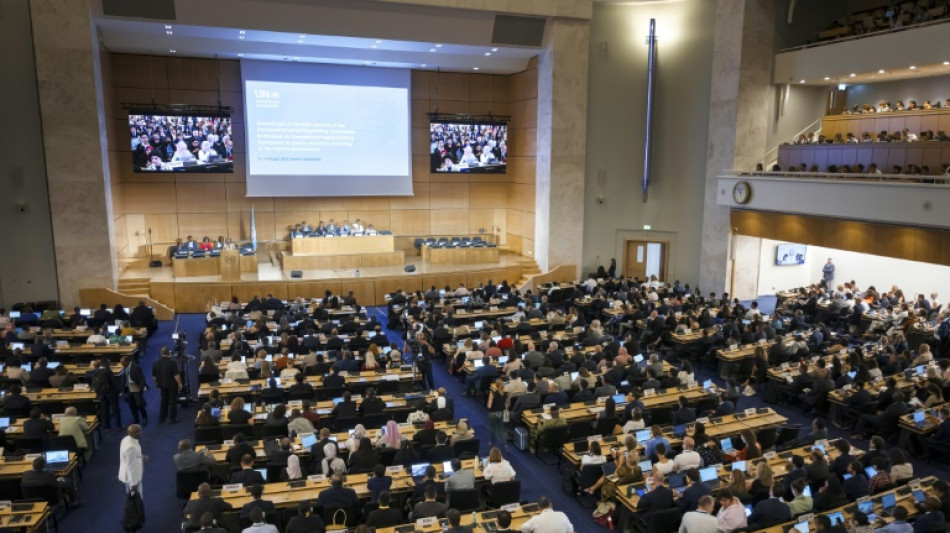
Plastic pollution treaty talks stuck in 'dialogue of the deaf' / Photo: Fabrice COFFRINI - AFP

Negotiations aimed at forging a global treaty on plastic pollution are being blocked by oil-producing countries and getting bogged down in a "dialogue of the deaf", sources in and around the talks told AFP.
Ten days of talks on finalising an international, legally-binding instrument on plastic pollution opened on Tuesday with sunny optimism from the moderators that a deal could be done to tackle the scourge of plastic rubbish and microplastics trashing the planet.
But by Thursday, after countries had staked out their positions, the mood had darkened, sources in the negotiating rooms said.
"We are in a dialogue of the deaf, with very few landing zones... I don't see progress," said a diplomatic source from a country in the so-called "ambitious" coalition of nations pushing for a strong treaty, including plastic production reduction targets.
"What's worrying is that we have lots of points of disagreement; we're not quibbling about one problem."
The "Like-Minded Countries" group, chiefly comprising oil-producing states, is opposed to any constraints on production targets.
In total, 184 nations are taking part in the talks at the United Nations in Geneva.
Technically, these talks are a resumed session of the fifth -- and supposedly final -- round of negotiations, which ended in a flop in Busan, South Korea, in December.
- Countries digging in -
Rather than drifting towards common ground, "positions are crystallising" and not moving, an observer from a non-governmental organisation told AFP after attending several of the discussion groups, where the technical articles of the treaty are being thrashed out in detail by countries' negotiators.
Written documents submitted by nations to the UN negotiations website, consulted by AFP, confirm that Saudi Arabia, the Arab countries group, Russia, Iran, Kazakhstan and Malaysia reject having any binding measures on cutting plastic production.
Most of these countries want the petroleum origin of plastic to be left outside the bounds of any eventual treaty, and want the agreement to focus solely on what happens further downstream, such as waste collection, sorting, recycling.
However, the initial, universally-adopted resolution establishing negotiations towards a treaty envisaged a deal covering the entire life cycle of plastic.
"If the text is only to help developing countries manage their waste better, we don't need an international treaty to do so," the diplomatic source stressed, adding that "we are in a stand-off with countries quite prepared for there to be no treaty".
- Chemicals list -
No consensus has emerged on Article 3 of the draft text, on creating a list of chemical substances considered potentially hazardous to the environment or human health. The chemical industry has voiced its opposition to such a list.
"Some don't want a list at all, or for each country to be able to draw up its own list of hazardous products -- which can already be done today without the need for an international treaty," noted the same source, who also voiced surprise at "China's lack of openness".
China is the world's leading plastics producer, turning out 34 percent of the four most widely used polymers: polyethylene (PE), polypropylene (PP), polyethylene terephthalate (PET) and polystyrene (PS), according to the British environmental consultancy Eunomia.
The world's single leading plastics producer is the Chinese state-owned Sinopec.
Highlighting the numbers of industry lobbyists accredited to attend the talks, Greenpeace staged a protest at the main entrance to the UN Palais des Nations, clambering on the entrance gate's roof to unveil banners reading "Big oil polluting inside" and "Plastics treaty not for sale".
Greenpeace delegation chief Graham Forbes said: "Each round of negotiations brings more oil and gas lobbyists into the room. Fossil fuel and petrochemical giants are polluting the negotiations from the inside, and we're calling on the UN to kick them out."
T.Ueda--JT