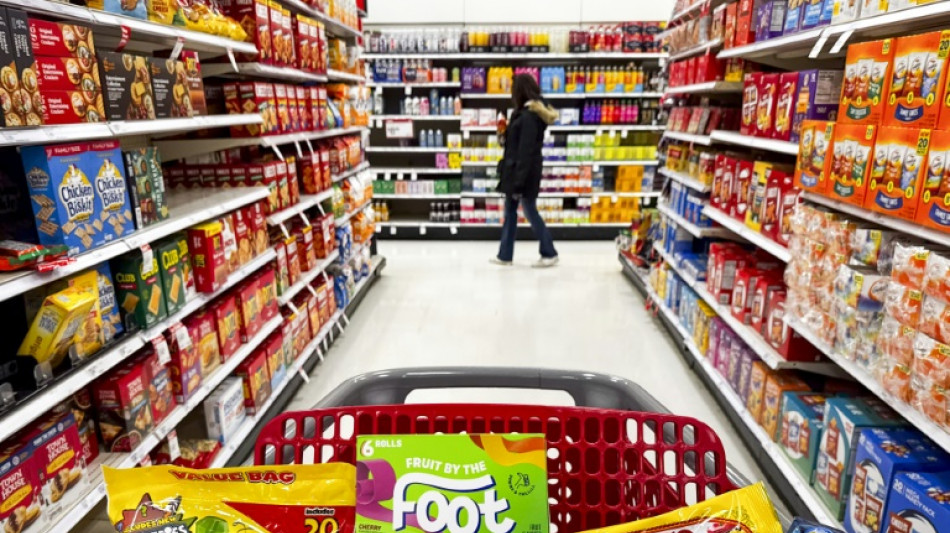
Trump's administration moves to ban artificial food dyes / Photo: ROBERTO SCHMIDT - AFP/File

President Donald Trump's administration on Tuesday announced plans to ban synthetic dyes from the US food supply -— a move welcomed by health experts and marking a rare point of bipartisan agreement in an otherwise sharply divided political climate.
Health Secretary Robert F Kennedy Jr. has vowed to overhaul America's food system under the banner of his "Make America Healthy Again" agenda, and the push would phase out the eight approved artificial food dyes by the end of 2026.
It builds upon a prohibition on Red Dye 3 by the government of former president Joe Biden but accelerates the timeline and also asks the National Institutes of Health to carry out comprehensive research on how additives impact children's development.
"For the last 50 years, American children have increasingly been living in a toxic soup of synthetic chemicals," Food and Drug Administration commissioner Marty Makary said at a press conference surrounded by young families and MAHA supporters.
He cited studies linking synthetic dyes to conditions including attention deficit hyperactivity disorder (ADHD), diabetes, cancer, genomic disruption, gastrointestinal issues and more.
Of the eight synthetic dyes derived from petroleum, Yellow 5, Yellow 6 and Red 40 constitute the lion's share of those in use, Peter Lurie, president and executive director of the nonprofit Center for Science in the Public Interest, told AFP.
They are found in a range of products from beverages and candies to cereals, sauces and dairy products.
"None of them convey anything of any nutritional significance, and what they're really there for is to mislead -- to make food appear somehow redder, somehow bluer, somehow fruitier or more attractive than it is," he said. "And the purpose of all that is to drive up sales, it's not anything that benefits the American public."
- Bipartisan momentum -
Momentum has been building at the state level. In March, Republican-leaning West Virginia enacted a broad ban on synthetic dyes, following California's 2024 decision to restrict them in public schools.
While Red Dye No. 3 was previously targeted for phaseout in foods and drugs by 2027 and 2028 respectively due to cancer concerns, the remaining dyes have been linked to behavioral issues such as attention deficit disorder in children.
In Europe, these dyes aren't banned outright — but the requirement to carry warning labels has led many companies to switch to natural alternatives.
Kennedy's stance on synthetic dyes aligns him, unusually, with mainstream scientific consensus — a departure from his controversial history of promoting vaccine misinformation, downplaying the nation's worst measles outbreak in years, and suggesting bird flu should be allowed to spread naturally among poultry.
Industry opposition may still emerge. Food manufacturers have historically lobbied against tighter regulations, but Lurie believes resistance may be more muted this time.
"The question that industries are wrestling with now is whether or not to oppose this, and you know, the signs that I see are that they may just suck it up in the end," said Lurie.
He cited "tepid" statements made when Red 3 was banned and the limited response when Kennedy first warned he would be targeting dyes.
K.Tanaka--JT