The Japan Times - EU's Russian oil ban unlikely to affect OPEC+ decision

EUR -
AED 4.246429
AFN 76.887634
ALL 93.189144
AMD 423.342651
AOA 1060.176801
ARS 1724.882575
AUD 1.635501
AWG 2.082489
AZN 1.97002
BAM 1.961391
BBD 2.328337
BDT 143.102254
BHD 0.435984
BIF 3453.955207
BMD 1.156136
BND 1.481323
BOB 13.739522
BRL 5.893522
BSD 1.155995
BTN 110.001186
BWP 15.603479
BYN 3.442212
BYR 22660.258427
BZD 2.324897
CAD 1.613446
CDF 2615.761404
CHF 0.934267
CLF 0.026749
CLP 1056.199727
CNY 7.801146
CNH 7.796152
COP 3650.105178
CRC 525.509359
CUC 1.156136
CUP 30.637594
CVE 110.646682
CZK 24.258158
DJF 205.46888
DKK 7.477932
DOP 67.345355
DZD 153.694406
EGP 57.293288
ERN 17.342035
ETB 184.982115
FJD 2.55395
FKP 0.859288
GBP 0.856968
GEL 3.017966
GGP 0.859288
GHS 13.596606
GIP 0.859288
GMD 84.980421
GNF 10145.090599
GTQ 8.820142
GYD 241.849406
HKD 9.067746
HNL 31.077375
HRK 7.536506
HTG 151.150865
HUF 363.096405
IDR 20580.370421
ILS 3.468234
IMP 0.859288
INR 109.992259
IQD 1515.115748
IRR 1590322.371805
ISK 142.598215
JEP 0.859288
JMD 183.583315
JOD 0.819746
JPY 182.445186
KES 148.887592
KGS 101.104505
KHR 4685.244046
KMF 492.514185
KRW 1627.712241
KWD 0.356865
KYD 0.963346
KZT 541.784389
LAK 26108.437325
LBP 103531.946431
LKR 387.745291
LRD 209.896866
LSL 18.648909
LTL 3.413768
LVL 0.699335
LYD 7.358849
MAD 10.757887
MDL 20.102303
MGA 4982.944983
MKD 61.70777
MMK 2427.367709
MNT 4157.510076
MOP 9.34149
MRU 46.349915
MUR 54.396619
MVR 17.862733
MWK 2008.207995
MXN 19.811776
MYR 4.728715
MZN 73.882892
NAD 18.78764
NGN 1577.963717
NIO 42.540713
NOK 10.99759
NPR 176.001898
NZD 1.961547
OMR 0.442559
PAB 1.15598
PEN 3.913564
PGK 5.112721
PHP 70.183258
PKR 321.178758
PLN 4.299905
PYG 6873.802279
QAR 4.213541
RON 5.244583
RSD 117.953626
RUB 94.679224
RWF 1693.738704
SAR 4.370455
SBD 9.325039
SCR 16.735107
SDG 694.263698
SEK 10.961095
SGD 1.477777
SLE 28.445176
SOS 694.263682
SRD 43.778814
STD 23929.673396
STN 24.712399
SVC 10.11514
SZL 18.781467
THB 38.164464
TJS 10.664099
TMT 4.058036
TND 3.366711
TRY 55.146402
TTD 7.835505
TWD 37.286072
TZS 3060.872603
UAH 51.775757
UGX 4306.406038
USD 1.156136
UYU 46.534057
UZS 13815.821213
VES 873.763846
VND 30295.956222
VUV 137.592149
WST 3.154418
XAF 657.83219
XAG 0.018216
XAU 0.000266
XCD 3.124515
XCG 2.083439
XDR 0.818768
XOF 656.685424
XPF 119.331742
YER 275.626884
ZAR 18.667336
ZMK 10406.612213
ZMW 21.818913
ZWL 372.275202
  • CMSC

    0.0240

    21.744

    +0.11%

  • CMSD

    -0.1600

    21.82

    -0.73%

  • JRI

    0.1500

    12.81

    +1.17%

  • RIO

    1.4500

    101.1

    +1.43%

  • NGG

    0.4700

    80.88

    +0.58%

  • BTI

    0.6000

    59.33

    +1.01%

  • RBGPF

    0.6500

    70.6

    +0.92%

  • GSK

    0.7900

    52.96

    +1.49%

  • BCC

    2.3400

    86.6

    +2.7%

  • BCE

    -0.0200

    22.75

    -0.09%

  • RYCEF

    0.0500

    21

    +0.24%

  • AZN

    1.4100

    161.42

    +0.87%

  • RELX

    0.0485

    35.52

    +0.14%

  • VOD

    0.1900

    16.19

    +1.17%

  • BP

    -0.6000

    41.63

    -1.44%

EU's Russian oil ban unlikely to affect OPEC+ decision
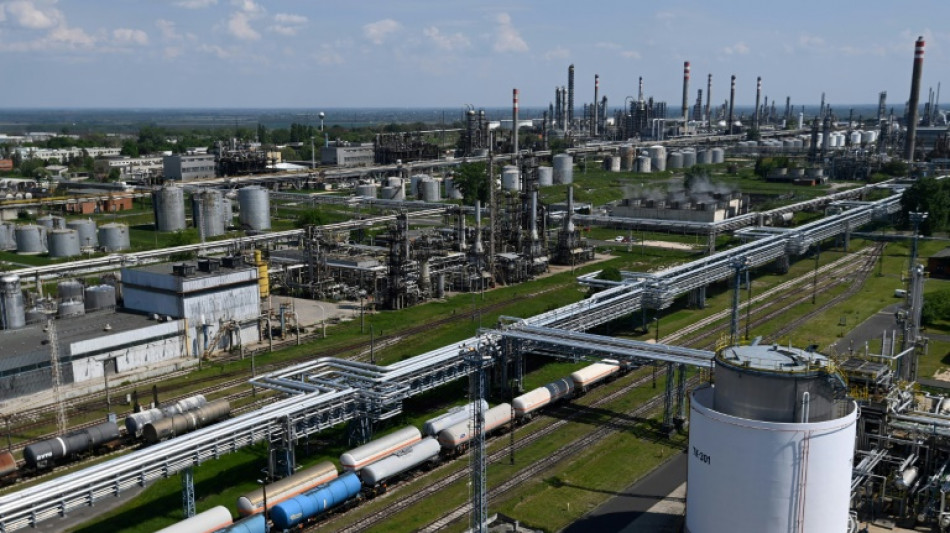
EU's Russian oil ban unlikely to affect OPEC+ decision / Photo: ATTILA KISBENEDEK - AFP/File

EU's Russian oil ban unlikely to affect OPEC+ decision

Saudia Arabia, Russia and their allies are likely to stick to their policy of modest oil output increases when they meet Thursday after the EU banned most imports from Moscow.

Text size:

European Union leaders agreed on Monday to ban more than two-thirds of Russian oil imports, tightening economic screws on the country over its invasion of its neighbour Ukraine.

This has caused oil prices, which have already hit record highs so far this year, to soar further amid pressure on the 23-member OPEC+ to open tabs more widely and relieve the market.

Brent, the international benchmark, hit a two-month high above $124 per barrel while the US contract, WTI, topped $119.

But analysts say OPEC+ will stick to its strategy of only slightly increasing output when it holds its monthly videoconference on Thursday as it remains united with Moscow.

"With Russia being one of the two most important members of the alliance (alongside Saudi Arabia), any decision on increasing output has become highly political," Craig Erlam, analyst at trading platform OANDA, told AFP.

"Both because (Russia) cannot sell what it's already producing as a result of sanctions and perhaps even because it wants prices to be uncomfortably high and maintain pressure on countries it considers 'unfriendly'," he said.

The 13 members of the Organization of the Petroleum Exporting Countries chaired by Saudi Arabia and their 10 partners led by Russia drastically slashed output in 2020 as demand slumped because of the coronavirus pandemic and worldwide lockdowns.

They have been increasing output modestly to the tune of around 400,000 barrels per day each month since last year and have resisted pressure by top consumers, including the US, to open the tabs wider.

Ipek Ozkardeskaya, an analyst with Swissquote bank, said Thursday's meeting "looks like a formality".

"There is little hope to see OPEC countries announcing anything that would give a relief to the market," she said.

- Unable to meet quotas -

Analysts have also noted even if the group was willing to increase its output, several of its members have fallen short of the quotas, resulting in a lower supply to the market.

"Ultimately, the group is missing its already modest targets by increasingly large margins every month so you have to question just how impactful any increase would be if countries simply don't have the capacity to increase further," Erlam said.

In a statement Friday, the Group of Seven wealthy countries noted OPEC's "key role" and once again called on "oil and gas producing countries to act in a responsible manner and to respond to tightening international markets".

OPEC was set up in 1960 and joined by the 10 partners through a 2016 declaration. Its mission is to "ensure the stabilisation of oil markets".

But OPEC+ is "expected to push back against calls by the West to speed up its oil output increases, sticking to its existing plans instead," said Victoria Scholar, an analyst at Interactive Investor.

H.Takahashi--JT