Hong Kong to cull hamsters after Covid found in pets

Hong Kong will cull hundreds of hamsters after some tested positive for coronavirus, officials said Tuesday, as the city pushes to maintain its strict "zero-Covid" strategy.
The Chinese territory's staunch adherence to the mainland's "zero-Covid" policy has kept the number of cases low, but maintaining it has cut the finance hub off from the rest of the world for the last two years.
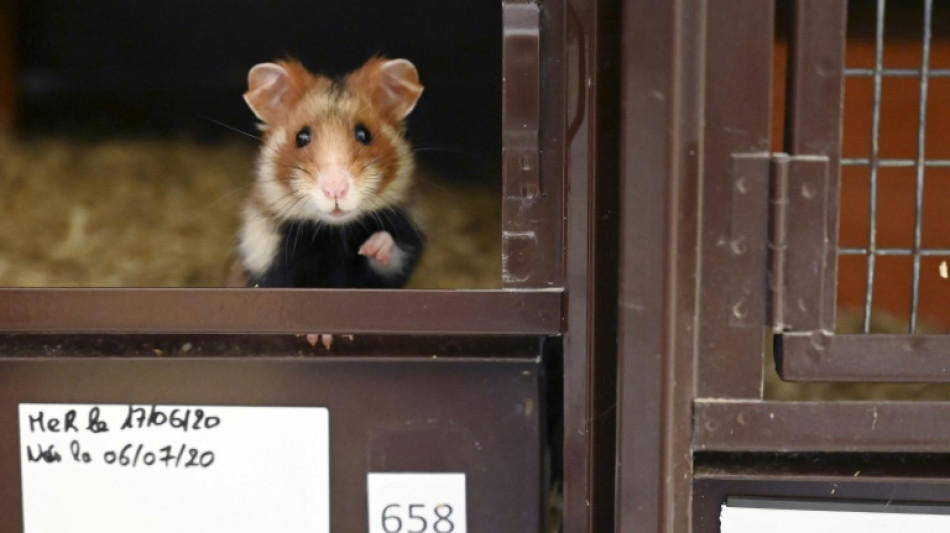
The decision to cull about 2,000 hamsters and other small animals comes after health officials recorded Covid cases at a Hong Kong pet shop.
Health secretary Sophia Chan said the move will protect public health after a pet shop employee and a customer handling hamsters tested positive.
The employee was found to be infected with the Delta variant, which has become rare in Hong Kong.
"Internationally, there is no evidence yet to show pets can transmit the coronavirus to humans, but... we will take precautionary measures against any vector of transmission," Chan said during a press conference.
Eleven preliminary positive samples were found on hamsters for sale at the Little Boss pet shop in the bustling shopping district of Causeway Bay.
Officials believe they were imported from the Netherlands and urged anyone who bought a hamster after December 22 to give up their pet for culling.
About 1,000 animals from Little Boss and its warehouse will be seized and put down, while staff and customers have been sent for testing.
Health officials also issued quarantine orders for around 150 people who visited the pet shop as well as more than 20 warehouse employees.
The shop was shuttered Tuesday.
- Avoid kissing pets call -
Another 1,000 hamsters from dozens of other pet shops across Hong Kong will also be killed and the businesses have been ordered to close temporarily.
Imports of small mammals will be suspended, officials added.
Deputy agriculture chief Thomas Sit defended the cull as a precautionary measure when asked why the decision was made without a clear scientific basis.
"The public should avoid kissing their pets and keep their homes clean," added agriculture director Leung Siu-fai.
"They should not abandon their pets on the streets under any circumstances."
Reaction from hamster lovers in Hong Kong was swift -- and angry.
"Is there anyone who can save the hamsters and other small animals?" said one person in a Facebook group called Hamster Blog HK -- which boasts more than 10,000 members.
Another ridiculed officials over the cull, telling them to "go to Wuhan and help the bats there wear two masks", referring to the Chinese city where Covid-19 first emerged two years ago.
- Reverse zoonosis -
Asked about the Hong Kong hamsters case, the World Health Organization said experts were studying animal susceptibility to the virus which causes Covid-19 disease.
"There are a number of species that can be infected with SARS-CoV-2 and then of course, there's the possibility -- we call that a reverse zoonosis -- it goes from humans back to animals, and then it's possible for the animals to reinfect humans," said Maria Van Kerkhove, the WHO's technical lead on Covid-19.
"That risk remains low but it is something that we are constantly looking at," she told a press conference in Geneva.
Of seven million virus sequences submitted to global platforms, around 1,500 are from animals.
Van Kerkhove said better surveillance was needed to determine not only which animals were susceptible but also to understand the extent of infections in animals and track the virus in animals over time to see what risk it posed.
T.Shimizu--JT