ECB says has tools to calm markets as French debt worries rise / Photo: Kirill KUDRYAVTSEV - AFP

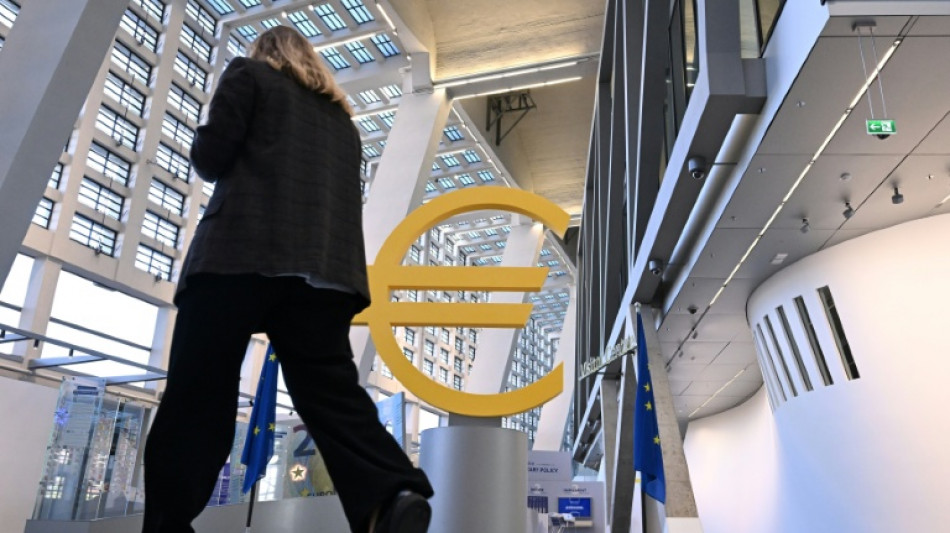
The European Central Bank on Thursday said it had crisis-fighting tools to deal with "disorderly" markets, seeking to calm worries that France's deteriorating public finances could shake the wider eurozone.
While the chances of the ECB intervening to help push down France's surging borrowing costs are currently seen as low, President Christine Lagarde's remarks appeared aimed at reassuring investors that policymakers would act if needed.
In a meeting just hours after Lagarde announced she would step down early, in February 2027, the central bank also kept its benchmark interest rate on hold despite rising inflation fuelled by the Iran war energy shock, but opened the door to another hike in December.
At a press conference after the decision, attention quickly shifted to France's debt woes after the country's bond yields, which reflect the cost of government borrowing, surged to their highest levels since 2002.
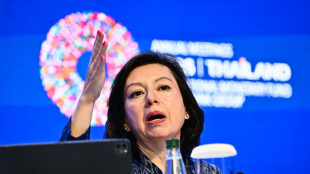
While declining to comment directly on the situation in France, Lagarde said that "should market developments threaten the smooth transmission of our monetary policy, including through unwarranted and disorderly market movements, we have instruments available to respond".
But she also appeared to downplay the chance of an imminent intervention, noting there were certain criteria to trigger such a step.
France's borrowing costs have risen sharply amid a standoff over attempts to push through a budget aiming to reduce the country's deficit and also after protests, driven in part by demands for more public spending, degenerated into the worst street violence in years.
There has been speculation that the ECB could, for the first time, use a crisis-fighting tool aimed at combating "disorderly" moves in sovereign debt markets.
However, the criteria to activate the yet-to-be-used Transmission Protection Instrument (TPI) are strict, and most observers believe France's problems do not meet the threshold.
Lagarde has in the past reacted coolly when asked about the prospect of deploying the TPI.
While she did not go into detail about the subject on Thursday, she made general remarks about the need for eurozone member states to have sound public finances.
"Fiscal sustainability is a crucial anchor for broader economic stability," she said.
- Hike debate -
The rate decision came just hours after Lagarde announced she would step down in February next year, ahead of the official end of her term in October 2027.
This will allow European leaders to pick her successor before France's presidential elections in the spring, with officials fearing a far-right victory would complicate negotiations.
Lagarde gave little away about her next moves at Thursday's press conference, saying only she wanted to be able to speak more freely on matters outside of monetary policy.
This will stoke expectations that the former French finance minister, who served in centre-right governments, could campaign in the presidential elections, although she has previously ruled out running for the presidency herself.
The ECB's decision to hold rates steady, after two hikes earlier this year, was widely expected.
Eurozone inflation rose to a three-year high of 3.8 percent in September, driven by surging energy costs amid the Middle East conflict, but the ECB stressed core inflation -- excluding food and energy costs -- was under control.
"While the full effects of the energy shock are still unfolding, underlying inflation has remained broadly stable so far," Lagarde said.
She also justified the decision to keep rates on hold due to tighter financing conditions caused by rising bond yields.
Higher government yields can lead to increased borrowing costs for households and businesses, essentially having the same effect as higher interest rates -- and relieving the ECB of the need to increase rates further.
But Lagarde also revealed the ECB's governing council had "debated whether a hike was appropriate", fuelling expectations that rates could be increased at the central bank's next meeting in December.
She did little to dispel this notion, saying that "unless there were major developments, the direction of travel is quite clear".
M.Saito--JT