Gas, health care, utilities: high costs squeeze US midterm voters / Photo: DUSTIN FRANZ - AFP

Former US steelworker Denise Barber retired three years ago, but steep gasoline prices and family healthcare needs are making the Ohio resident consider returning to part-time work to make ends meet.
The 68-year-old is among American voters squeezed by affordability worries ahead of November's midterm elections, an issue that Democrats hope can help them to victory.
"I'm hoping that somebody can undo some of the things that this president has caused, like this Iran war," Barber told AFP.
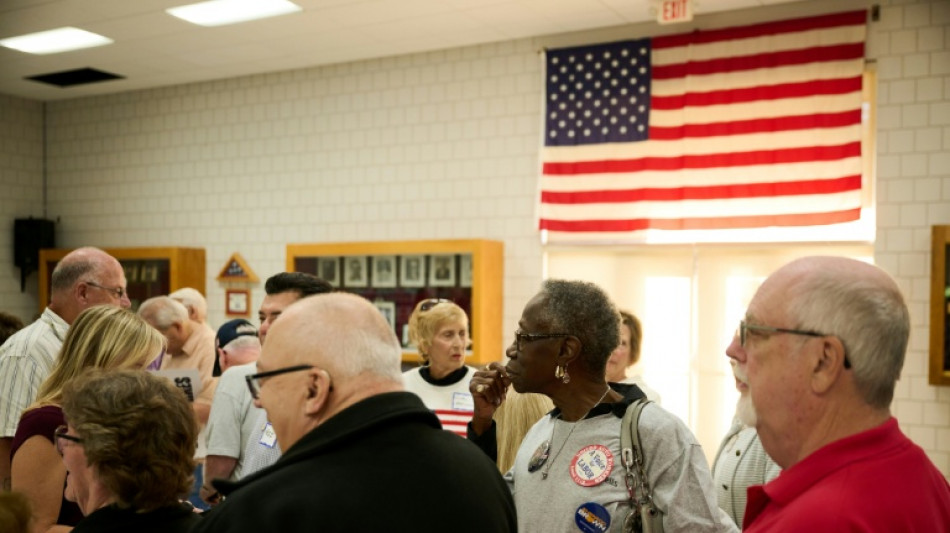
The Democratic former union worker was among dozens in Mahoning Valley -- known for its industrial history -- to show up at a town hall in recent weeks, expressing concern over hospital closures, cuts to health programs and rising cost of living.
Many districts in Ohio are expected to remain Republican. But the Buckeye State, which President Donald Trump won by double digits in 2024, has become a battleground.
Democrats are competitive in some House races and have a chance of seeing former three-term senator Sherrod Brown unseat Republican Jon Husted, who filled a vacancy left by Vice President JD Vance.
The question is whether frustrations over rising gasoline, grocery and utilities prices, exacerbated by other worries like healthcare issues, will spill into the ballot box.
Barber recalls driving her husband to medical appointments recently after he had a mini stroke, and how costs piled up as they live in a "medical desert."
"The price of gas driving up there is outrageous," said Barber, a steelworker of 22 years who later became an accountant after losing her job. "On a fixed income, it makes it really hard."
She is not alone, with affordability top-of-mind for US voters this year.
Some 29 percent spontaneously named an economic concern when asked what they wanted congressional candidates to discuss, a Pew survey in June found.
War with Iran has intensified stresses, as Tehran retaliated against US-Israel strikes from late February by choking off the Strait of Hormuz, sending energy costs soaring.
The average cost of regular gasoline has jumped over 45 percent since the war started, to $4.37 per gallon ($1.15 per liter), AAA motor club data shows.
For Barber, this sometimes meant hundreds of dollars more in weekly expenses.
"I'm going to have to find a job so that I can make up the difference," she said.
- 'Win them over' -
While Mahoning Valley in northeast Ohio has "become very Republican," Hudson Institute nonresident senior fellow Paul Sracic believes the party faces "real danger" in the Senate race.
"The party in power always does poorly in midterm elections," he told AFP. "It was going to be an uphill fight anyway."
But "we have gas prices going up, and gas prices are the best measure of how people feel about the economy," he said.
Husted has also been a supporter of data center investment, which has attracted backlash, Sracic said.
And US grocery prices stood 2.2 percent higher than a year ago in August, underscoring households' compounding costs.
Democrats are campaigning on these pressures.
"Working-class voters didn't want this war," Brown told reporters on the sidelines of a recent meet-and-greet in Warren, Ohio.
"They didn't want to see explosions in costs of everything," Brown added. "I'm going to win them over."
"Why do you think the data centers are pumping $30 million against me in this state? Because they know I'll stand up to them."
- 'Getting crunched' -
"Affordability is affecting every worker, not only in this area but really across the entire country," said David Green, a labor leader with the United Auto Workers (UAW) union in Ohio.
"Workers are getting crunched right now," he added.
"What's been really scary is over the last six months to a year, a lot of our smaller UAW facilities that are independent part suppliers, mom and pop shops, are having layoffs and some plant closures," Green said.
While the area around Youngstown was once predominantly Democrat, he said, it turned red in 2016 amid Trump's election pledges.
"There were a lot of broken promises," Green said, including that "all these jobs were coming back."
Some residents say they are still awaiting the manufacturing resurgence Trump promised.
Retired steelworker Mike Rubicz has seen Mahoning Valley "go from one of the main centers of the steel industry in the world to (virtually having) no steel mills left."
"Everyone in this valley is conscious of the need for manufacturing jobs," he said. "But the reality is, the ability of people to come to the valley and get a job is gone."
T.Shimizu--JT