The Japan Times - Myanmar tin mega-mine restarts operations: think tank

EUR -
AED 4.095701
AFN 72.480008
ALL 90.882712
AMD 401.805034
ANG 1.995737
AOA 1023.635334
ARS 1721.721299
AUD 1.622157
AWG 2.007127
AZN 1.900047
BAM 1.951697
BBD 2.245579
BDT 138.86805
BGN 1.948955
BHD 0.420772
BIF 3356.362879
BMD 1.115071
BND 1.428792
BOB 13.374482
BRL 6.138357
BSD 1.114956
BTN 104.659009
BWP 15.359741
BYN 3.339105
BYR 21855.38619
BZD 2.242466
CAD 1.573756
CDF 2586.964483
CHF 0.914881
CLF 0.027698
CLP 1090.127033
CNY 7.444774
CNH 7.440667
COP 3625.685911
CRC 505.646021
CUC 1.115071
CUP 26.76054
CVE 110.842372
CZK 24.346956
DJF 198.170808
DKK 7.480457
DOP 67.740985
DZD 152.081196
EGP 59.957114
ERN 16.726061
ETB 179.75372
FJD 2.514764
FKP 0.833961
GBP 0.834821
GEL 2.893653
GGP 0.833961
GHS 13.029646
GIP 0.833961
GMD 83.077063
GNF 9876.743229
GTQ 8.520088
GYD 233.749058
HKD 8.744552
HNL 30.190584
HRK 7.547925
HTG 146.132606
HUF 363.51345
IDR 20192.258205
ILS 3.552538
IMP 0.833961
INR 104.869336
IQD 1688.217076
IRR 2108992.359359
ISK 136.919964
JEP 0.833961
JMD 176.947992
JOD 0.790629
JPY 176.744329
KES 144.903869
KGS 97.510486
KHR 4549.488945
KMF 492.86165
KPW 1003.563608
KRW 1520.737678
KWD 0.346765
KYD 0.929309
KZT 499.776184
LAK 25094.667032
LBP 99854.583719
LKR 370.763872
LRD 189.90075
LSL 18.465996
LTL 3.292514
LVL 0.674496
LYD 7.170329
MAD 10.880307
MDL 19.93044
MGA 5123.750363
MKD 61.556144
MMK 2341.311039
MNT 4015.078679
MOP 9.000882
MRU 44.882019
MUR 52.442198
MVR 17.176258
MWK 1936.878232
MXN 20.768572
MYR 4.528864
MZN 71.257178
NAD 18.465992
NGN 1502.23485
NIO 40.823159
NOK 10.548462
NPR 167.454215
NZD 2.010586
OMR 0.428348
PAB 1.115031
PEN 3.838635
PGK 5.008941
PHP 70.369926
PKR 308.456482
PLN 4.399568
PYG 6968.50605
QAR 4.062245
RON 5.343646
RSD 117.7359
RUB 91.352798
RWF 1644.729318
SAR 4.18675
SBD 8.974739
SCR 15.631155
SDG 670.719139
SEK 11.033072
SGD 1.430194
SHP 0.835103
SLE 25.591287
SLL 23382.48045
SOS 637.267002
SRD 41.908265
STD 23079.712667
STN 24.8382
SVC 9.75549
SYP 14498.149201
SZL 18.465983
THB 37.411034
TJS 10.285553
TMT 3.902748
TND 3.329048
TOP 2.684822
TRY 55.9111
TTD 7.561104
TWD 36.546782
TZS 2946.578434
UAH 50.509358
UGX 4560.432794
USD 1.115071
UYU 44.855697
UZS 13380.84906
VES 999.456181
VND 28526.296796
VUV 133.25575
WST 3.108617
XAF 655.957
XAG 0.021465
XAU 0.000274244363
XCD 3.013535
XCG 2.009331
XDR 0.788413
XOF 655.957
XPF 119.331742
YER 263.853652
ZAR 18.419263
ZMK 10036.978597
ZMW 22.65679
ZWL 359.052318
SSP 6406.644798
MXV 2.336546
  • RYCEF

    0.1000

    19.81

    +0.5%

  • VOD

    -0.2500

    16.33

    -1.53%

  • CMSC

    -0.2800

    20.12

    -1.39%

  • RBGPF

    -2.0000

    65

    -3.08%

  • RIO

    -0.2500

    94.16

    -0.27%

  • BTI

    -1.2000

    54.85

    -2.19%

  • NGG

    -0.3000

    74.94

    -0.4%

  • GSK

    -0.3500

    49.35

    -0.71%

  • BCE

    -0.4200

    20.14

    -2.09%

  • CMSD

    -0.3400

    19.93

    -1.71%

  • BP

    -0.9100

    43.52

    -2.09%

  • RELX

    0.1700

    33.24

    +0.51%

  • BCC

    -0.6200

    75.97

    -0.82%

  • AZN

    -1.9400

    164.21

    -1.18%

  • JRI

    0.0000

    10.77

    0%

Myanmar tin mega-mine restarts operations: think tank
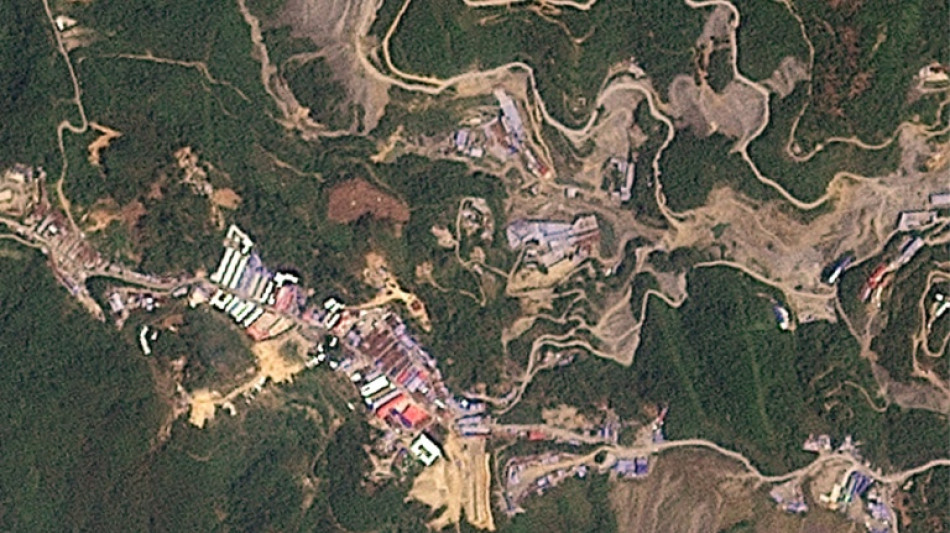
Myanmar tin mega-mine restarts operations: think tank / Photo: Handout - 2026 Planet Labs PBC/AFP

Myanmar tin mega-mine restarts operations: think tank

One of the world's biggest tin mines, located in an autonomous region of war-torn Myanmar, is resuming operations suspended since 2023 and ramping up exports to China, a think tank said Thursday.

Text size:

Tin is an element vital to the artificial intelligence industry, used as solder to attach microchips to circuit boards and bond together other electronics in data centres.

Eastern Myanmar's Man Maw mine emerged suddenly as a global supply lynchpin in the 2010s, making the nation the world's third-largest tin producer and the biggest supplier to China.

Its abrupt closure by the powerful armed faction controlling the area coincided with the start of the AI boom, causing a price spike and a global scramble for the metal.

But the International Crisis Group think tank said operations are beginning a "slow restart".

"Ore is moving again," analysis shared with AFP said, although "output remains well below pre-suspension levels".

China's imports of tin ore and concentrates from Myanmar in the first half of 2026 have already surpassed 2025's total at nearly 40,000 metric tonnes, Beijing's customs data shows.

"Satellite imagery shows large new buildings going up" around the gargantuan Man Maw site, according to Crisis Group's report.

"Night-time illumination around the site has returned to higher levels after falling sharply following the suspension," also suggesting increased activity, it said.

Production levels are still far from Man Maw's peak.

In 2016, Myanmar supplied nearly 500,000 metric tonnes of tin ore and concentrate to China, accounting for more than 99 percent of such imports, Beijing's customs data shows.

Still, Crisis Group's senior Asia advisor Richard Horsey told AFP there is evidence of "a steady but uneven ramp-up" at the mine.

Any revival, however slow, is likely to have far-reaching implications amidst the international race to secure resources critical to AI.

Fragile supply and a production boom in data-processing microchips drove tin to record prices in January.

Access to Man Maw and information about its operations is highly restricted by the ethnic minority army which controls it in the eastern state of Wa, which borders China.

The United Wa State Army is one of the world's largest non-state armed organisations, with a long history of sanctions abroad over its involvement in narcotics trafficking.

Analysts say the group's Chinese patronage and business ties have allowed Wa State to remain relatively insulated from the civil war consuming the rest of Myanmar since a 2021 military coup.

The 2023 Man Maw mine shutdown was likely caused by a jostle for control among dynastic Wa groups, the Crisis Group said, rather than armed conflict.

But the facility may still face challenges to profitability, the organisation said, including flooded mine shafts and the depletion of higher-grade ore deposits.

T.Shimizu--JT