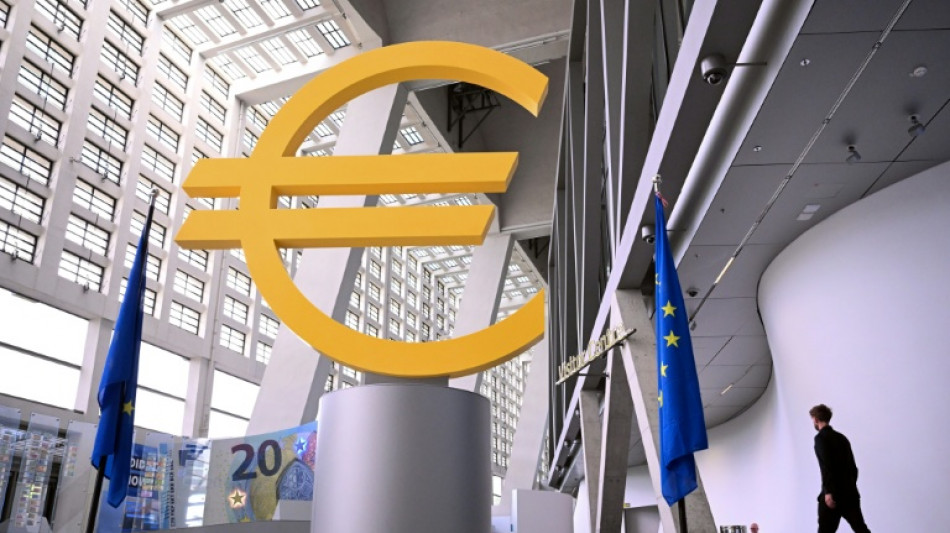
Eurozone rate-setters to hike borrowing costs as energy prices jump / Photo: Kirill KUDRYAVTSEV - AFP

With renewed Middle East clashes stoking energy prices and putting upward pressure on inflation, the European Central Bank is expected on Thursday to raise interest rates for the second time this year.
International oil benchmark Brent jumped above $100 a barrel Wednesday and European gas prices surged to their highest levels since early 2023, topping 80 euros ($93) per megawatt hour.
This followed an escalation in the US-Iran conflict and attacks by Iran-backed Houthi rebels on Saudi oil facilities, raising concerns about further disruptions to global energy supplies.
With surging energy prices expected to further fuel eurozone inflation, which already hit a three-year high in August, a fresh hike to borrowing costs looks like a done deal.
"A further interest rate rise of 25 basis points on Thursday is highly likely," said Dirk Schumacher, chief economist at German public lender KfW.
The move would take the ECB's key deposit rate to 2.5 percent -- a level last seen in March 2025.
There had been concerns another hike could weigh on growth in the euro area as it struggles with the Iran war fallout, but these have eased somewhat as recent data has come in surprisingly strong.
Nevertheless, for households in the 21-nation euro area, another hike will still mean pricier mortgages, consumer credit and other loans.
The central bank delivered its first increase since 2023 in June as the Middle East war pushed up costs in the eurozone, which is highly dependent on energy imports, before hitting pause at its last meeting in July.
- Further hikes could do 'harm' -
The ECB, meeting in Berlin on one its regular trips away from its Frankfurt headquarters, will release fresh growth and inflation forecasts for the next few years, although analysts don't expect major changes to the projections.
The central bank has however faced criticism in some quarters for trying to tackle an energy supply shock with tighter monetary policy.
Rate hikes aim to slow inflation by dampening demand from consumers and businesses, but critics say they can do little to tackle the root cause of the current burst in price rises -- a shortage of energy.
And so far there has been little sign of eurozone inflation -- which hit 3.3 percent in August, above the ECB's two-percent target -- seeping more broadly through to the economy via higher costs for food, goods or services.
While this week's increase is expected, any further hikes "would not make a lot of sense and could harm the eurozone economy," warned ING bank economist Carsten Brzeski.
Some contend the ECB is being influenced by worries about a repeat of 2022, when the central bank was criticised for hiking rates too slowly in response to the inflation surge following Russia's invasion of Ukraine.
All eyes will be on President Christine Lagarde's post rate-call press conference for clues about whether the ECB plans further hikes, although she typically tries to give little away about future moves.
Nevertheless, most analysts believe the ECB is likely to take a breather after Thursday, and think that Lagarde may offer some hints of this in her comments.
She could be worried about sounding too "hawkish" -- in favour of further monetary tightening -- for fear of further driving up eurozone bond yields after a recent surge.
This means the region's governments have to pay more to borrow on international markets.
Worries about bond yields "could push the ECB towards a less hawkish stance," said ING bank in a note.
"With fiscal concerns mounting and bond yields rising, we are not convinced the bank is ready to add fuel to the fire."
M.Fujitav--JT