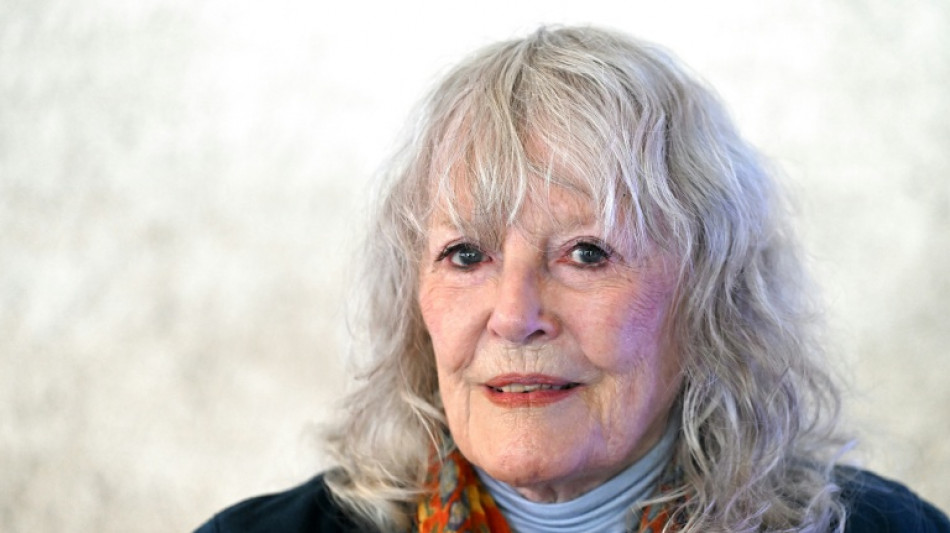
Petula Clark, 93, hopes real singers will survive the AI tide / Photo: Fabrice COFFRINI - AFP

Veteran British star Petula Clark hopes artificial intelligence will never be able to replace the warmth and emotion of a real singer.
At 93, the "Downtown" legend still relishes the connection between audience and performer, and the humanity in delivering a vocal -- two things AI songs might eliminate.
"We're all very worried about that, and they're actually saying eventually AI will have emotion, and even that's a little worrying -- where do we go from there?" said Clark.
"For the future, it's a little puzzling, to say the least," she told AFP in an interview.
Asked if the human feel in a song was irreplaceable, she said: "We like to think so. Who knows? The way things are going, maybe everything is going to be replaced anyway. I hope not. I find the whole thing a bit scary.
"There's been a lot of electronic stuff, computers in studios for quite a few years, and we're OK, we're still here. But how much longer?"
- London concert plans -
Clark said her singing register was now lower, but the magic was still present.
"My voice, it has changed," she explained.
"But it hasn't changed in whatever it has: it's there. It's come down a little bit, but I kind of like it!"
"What I do is very personal, and it's mine; nobody can be me," she said.
"It comes from the heart."
Clark said there were plans for a concert in a London theatre, possibly later this year.
"It's going to be something very important for me, and very emotional too. It may be my last one; who knows?," she said.
"But I'm really looking forward to it, getting back to an audience. There's nothing quite like the communion with an audience."
- Ear for melody -
Clark met the French publicist Claude Wolff in 1957, they married in 1961 and in a very rare step for a British or US artist, she fully embraced French songs, becoming a major star in France too.
When seeking out new songs, Clark said it was "always the melody" that caught her ear, "because melody is international".
Indeed, her 1964 signature hit "Downtown", which sold millions and earned her a Grammy award, had no lyrics when she first heard composer Tony Hatch playing it on the piano.
"Some songs just have it. If we knew what it was, we'd all be singing them!" she said.
"We knew it was a good song, but we had no idea that it was a monster song.
"Some songs live on and live on."
Clark still listens to music every day -- mostly classical music and jazz.
"I like Adele very much. I think she's a wonderful singer, very good songwriter," she said.
- 'Is That You, Petula?' -
After making her debut as child star on BBC wartime radio in 1942, Clark's career took many turns.
She starred in films alongside Alec Guinness, Fred Astaire and Peter O'Toole and appeared in musicals in New York and London.
"An Evening with Petula" in concert was the first colour transmission on BBC One television in 1969.
She has now written her autobiography, entitled "Is That You, Petula?" -- John Lennon's words when she visited his Montreal bed-in for peace in 1969, ending up on the single "Give Peace A Chance".
"It's been a long life, and a very exciting life, and a very sad life, and a very happy life," she said.
Clark has lived in Geneva since the mid-1960s and spoke to AFP at the Collonge Book Festival in the Genevan countryside.
Those queuing to meet her included a starstruck 21-year-old man clutching a 1980s vinyl album.
Clark said she hoped she had brought happiness to people throughout the decades.
"They've made me happy, too," she said.
H.Nakamura--JT