Ghana rallies round traditional tunic after foreign mockery / Photo: Nipah Dennis - AFP

Ghanaians have rushed to defend their colourful handwoven "fugu" smocks after President John Mahama's wearing of the loose-fitting traditional garment on a recent state visit to Zambia caused an online storm.
Traditionally produced in northern Ghana on narrow-strip looms, the fugu is widely treated as the west African country's national costume, worn at festivals, political events and -- increasingly -- in offices and public life.
But Mahama's choice to walk the red carpet and inspect a guard-of-honour parade in Lusaka while rocking a blue-white-grey striped version of the flare-armed tunic drew mockery from non-Ghanaians on social media, with some calling the garment inappropriate for a head of state.
Unfazed, Mahama's government declared Wednesdays "fugu" day on his return home, with traders and weavers reporting a spike in demand for the centuries-old attire since.
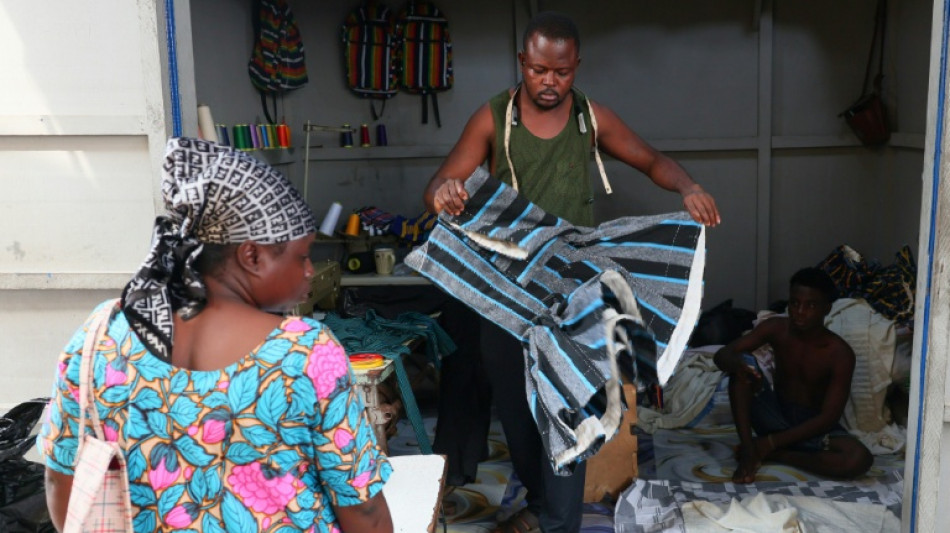
"People are coming specifically for it now," textile trader William Nene said as he folded freshly woven smocks, which are also known as "batakari", at his small stall in central Accra.
Customers have filtered in asking for the same style recently worn by the president.
"Since the discussion online, many want to wear something that shows they are Ghanaian," said Nene.
The furore has triggered a broader conversation about identity, heritage and support for local textiles.
- 'This cloth is ours' -
Shadrack Yao Agboli, a fugu weaver who also works with the National Commission on Culture, has a home workshop where long bands of hand-loomed fabric hang to dry in the afternoon sun.
"More young people are asking questions: how it's made, where it comes from," he told AFP as he guided a thread through a wooden loom.
Weaving provides livelihoods for many families, he said, adding that each garment can take days to complete.
"When leaders wear it, it reminds people this cloth is ours," Agboli said.
Historian and cultural commentator Yaw Anokye Frimpong called the fugu "an unofficial national dress" with practical and historical roots.
"Unlike kente, which is largely ceremonial, the smock is everyday wear," he said, referring to another form of traditional Ghanian dress worn during major celebrations. "Our ancestors even wore it into battle. It represents Indigenous technology and self-reliance."
Beyond patriotic symbolism, the renewed demand for fugus could provide a lift for local artisans competing against cheaper imported clothing, mainly from China.
For Frederick Ohene Offei-Addo, who wears a locally woven fugu to his work as radio station head at the Asaase Broadcasting Company, choosing Ghana-made textiles is both a matter of cultural pride and economic strategy.
"If we keep talking about industrialisation and jobs, then we must also be intentional about what we buy and wear. Culture is not just heritage -- it's livelihoods," he said.
The debate comes as the Ghanaian government has sought to promote local industries and cultural exports as part of efforts to create jobs and reduce reliance on imports.
But for traders like Nene, the politics matter less than the immediate effect. "When people see it on the president, they want one too," he said, gesturing towards an almost empty rack. "Right now, we can't weave them fast enough."
T.Ueda--JT