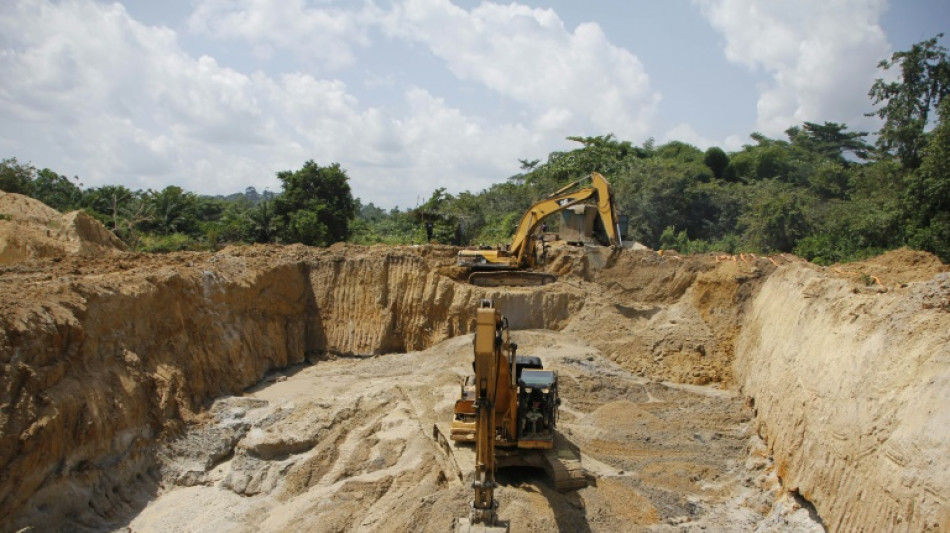
Ghana moves to rewrite mining laws for bigger share of gold revenues / Photo: Chris Stein - AFP/File

Ghana is preparing to overhaul its mining laws to increase its share of the revenues generated by the surge in the precious metal's price, sparking concern among foreign mining companies in Africa's top gold producer.
By revising its mining code, which currently offers foreign mining firms favourable tax and royalty terms, leaving the state with a limited stake, Ghana is following in the footsteps of other African countries.
They are looking to tighten control over natural resources as global demand for gold and critical minerals such as cobalt soars.
Among those that have recently introduced new mining laws are the Democratic Republic of Congo, Mali and Tanzania.
Gold prices have skyrocketed recently, jumping more than 65 percent in 2025, climbing to fresh records above $5,100 on Monday.
"What we have since 2014 is a policy that has not been reviewed," Isaac Andrews Tandoh, acting chief executive officer of the Minerals Commission, told AFP.
"We had to do something to bridge this gap."
In Ghana, the world's sixth-largest gold producer, gold production is largely dominated by foreign companies such as the US's Newmont, South Africa's Gold Fields and AngloGold Ashanti and Australia's Perseus Mining.
Under proposed reforms expected to be presented to parliament by March, mining royalties would jump from the current three to five percent range to between nine and 12 percent, depending on global gold prices, Tandoh said.
Ghana's mining agreements typically freeze fiscal terms for between five and 15 years in exchange for investments that can exceed $500 million to build or expand mines.
But regulators say some companies renege on their commitments.
"We have seen companies with development agreements that refuse to develop the mine and instead use revenues from Ghana to acquire assets elsewhere," Tandoh said.
The reforms would scrap development agreements entirely and review stability clauses that shield investors from future policy changes, a move authorities say reflects Ghana's growing experience in managing the sector.
- 'Double-edged knife' -
As African governments increasingly seek a bigger share of mining revenues amid a surge in commodity prices, officials acknowledge the challenge of balancing investor confidence with national benefit.
Mining policy strategist Ing. Wisdom Gomashie said Ghana currently captures only about 10 percent of total mineral value through royalties, dividends and taxes.
"The thinking of government is right," Gomashie said. "But the approach should not be draconian."
He warned that stability agreements, while open to reform, are crucial for protecting long-term investments and securing external financing, particularly in countries perceived as politically risky.
"Scrapping them outright, while simultaneously increasing royalties, could become a double-edged knife," Gomashie said.
Industry groups have also voiced concern.
Ghana Chamber of Mines CEO Kenneth Ashigbey said miners were not opposed to the state seeking higher returns but warned that the current proposals risk undermining competitiveness.
"What we are advocating for is a sweet spot, one where government secures sustainable revenues while the industry can expand, reinvest and take advantage of high gold prices," Ashigbey told AFP.
Large-scale mining firms in Ghana already face a high tax burden, including a five percent royalty on gross revenue and a 35 percent corporate income tax, the chamber said.
Alongside fiscal reforms, Ghana has tightened gold trading rules, particularly in the small-scale sector, to curb smuggling and improve transparency.
Ghana's Gold Board spokesman, Prince Minkah said new licensing and tracking systems have helped formalise the trade and boost foreign exchange earnings.
"We now have the data to track when, where and how traders operate," Minkah told AFP.
Ghana recorded about $10.5 billion in gold export earnings last year.
The country's proposed mining reforms come as the country faces rising fiscal pressure.
It ended 2025 as Africa's fourth-largest IMF debtor, with $4.1 billion outstanding, and recently received a further $365 million under a bailout programme.
Public debt stood at 684.6 billion cedis ($55.1 billion) in September, intensifying the push for domestic revenue and economic stabilisation.
T.Maeda--JT